

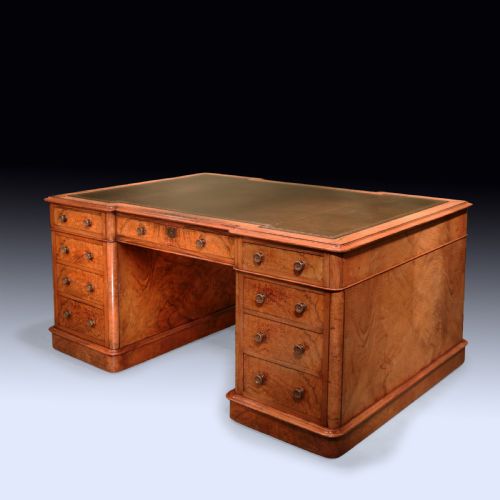


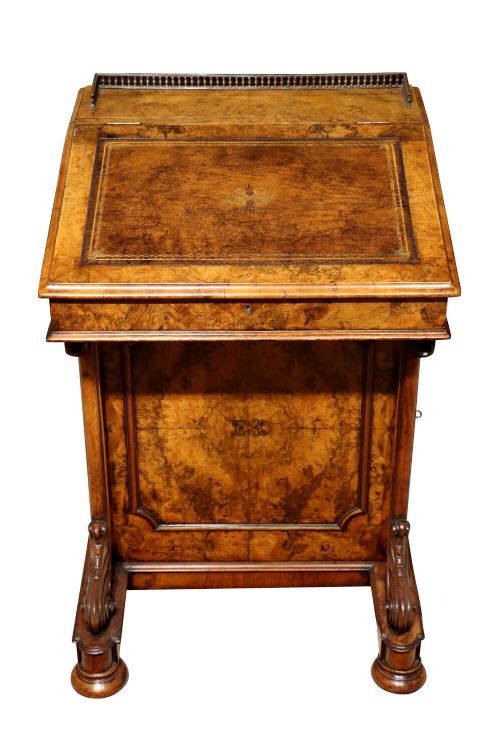
Mid Century Walnut Table
A mid century walnut table brings warmth and rich grain to a room, offering practical surface space through centuries of traditional forms.
Mid Century Walnut Table
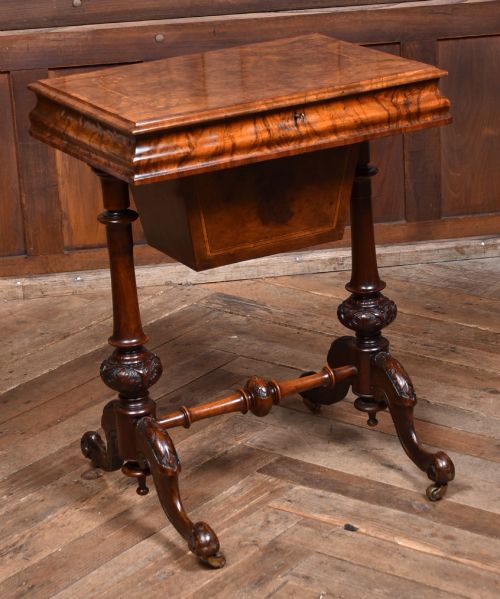
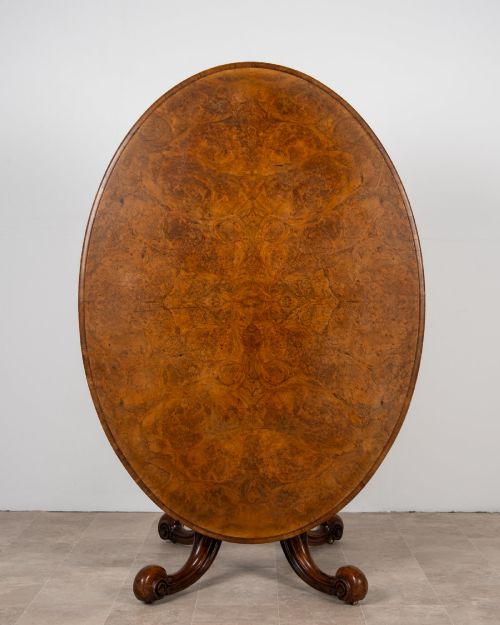
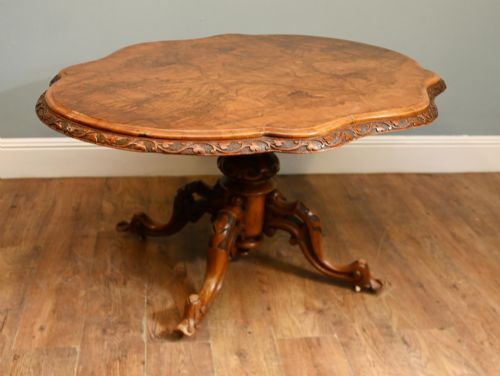
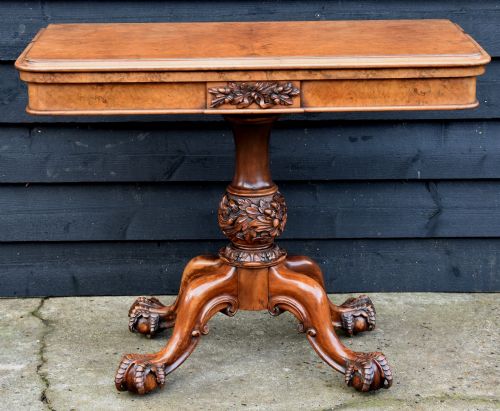
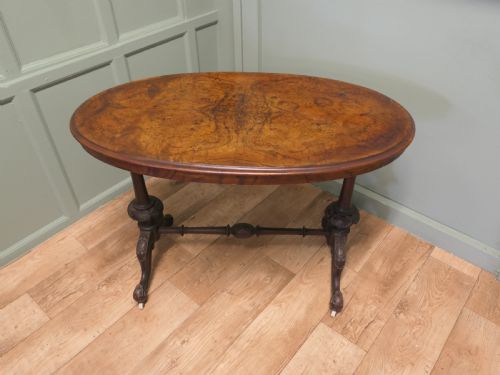
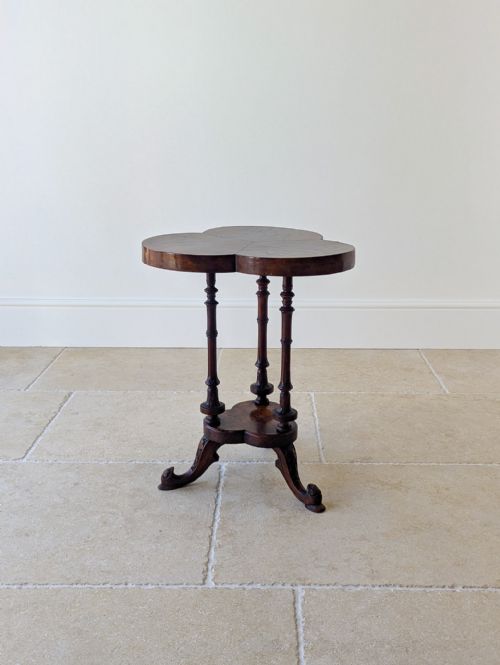
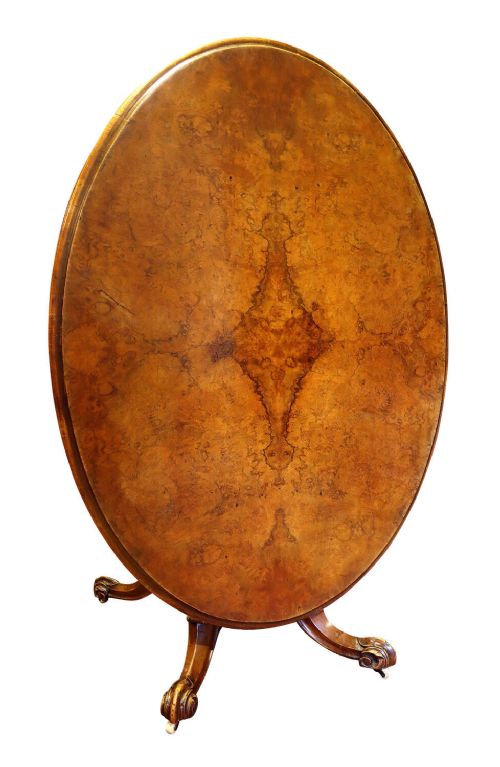
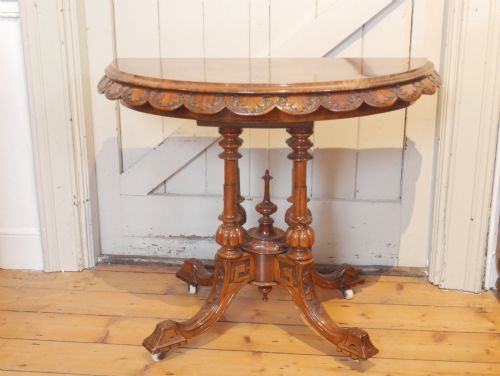
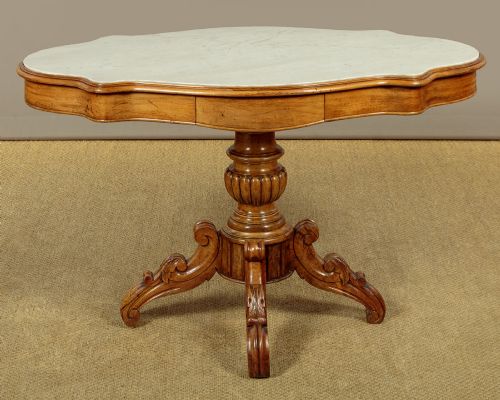
Victorian examples dominate the options, frequently taking the form of oval loo tables, occasional tables, and pedestal centre tables with intricate marquetry or inlaid details. Earlier pieces from the eighteenth century appear as drop-leaf dining tables, lowboys, and kneehole desks.
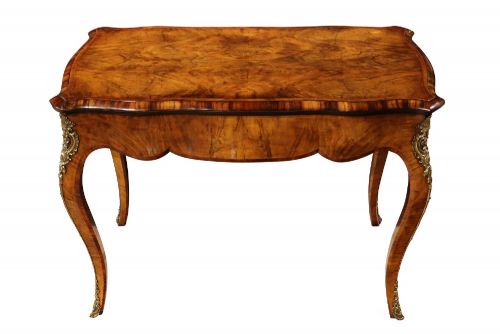
Art Deco items represent the later twentieth-century aesthetic, offering streamlined coffee tables and dining sets from the nineteen-thirties. These pieces combine utility with decorative presence, utilising marble, brass, and ormolu mounts alongside rich timber grains.
How they were made
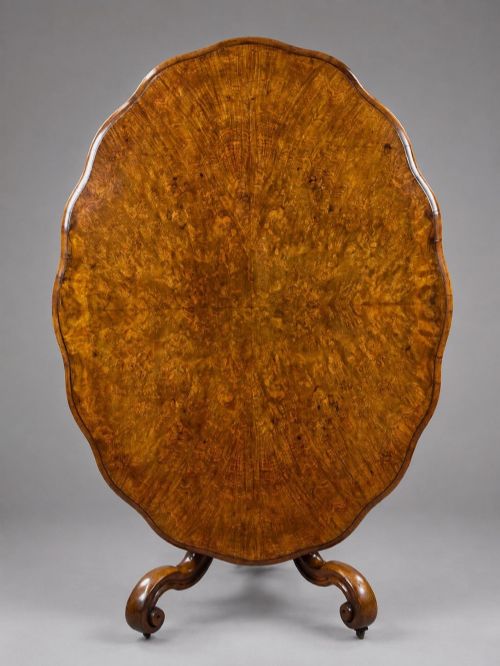
Makers utilised solid walnut and figured burr walnut veneers applied over secondary timbers to create striking patterned surfaces on tabletops and desk fronts. Burr walnut provides intricate swirling grain patterns that catch the light, while solid walnut forms structural legs, frames, and drop leaves.
Craftsmen incorporated decorative elements such as boxwood stringing, marquetry inlay, and satinwood interiors within desks and games tables. Metal components including brass mounts, ormolu details, and leather writing inserts complete the construction of finer writing and centre tables.
Mid Century Walnut Table Retail Price Guide 2026
Typical asking prices for mid century walnut table among the pieces listed under this phrase on Sellingantiques today, from the lower quarter to the upper quarter. They describe what is for sale here now, not the wider market.
Several tables include hidden compartments or secret satinwood interiors designed for holding quiet correspondence away from prying eyes.
What varies in quality
The distinction between standard examples and superior pieces rests on the choice of timber and the complexity of the grain. Highly figured burr walnut veneers paired with crisp marquetry inlay or exhibition-grade carving elevate a table well above plain timber versions.
Execution of secondary details dictates overall refinement, from the integration of ormolu mounts and brass galleries to the precision of turn-over mechanisms on card tables. Maker attribution and stamped signatures further separate standard workshop output from exceptional cabinet work.
Edward Barnsley·Étienne Kohlmann·James Winter·ELLIOTT of LONDON
The Mid Century Walnut Table Glossary
- Burr Walnut
- A veneer taken from the warted growth on a walnut tree, prized for its swirling, highly decorative grain patterns. This material defines the aesthetic of many Victorian centre and loo tables.
- Loo Table
- A large Victorian round or oval table designed for the card game loo, featuring a tilt-top mechanism that allowed upright storage against a wall when not in use. These tables often stand on heavily carved pedestal bases.
- Marquetry
- The art of applying decorative pieces of veneer to a structure to form intricate geometric patterns or pictorial designs. It appears frequently on the tops of nineteenth-century French and English tables.
- Lowboy
- A small eighteenth-century dressing table or side table with a flat top and drawers set into the valance below, typically supported on slender cabriole legs. These Georgian pieces highlight early red walnut construction.
- Ormolu
- Gilded bronze ornamentation applied to furniture, common on French revival desks and tables from the nineteenth century. This decorative metalwork adds architectural definition to curved wooden surfaces.
Mid Century Walnut Table: Frequently Asked Questions
How do I use a loo table?
A loo table serves as a flexible centre table for a principal room, providing a generous round or oval surface for daily use. The tilting mechanism allows the top to lock vertically, saving space when the room requires clearance.
Position the table centrally under a pendant light to showcase the decorative burr walnut grain. Ensure adequate clearance around the pedestal base for comfortable movement in the space.
Can I use an antique card table daily?
Antique card tables function well as console or side tables against a wall when folded shut, offering a convenient surface for lamps or decorative objects. The hinged top unfolds to reveal a baize-lined playing or writing surface when needed.
Handle the turn-over mechanism with care to preserve the original hinges and internal framing. Avoid placing excessively heavy items on the extended leaf to prevent strain on the pivoting joints.
How do I tell Victorian tables apart from Georgian ones?
Victorian walnut tables often feature rich burr veneers, elaborate pedestal bases, and darker timber tones associated with revival styles like Louis XV or Rococo. Cabinetmakers of this era favoured heavy ornamentation, including marquetry inlay and ormolu mounts.
Georgian tables, dating from the eighteenth century, rely on simpler architectural lines, solid red walnut timber, and bracket feet or cabriole legs. These earlier pieces exhibit a faded, natural patina developed over centuries of honest use.
How do I care for a walnut tabletop?
Maintain walnut furniture by dusting regularly with a soft, dry cloth and avoiding silicone-based polishes that build up over time. Natural wax applied sparingly preserves the moisture and depth of the timber grain.
Protect the surface from direct sunlight and heat sources to prevent the veneer from drying or cracking. Use coasters and felt pads under objects to safeguard polished French polished finishes from moisture and scratches.