

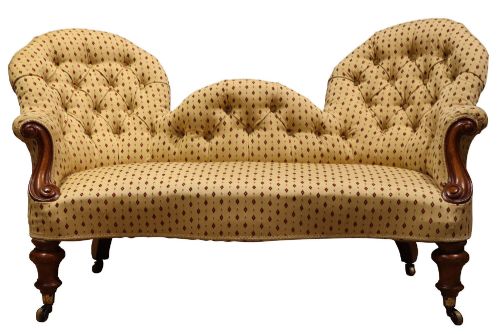


Mid Century Victorian Sofa
A mid century victorian sofa brings nineteenth-century seating comfort and formal elegance to a room.
Mid Century Victorian Sofa
When searching for a mid century victorian sofa, buyers encounter nineteenth-century seating forms including chaise longues, settees, and chesterfield sofas. These items originate from the 1850s and 1860s, reflecting the cabinet-making standards of the period.
The selection on this page centres on mid-nineteenth-century seating, featuring frames shaped by Victorian rococo revival and continental neo-classical influences. Alongside upholstered sofas, the listings include related reception and writing furniture from the same decades.
Most pieces combine exposed timber frameworks with sprung or padded upholstery upholstered in calico or decorative fabric. Their forms range from country house daybeds to structured reception settees designed for nineteenth-century drawing rooms.
How they were made
Frames are constructed from dense hardwoods such as walnut, burr walnut, mahogany, and rosewood, selected for their grain pattern and structural strength. Cabinet makers utilised these timbers to support the sweeping curves characteristic of mid-nineteenth-century seating.
Upholstery techniques of the period involved traditional stuffing secured over webbed frames, often finished with brass castors on the feet for mobility. Skilled joinery connects the show-wood components to the internal weight-bearing structures.
Mid Century Victorian Sofa Retail Price Guide 2026
Typical asking prices for mid century victorian sofa among the pieces listed under this phrase on Sellingantiques today, from the lower quarter to the upper quarter. They describe what is for sale here now, not the wider market.
Listings feature pieces from the 1850s and 1860s constructed in walnut, mahogany, and rosewood.
What varies in quality
Quality rests in the crispness of the timber carving and the selection of figured veneers like burr walnut or pollard oak. Superior examples display precise joinery in the frame and well-proportioned curves that maintain structural integrity.
The distinction between standard production and top-tier workshop output lies in the detailing of the show-wood and the integrity of the original framing. Pieces attributed to notable makers demonstrate finer execution in their moulded components.
Holland & Sons·Howard & Sons·James Winter & Sons
The Mid Century Victorian Sofa Glossary
- Chaise longue
- An upholstered couch-like seat designed for reclining, featuring an asymmetric backrest and a single raised end. This form became popular in mid-nineteenth-century drawing rooms.
- Chesterfield sofa
- A deep-buttoned upholstered sofa with arms and back of the same height. This style provides formal seating originating in the Victorian era.
- Burr walnut
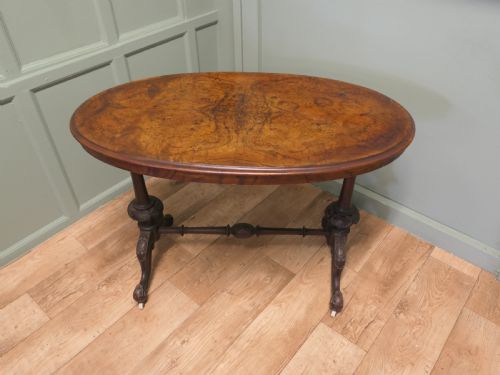
- A veneer taken from the growth growths of walnut trees, displaying intricate swirling grain patterns. Cabinet makers used this material on prominent surfaces of high-status tables and seating frames.
- Settee
- A medium-sized upholstered bench with a back and arms, designed to seat multiple people. These pieces sit within nineteenth-century formal reception spaces.
Mid Century Victorian Sofa: Frequently Asked Questions
How do I identify a mid-nineteenth-century sofa?
Examine the timber frame for dense hardwoods such as walnut or mahogany, which indicate nineteenth-century production methods. The presence of revival styling cues helps date the piece accurately.
Check for hand-cut joinery and traditional upholstery foundations beneath the fabric. These structural markers distinguish period pieces from later reproductions.
Where should I place a chaise longue?
Position the piece in a drawing room or large bedroom where its asymmetric profile can be viewed from multiple angles. It serves as a focal point for relaxation.
Ensure adequate floor space around the seating to display the carved timber frame and brass castors properly.
How do I care for antique walnut furniture?
Maintain the timber by keeping the piece away from direct sunlight and heat sources that dry out the wood. Regular dusting with a dry cloth protects the polished surface.
Apply professional wax polish sparingly to nourish figured veneers like burr walnut without building up excess residue.