





Mid Century Mirror
A mid century mirror brings light and depth to a room, shifting focus through glass and gilt frames.
Mid Century Mirror
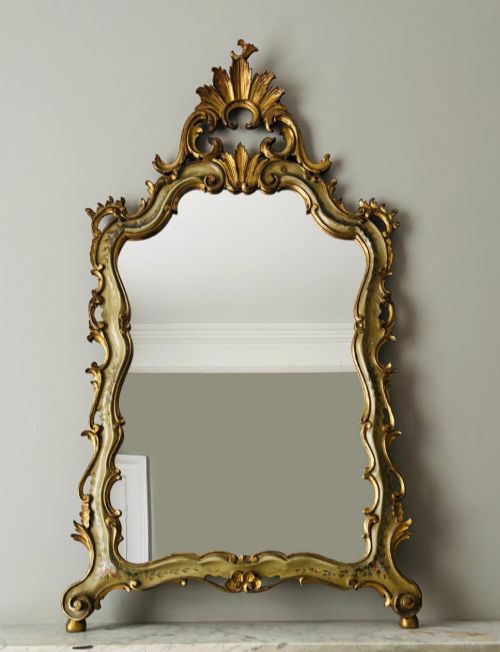
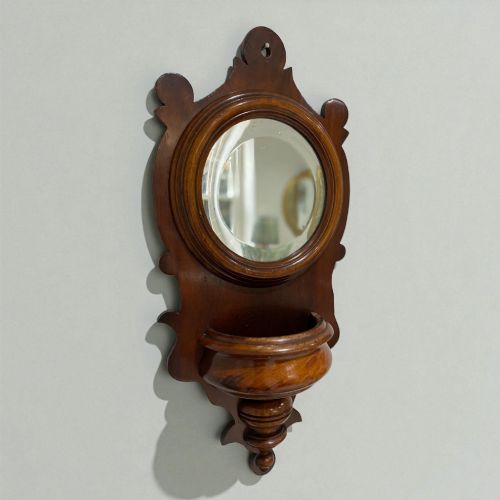
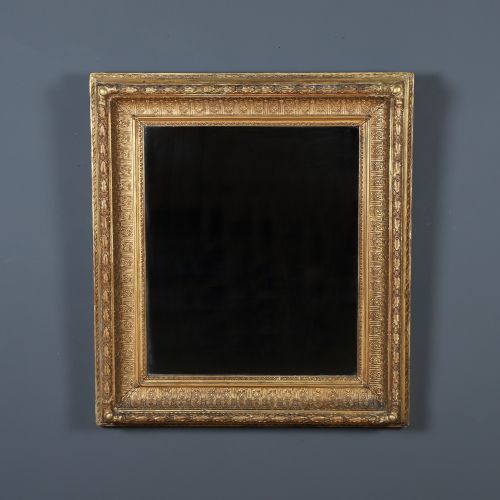
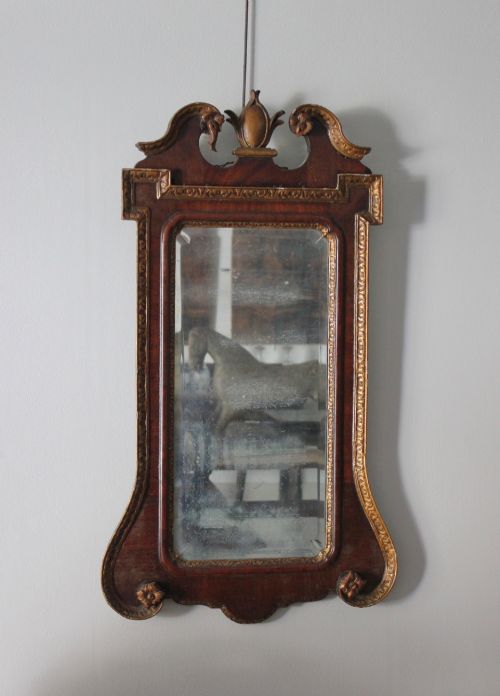
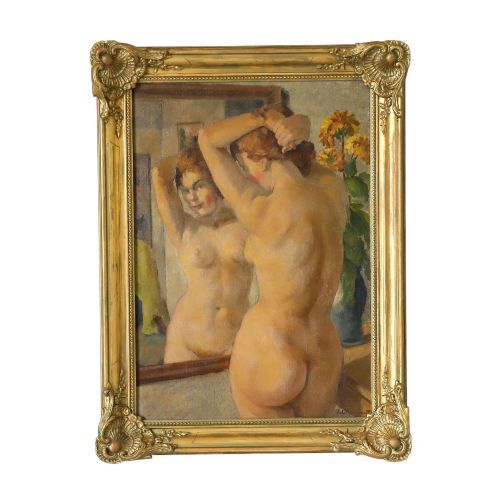
A mid century mirror encompasses reflective glass set into frames of wood, brass, or gilt composition, spanning domestic wall mounts, overmantels, and dressing pieces. Buyers search for these items to anchor a room with functional ornament, drawing on historic forms ranging from Georgian walnut to Victorian giltwood and later twentieth-century designs.
The selections available here lean heavily toward nineteenth-century production, particularly mid-nineteenth-century giltwood, mahogany, and convex wall mirrors. Alongside these, examples stretch from eighteenth-century Georgian pieces to mid-twentieth-century Hollywood Regency and Italian work, offering varied scales from small circular frames to large overmantels.
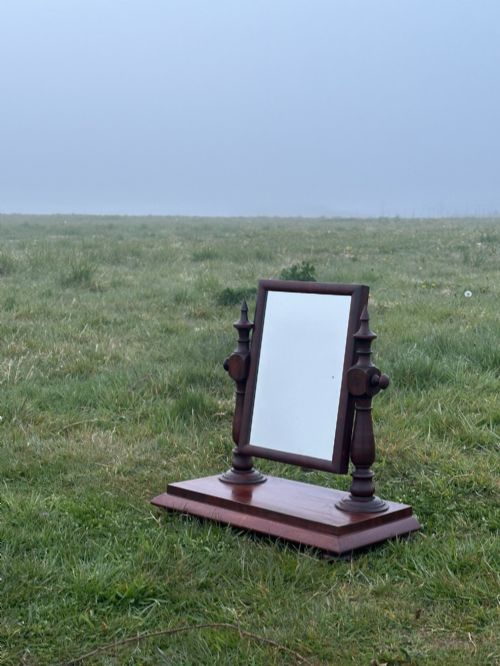
Object types on this page extend beyond standard wall hangings to include dressing mirrors, overmantel mirrors, and console combinations, reflecting how historical makers integrated glass into broader interior furnishings. The forms capture domestic utility paired with decorative ambition across several European traditions.
How they were made
Makers constructed frames using native and imported timbers such as mahogany, walnut, and palisander, often applying carved gesso and gold leaf to create ornate giltwood surfaces. Joinery techniques varied from simple bracket supports to elaborate layered mouldings designed to hold heavy glass securely.
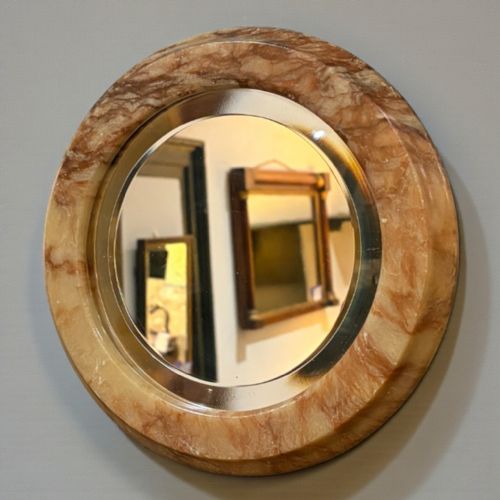
Mirror glass itself was cut and silvered by hand in earlier periods, resulting in subtle imperfections and depth within the reflection that distinguish older plates from modern float glass. Brass and alabaster also appear as primary structural elements, shaped and polished to frame the reflective surface.
Among the mirrors, a set of original glass circus mirrors waits to distort reflections in the spirit of early entertainment.
What varies in quality
Quality rests in the crispness of the carving, the integrity of the original gilding or polish, and the preservation of the mirror plate. Hand-carved giltwood with deep relief and well-maintained gesso represents a higher tier of craftsmanship than simpler moulded or later cast substitutes.
The proportion and balance of the frame relative to the glass plate dictate the visual success of the piece. Period glass showing authentic foxing and age adds character, whereas poorly executed restorations or replaced plates alter the historic weight of the object.
The Mid Century Mirror Glossary
- Convex mirror
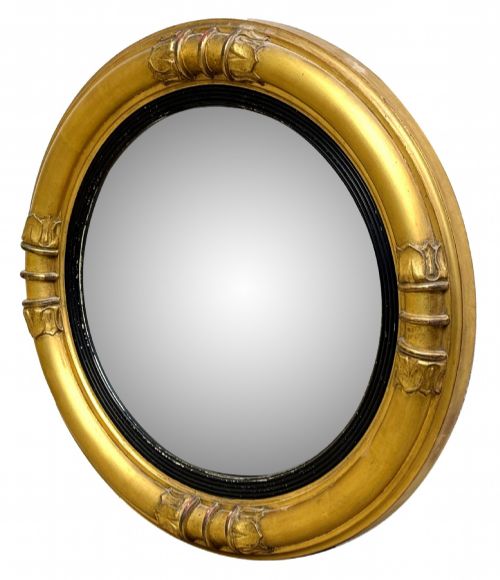
- A round mirror with an outward-curving glass plate that bends reflections to capture a wide-angle view of the interior. These pieces were frequently mounted in gilded frames with small decorative balls.
- Giltwood
- Timber, commonly lime or pine, coated in gesso and leaf gold to produce a bright metallic finish. It defines the surface of many formal European wall mirrors.
- Overmantel mirror
- A wide mirror designed specifically to hang above a fireplace mantelpiece. They often feature horizontal proportions and decorative crestings suited to architectural placement.
- Vauxhall mirror
- An eighteenth-century English mirror featuring bevelled plate glass, named after the London glasshouse. These plates demonstrate early precision in glass bevelling and silvering.
- Girandole
- A wall mirror incorporating integrated candle sconces attached to the frame. The reflective glass amplified the candlelight in darkened rooms.
Mid Century Mirror: Frequently Asked Questions
How do I hang a heavy overmantel mirror?
Heavy overmantel mirrors require secure fixing directly into wall studs or masonry using appropriate brackets that match the weight of the timber and glass.
Professional installation is recommended to distribute the load evenly and prevent strain on the antique frame structure.
Are antique mirror plates always original?
Not all mirror plates survive in original condition, as glass is fragile and prone to deterioration over centuries of domestic use.
Replacements are common, so inspecting the silvering, backing boards, and edge bevelling helps determine whether the glass is period to the frame.
How should I clean a giltwood frame?
Giltwood frames require gentle dusting with a soft, dry brush to prevent damage to the delicate gesso and gold leaf layers.
Moisture and modern chemical cleaners must be avoided entirely, as they strip the historic finish from the timber.
What is foxing on mirror glass?
Foxing refers to small brown spots and patches that develop within the silver backing of older mirrors over time due to oxidation.
This natural ageing process is valued by collectors as evidence of genuine antiquity rather than a fault.