


Mid Century Diamond Pendant
These mid century diamond pendant pieces bring together crisp twentieth-century geometry and brilliant stones, offering an understated elegance that sits easily against the collarbone.
Mid Century Diamond Pendant
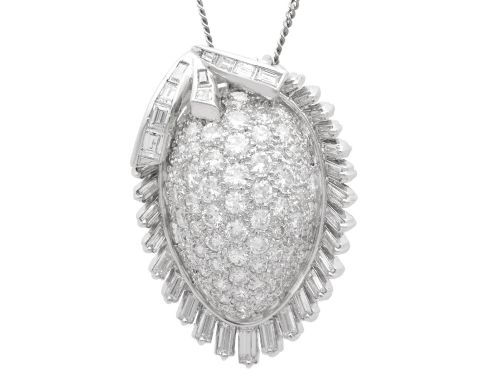
A mid century diamond pendant brings together clean lines, tailored settings and brilliant stones from the nineteen-fifties and sixties. These jewels focus attention on the neck, often suspended from fine metallic chains or integrated into drop designs.
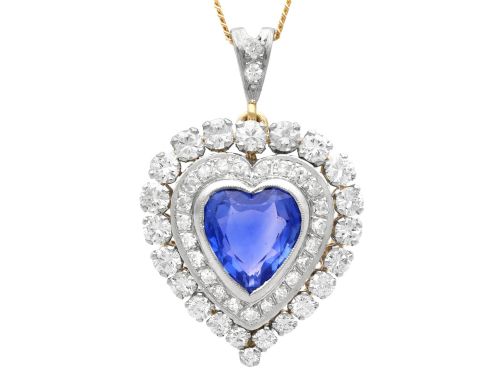
Most examples originate from the mid-century period, though the broader selection includes earlier Victorian revivals featuring similar gemstone configurations. Buyers encounter varied formats ranging from single-stone old-cut drops to complex cluster arrangements and Maltese cross motifs.
Alongside purely diamond-focused items, the category embraces pieces incorporating contrasting gems such as emeralds, aquamarines, rubies, sapphires and opals. The underlying design vocabulary favours architectural symmetry and restrained glamour over heavy Victorian ornamentation.
Materials and construction
Metals span platinum alongside fourteen-carat and eighteen-carat white gold, providing a bright, reflective foundation that enhances the icy sparkle of the stones. Yellow gold appears in select designs, offering a warmer contrast to the diamonds and coloured gems.
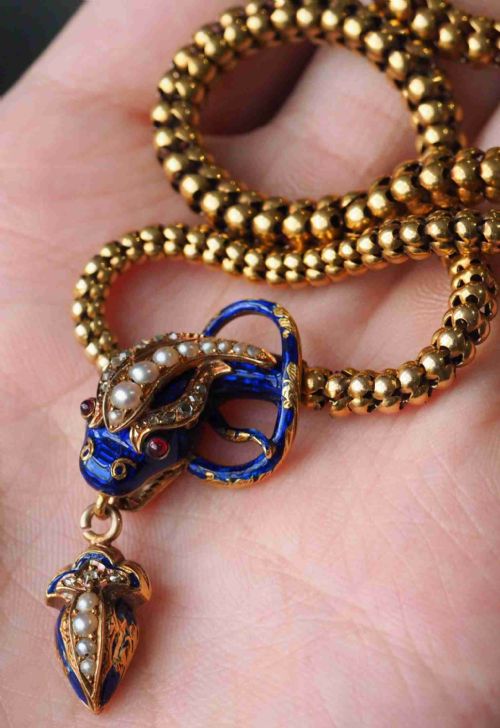
Master jewellers employed precise claw settings, bezel mounts and cluster arrangements to secure brilliant-cut and old-cut diamonds. Additional elements like seed pearls, enamel and onyx frequently accent the precious metal framework.
Listings feature platinum, fourteen-carat white gold and eighteen-carat white gold alongside yellow gold, paired with diamonds, aquamarines, emeralds and black opals.
Evaluating craftsmanship and stone selection
Quality rests in the precision of the metalwork and the lively brilliance of the central gems. Superior examples display immaculate claw alignment and secure stone placement that withstands daily wear.
The Mid Century Diamond Pendant Glossary
- Old-cut diamond
- A vintage diamond cut characterised by a small table, high crown and open culet, designed to catch candlelight.
- Cluster pendant
- A central gemstone surrounded by a tight halo of smaller diamonds, creating a concentrated focal point.
- Bezel setting
- A metal collar that wraps around the outer edge of a gemstone, holding it securely in place with a smooth border.
- Maltese cross
- A distinctive four-armed cross symbol with notched tips, frequently utilised as a decorative motif in mid-century jewellery.
- Cabochon
- A gemstone shaped and polished with a smooth, rounded surface rather than faceted edges.
Mid Century Diamond Pendant: Frequently Asked Questions
How do I wear a mid century diamond pendant daily?
These pendants pair well with simple necklines, letting the architectural lines of the metal and stone take centre stage. They transition easily from daytime tailoring to evening attire.
Keep the piece away from harsh household chemicals and store it individually in a fabric-lined box to protect the precious metals and settings from friction.
What periods do these pendants span?
The selection focuses primarily on pieces made during the nineteen-fifties and nineteen-sixties, capturing the modernist design shifts of the postwar era. Occasional Victorian pieces appear alongside them due to stylistic overlaps.
Examining the metal hallmarks and the specific cut of the diamonds helps establish the exact era of manufacture.
Which gemstones appear alongside diamonds?
Makers frequently paired diamonds with rich emeralds, pale blue aquamarines, sapphires, rubies and opals. Seed pearls and black onyx also serve as striking textural contrasts.
These coloured stones are often set as the central focus, with smaller diamonds framing them in tailored geometric arrangements.
What metal types should I expect to find?
White metals predominate, including durable platinum, fourteen-carat white gold and eighteen-carat white gold. Yellow gold is also utilised in specific vintage and revival creations.
The choice of metal directly influences the overall tone of the piece, with platinum offering a brighter, cooler finish than gold.