


Mid Century Diamond Cluster Ring
Mid century diamond cluster rings combine sculptural goldwork and intricate gemstone arrangements from the 1940s, 1950s, and 1960s.
Mid Century Diamond Cluster Ring
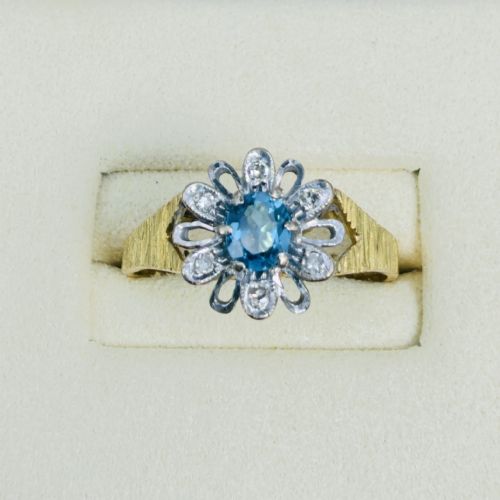
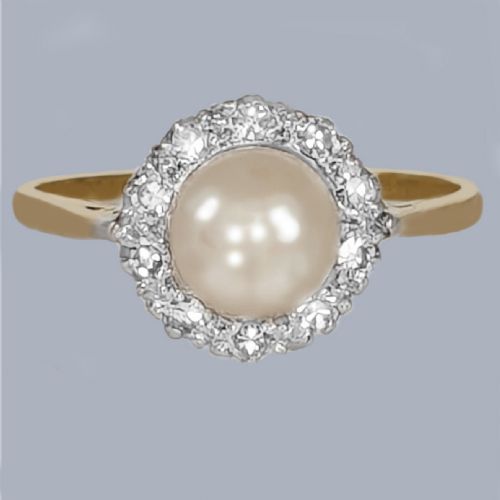
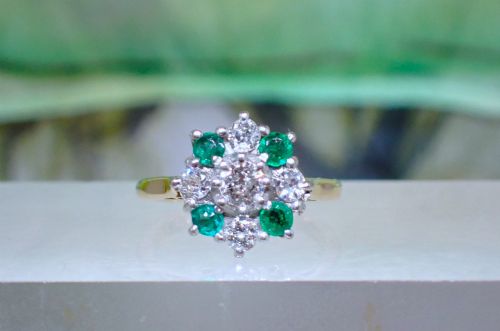
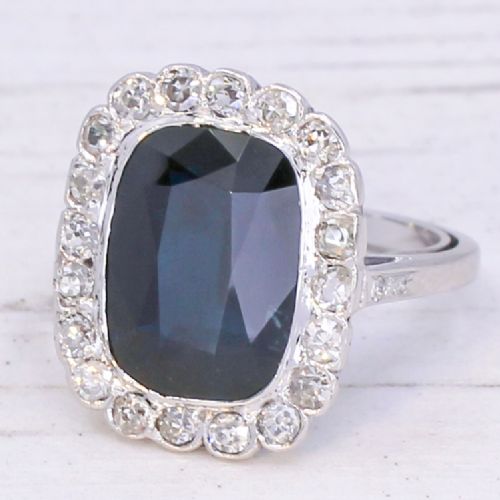
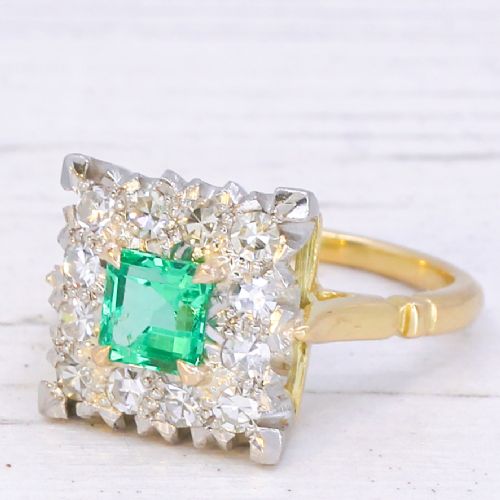
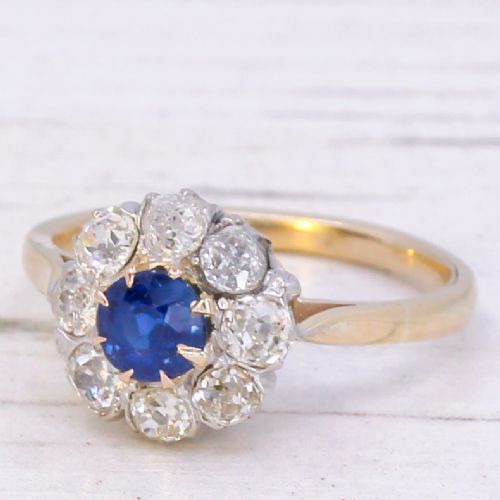
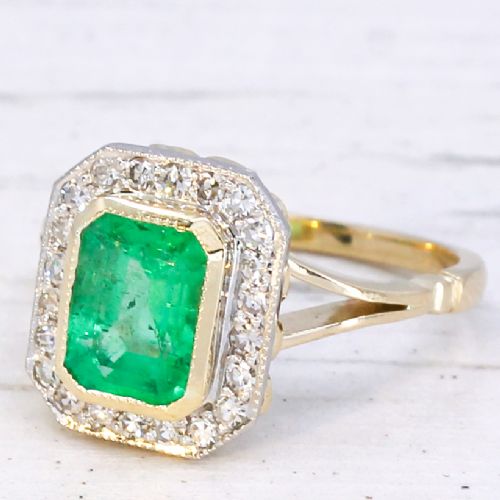
When searching for a mid century diamond cluster ring, collectors encounter bold cocktail designs, floral motifs, and geometric arrangements originating from the 1940s, 1950s, and 1960s. These pieces typically feature a central gemstone surrounded by a border of smaller diamonds, set in platinum or various shades of gold.
The most common examples on this page include rings centred on blue sapphires, emeralds, or rubies, alongside all-diamond configurations. Forms range from delicate target clusters and daisy shapes to elaborate ballerina settings and scrolling openwork panels.
Originating across Britain, France, Italy, and America, these mid-century pieces reflect a departure from strict period symmetry towards expressive, organic, and voluminous styling. Fine jewellery of this era prioritises visual impact, utilising substantial central stones supported by meticulous framing.
How They Were Made
Jewellers of the period utilised platinum and 18ct gold, often contrasting yellow gold shanks with white gold or platinum settings to enhance the brilliance of the diamonds. Coloured gemstones were frequently secured with traditional claw settings while diamond borders relied on neat grain or millegrain techniques.
Construction methods involved casting robust wirework and stamped scroll panels, hand-finished with pierced galleries and engraved detailing. Master goldsmiths combined heavier cast foundations with delicate platinum settings to securely house sizeable emeralds, rubies, and sapphires without compromising light entry.
Some mid-century cocktail rings utilise hidden under-galleries so intricate that only the wearer ever sees the delicate metal lacework underneath.
What Varies in Quality
The upper tier of these rings is distinguished by the origin and untreated nature of the central coloured stones, such as unheated Ceylon sapphires or negligible oil Colombian emeralds. Superior examples also demonstrate exceptional symmetry in stone cutting, where old cut or brilliant cut diamonds match precisely in colour grade and proportion.
Execution of the metalwork separates standard production from master craftsmanship, visible in the density and precision of openwork scroll panels and integrated platinum settings. Hallmark clarity, maker attribution, and the structural integrity of heavy cast gold shanks further dictate the standing of individual pieces.
Kutchinsky·Boucheron
The Mid Century Diamond Cluster Ring Glossary
- Ballerina ring
- A cluster ring style featuring a central oval or round gemstone encircled by a flared halo of tapered baguette or brilliant cut diamonds that resemble a ballerina's tutu.
- Target cluster
- A geometric ring design featuring concentric circles of contrasting gemstones or diamonds surrounding a central stone, creating a bullseye visual effect.
- Millegrain
- A decorative jewellery technique involving a line of tiny metal beads along the edges of a setting, popular in transitional and mid-century platinum work.
- Bombé ring
- A voluminous, domed ring style popular during the mid-century era that curves outward prominently from the finger to display dense pavé or cluster work.
- Old cut
- A diamond cutting style predating modern round brilliants, characterised by a smaller table, higher crown, and open culet which produce a softer candlelit sparkle.
Mid Century Diamond Cluster Ring: Frequently Asked Questions
How do I style a mid century diamond cluster ring?
These cocktail and dress rings command attention on their own, so pairing them with simple bands allows the central gemstone and surrounding diamonds to remain the focal point.
Because many feature raised ballerina or bombé profiles, consider wearing them on the middle finger for balanced proportions and comfort during daily wear.
How can I tell a 1950s ring from an Edwardian one?
Mid-century rings from the 1950s typically display heavier gold work, abstract scroll panels, and bold cocktail silhouettes compared to the lighter, lacy platinum garlands of the Edwardian period.
Looking at the inner shank for specific hallmarks, such as Birmingham assay stamps from 1962, also provides definitive chronological markers.
Are these rings suitable for everyday wear?
Platinum and 18ct gold settings provide strong durability, though rings set with softer emeralds or pearls require extra mindfulness against sharp impacts.
Checking the security of the claws and the integrity of the gallery ensures these mid-century pieces withstand regular rotation safely.