

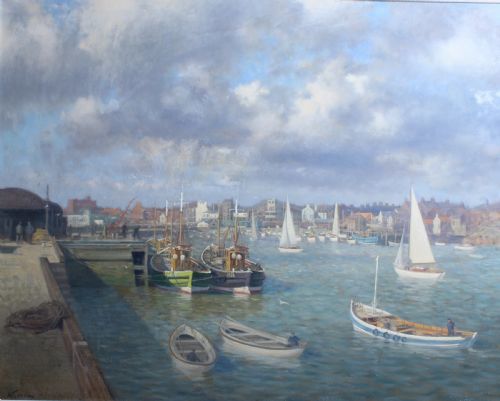
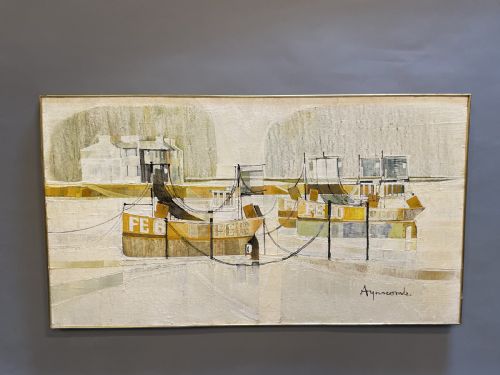

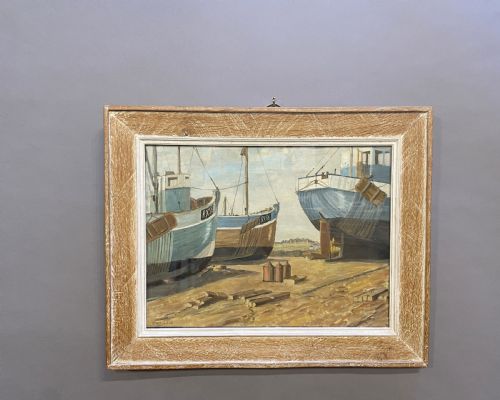


Mid Century Boat Painting
When you search for a mid century boat painting, you enter a world of coastal harbours and river canals captured through mid-century impressionism.
Mid Century Boat Painting
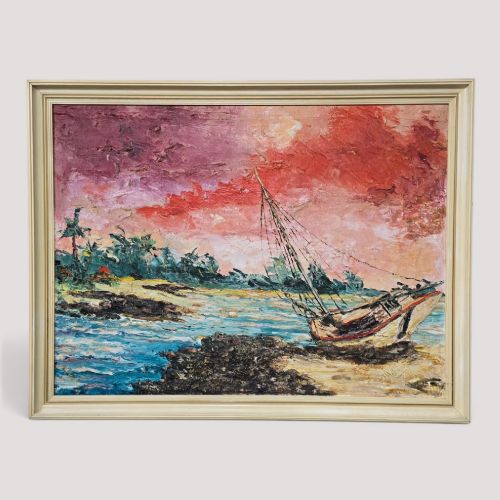
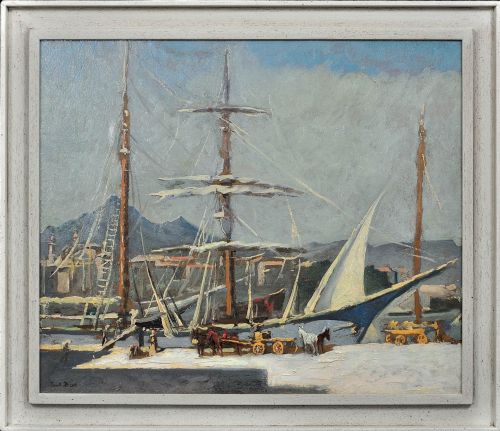
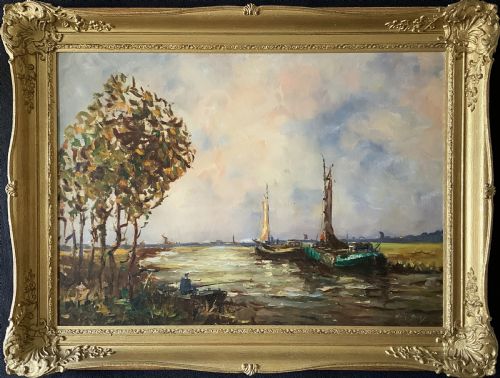
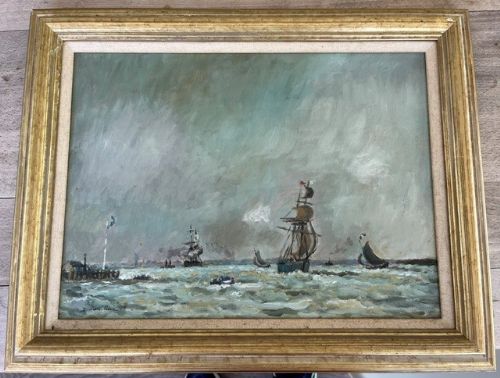
A mid century boat painting depicts maritime scenes, harbour views, and river landscapes created predominantly during the 1940s, 1950s, and 1960s. These works range from realistic depictions of docks and boatyards to abstracted coastal watercolours and textured oils.
You will most frequently encounter framed oil paintings on board or canvas, alongside works on paper. Subjects stretch from British and Cornish harbours to French canals, Italian coasts, and Dutch waterways.
How they were made
Artists painted primarily with oil paint, watercolours, gouache, or acrylics using canvas, wood panels, board, and paper as supports. Oil paint was frequently applied with visible brushstrokes or impasto technique to build texture in water and sky.
Support materials varied widely, with artists selecting stretched canvas for larger compositions and sturdy wood panels or board for smaller plein air studies and miniatures.
Even landlocked art lovers can acquire a stormy sea without getting their boots muddy.
What varies in quality
Quality rests upon the artist's handling of light, brushwork, and composition within the maritime subject. Works exhibiting confident gestural marks or expressive modernist abstraction stand apart from more rigid renderings.
The integration of the support material also dictates quality, where skilled application of paint on canvas or wood panel enhances the depth of the coastal atmosphere.
Kenneth Cozens·Paul Bret·Willem Bos·Walter Goodin·Raymond Picque·Gabriel Dauchot·Edward Seago·Fernando Del Basso·William Tuck·George Shaw·Sam Bough·Edward M Elliott·Antonio Godoy·Pauline Boumphrey·Markey Robinson·Maurice Sijs·William Burns·Ben Maile·Sam Barnes Robson
The Mid Century Boat Painting Glossary
- Impasto
- Paint applied thickly to a canvas or board, standing out from the surface to create a three-dimensional texture. This technique captures the turbulent movement of water or the heavy atmosphere of a harbour.
- Plein air
- Painting outdoors in direct natural light to capture immediate visual conditions. Many mid-century coastal and harbour scenes originated through this direct observation.
- Estuary
- The tidal mouth of a large river where the tide meets the stream. These areas provided artists with dynamic combinations of shipping vessels, mudflats, and changing light.
- Provenance
- The chronological history of the ownership of a work of art. Documented records help establish the authenticity and exhibition history of a painting.
Mid Century Boat Painting: Frequently Asked Questions
What periods do these paintings cover?
The available works span primarily across the mid-twentieth century, with a heavy concentration in the 1940s, 1950s, and 1960s. Earlier examples from the nineteenth century also appear occasionally.
These dates reflect the active periods of the artists and the prevailing modernist and impressionist movements of the era.
Where were these maritime scenes painted?
Artists recorded coastal locations across Britain, France, Italy, the Netherlands, and Brazil. Common settings include Cornish harbours, French rivers, and Italian bays.
Many pieces capture specific working ports, docks, and quiet estuaries familiar to the painters of the time.
How should I frame and display them?
Most pieces arrive already framed, retaining their period character. Traditional wood frames complement the oil and watercolour mediums effectively.
Keep them away from direct sunlight and damp conditions to preserve the integrity of the canvas, board, or paper supports.
What materials are most common?
Oil paint on board or canvas forms the majority of the collection. Watercolours and gouache on paper also feature prominently among the coastal works.
Artists occasionally utilised wood panels and card for smaller, portable plein air compositions.