
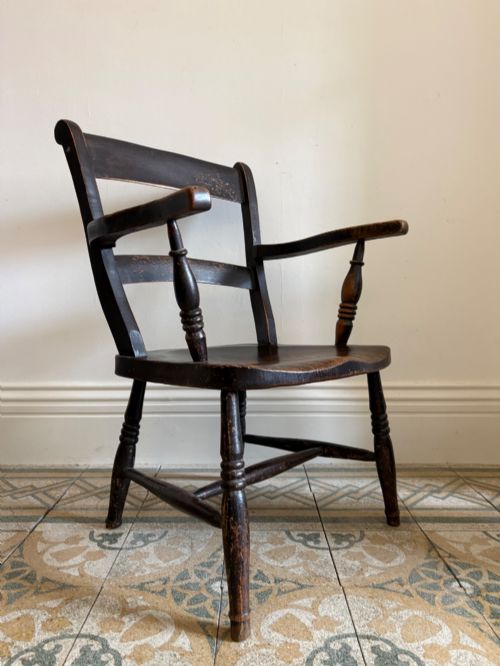


Mid 19th Century Windsor Chair
A mid 19th century windsor chair brings tactile regional craft and sculptural timber joinery into daily domestic use.
Mid 19th Century Windsor Chair
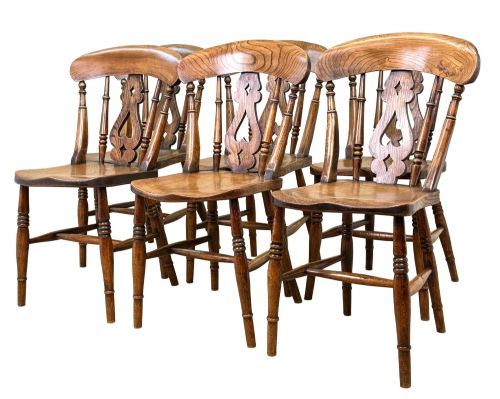
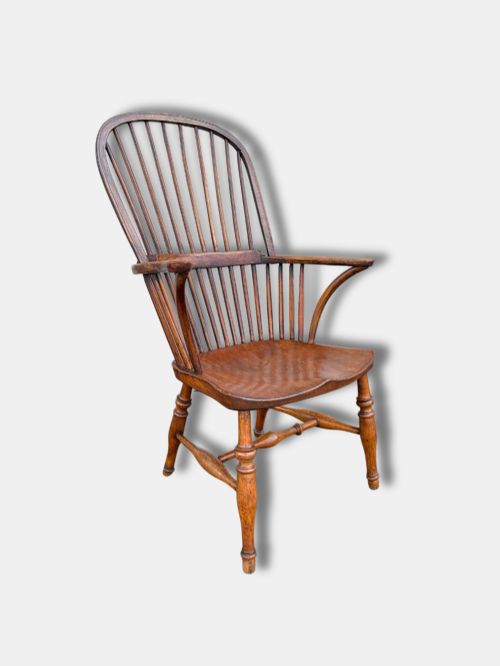
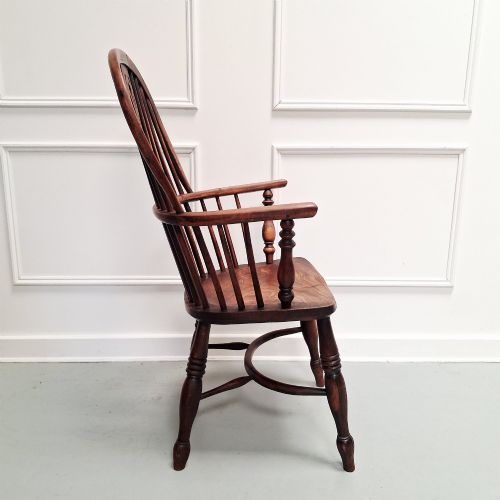
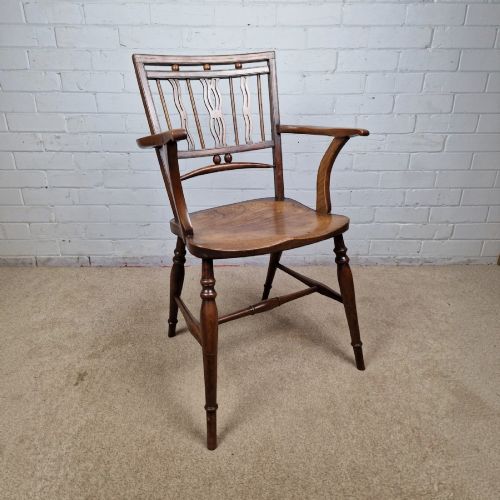
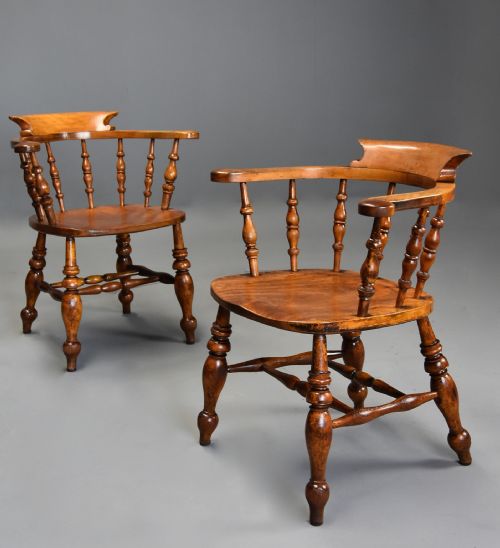
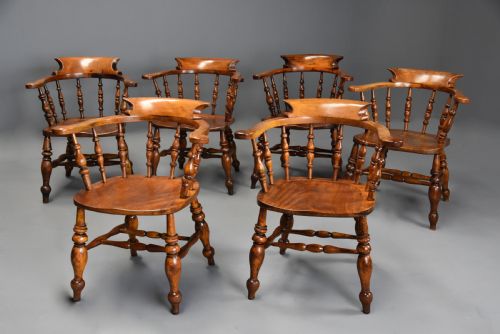
A mid 19th century windsor chair is a sturdy timber seating piece defined by a solid wooden saddle seat into which the legs and back spindles are wedged and pinned. These pieces emerge from Victorian country vernacular traditions, constructed by regional joiners and chair bodgers working in local British woods. Buyers encounter various regional forms on this page, ranging from low-backed smokers bows to commanding high-back armchairs and sets intended for farmhouse kitchens.
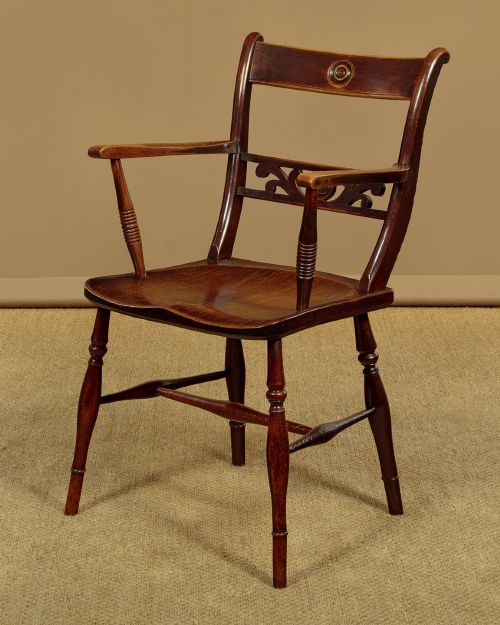
The selection encompasses specific regional types such as the Mendlesham chair, Oxford bar back, and Thames Valley variants alongside child's chairs and larger dining sets. Armchairs dominate the offerings, often recorded as Captain's chairs or broad arm varieties featuring generous proportions and turned undercarriages. Such seating bridges utility and rustic style, functioning equally well at a dining table or as a standalone fireside armchair.
How They Were Made
Construction relies on a traditional combination of timber species chosen for their specific physical properties, pairing strong ash or beech for structural elements with carved elm for the solid saddle seats. Cabinetmakers and bodgers integrated yew wood, birch, fruitwood, and oak depending on regional availability and the desired finish. Spindles were often steam-bent or turned on pole lathes, while comb backs and hoop backs were secured using wedged tenon joints.
Surface treatments range from natural waxed grain to ebonised finishes, with many examples developing a deep patina over decades of handling and polishing. Wheelback designs incorporate pierced central splats, while stickback and bar back variations utilise simple turned spindles to distribute weight along the curved crest rail.
Listings feature woods including elm, ash, beech, oak, yew, birch, and fruitwood across Victorian country regional styles.
What Varies In Quality
Quality in these seating pieces rests upon the crispness of the turning on the legs and spindles, the figure and figuring of the timber, and the overall integrity of the original construction. Chairs featuring richly grained yew wood or carefully matched sets display a higher degree of initial craftsmanship than utilitarian kitchen utility models.
The depth of the saddle seat carving and the survival of an uncompromised surface finish dictate the visual appeal of an example. Subtle details such as broad armrests, well-sculpted comb backs, and legible stamps left by makers distinguish finer regional productions from standard workshop output.
J Spencer·Hugh Shields Snr
The Mid 19th Century Windsor Chair Glossary
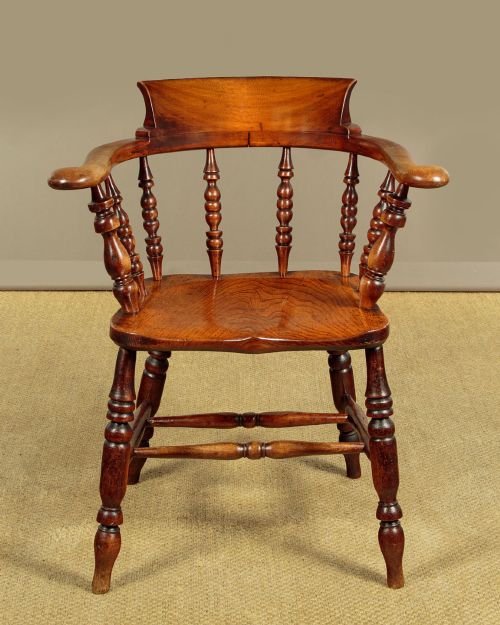
- Smoker's bow
- A low-backed armchair with a continuous curved armrail supported by turned spindles, often associated with nineteenth-century taverns and parlours.
- Comb back
- A Windsor chair style where the upper vertical spindles extend through a horizontal headboard, resembling the teeth of a dressing comb.
- Wheelback
- A design featuring a pierced wooden disc shaped like a spoked carriage wheel inserted into the centre of the back splat.
- Broad arm
- A chair featuring an exaggerated, wide flat paddle arm designed to provide a writing surface or extra resting space.
- Undercarriage
- The network of turned legs and interconnecting stretcher rails fitted beneath the seat to stabilise the chair frame.
Mid 19th Century Windsor Chair: Frequently Asked Questions
What is a smokers bow chair?
A smokers bow is a low-backed Windsor variant with a rounded captain's rail, designed for comfortable leaning in domestic or tavern settings.
These pieces typically feature turned spindles and a low profile that fits easily beneath standard tables.
How do I identify a Thames Valley Windsor?
Thames Valley examples are distinguished by specific timber combinations, most notably elm seats paired with ash frames, alongside refined turning.
They frequently incorporate ebonised details or distinctive wheelback motifs characteristic of southern English regional production.
Are these chairs suitable for daily dining?
These sturdy wooden seats were built for robust daily use in kitchens and dining rooms, making them practical for modern seating arrangements.
Harlequin sets and matched dining groups provide functional rustic character around a dining table.
What woods were used in nineteenth-century Windsors?
Makers utilised a mix of native hardwoods, selecting elm for comfortable scooped seats and ash or beech for rigid legs and spindles.
Finer versions often incorporate figured yew wood, birch, or fruitwood to enhance the visual texture of the backrest.