



Mid 19th Century Shelves
Mid 19th century shelves are timber storage pieces built to display books or objects, offering practical utility and period character.
Mid 19th Century Shelves
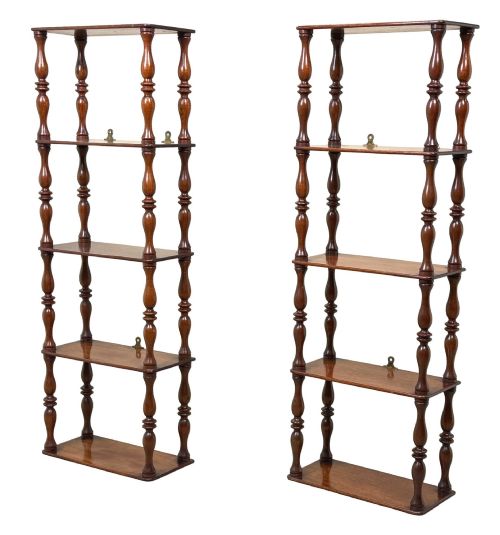
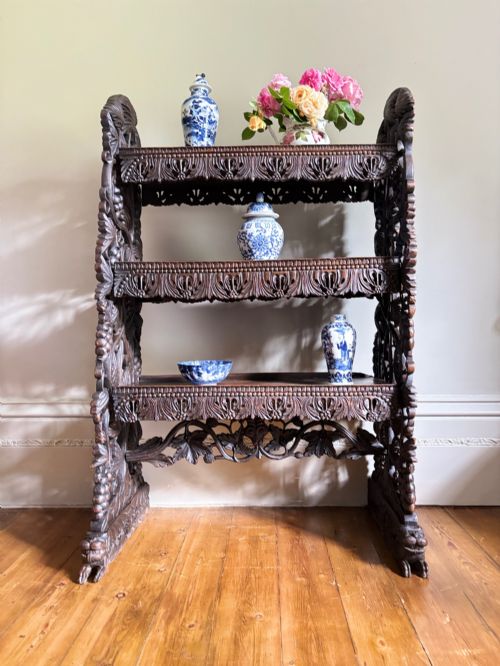
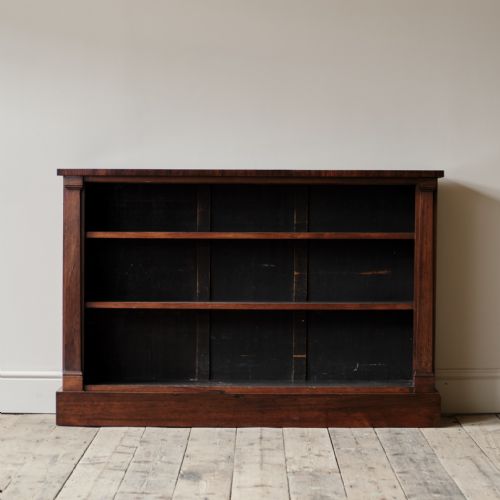
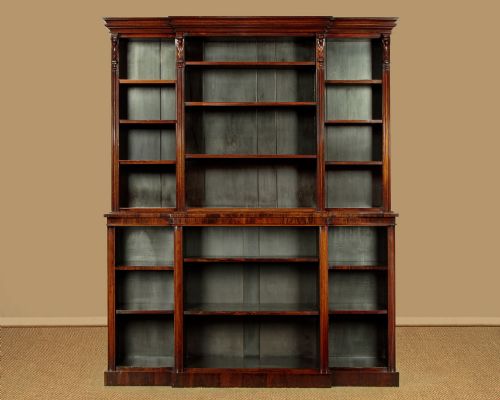
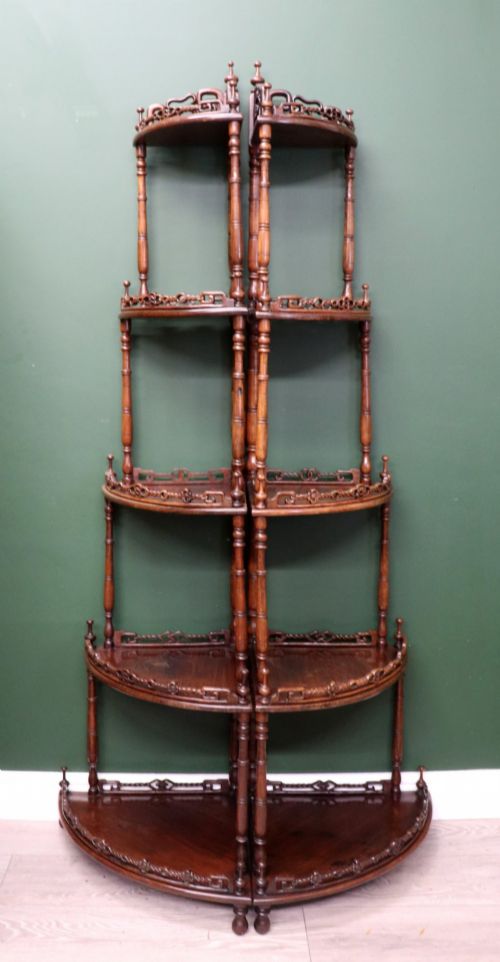
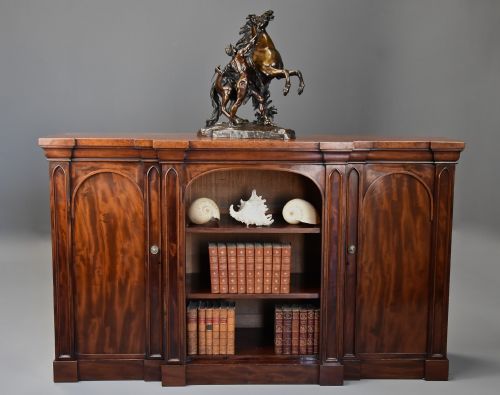
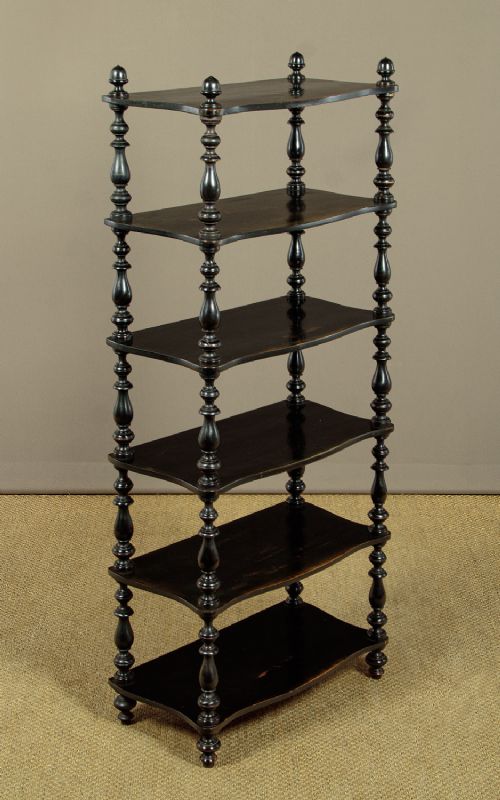
Mid 19th century shelves encompass various forms including open bookcases, multi-tiered etageres, whatnots, and wall-mounted brackets from the Victorian era. Buyers frequently encounter mahogany and rosewood constructions designed for domestic display and storage.
Materials and Construction
Cabinet makers utilised dense hardwoods such as mahogany, rosewood, walnut, and padauk, often applying flame mahogany veneer or burr walnut to prominent surfaces. These timbers provided the structural integrity required for multi-tiered étagères and heavy library bookcases.
Metal components like brass mounts and fittings frequently appeared on pieces executed in the French manner, while glass panels were incorporated into cabinets and bookcases. Joinery techniques ensured sturdy tier supports, wall brackets, and adjustable shelving arrangements.
One exceptional maple bookcase was specifically drawn up for Kiddington Hall by an architect famed for rebuilding the Houses of Parliament.
Evaluating Quality
Quality rests upon the selection of timber figures, such as flame mahogany or burr walnut, and the precision of carved details like corbels and applied mouldings. Superior examples exhibit balanced proportions and refined brass mountings executed by skilled workshops.
The architectural complexity of the piece, from simple wall shelves to grand breakfront libraries with Gothic influence or bespoke maker attribution, dictates the upper tier of craftsmanship. Robust foundational construction paired with harmonious secondary woods distinguishes finer items.
Sir Charles Barry·Druce & Co·Holland & Sons
The Mid 19th Century Shelves Glossary
- Étagère
- A set of open tiered shelves used for displaying small ornaments and decorative objects. These freestanding stands typically feature multiple levels supported by slender columns.
- Whatnot
- A multi-tiered piece of movable furniture designed for storage or display in nineteenth-century interiors. It frequently incorporates three or more tiers supported on turned uprights.
- Breakfront
- A piece of furniture featuring a central section that projects forward from the flanking wings. This architectural arrangement adds depth and visual interest to large bookcases and side cabinets.
- Corbel
- A structural or decorative bracket projecting from a wall to support a weight above. In Victorian shelving, carved wooden corbels often accent the underside of cornices or shelves.
- Palisander
- A dense, dark timber resembling rosewood, prized for cabinet making and decorative veneers. It provides a rich, heavily grained surface on mid-century case furniture.
Mid 19th Century Shelves: Frequently Asked Questions
Where were etageres placed in Victorian homes?
These tiered display stands sat in drawing rooms, parlours, and sitting rooms where hosts exhibited porcelain, small sculptures, and books. Their open structure made them ideal for perimeter placement against walls or in corners.
Smaller wall-mounted versions and hanging shelves utilised vertical space in tighter areas, while freestanding étagères and whatnots stood near seating groups to hold decorative items within easy reach.
What is the difference between a whatnot and an etagere?
A whatnot generally refers to a multi-tiered freestanding utility stand used for general display and storage in Victorian rooms. An étagère is often associated with French-inspired design, specifically highlighting decorative tiered platforms for ornaments.
In practice, nineteenth-century makers and contemporary dealers often use the terms interchangeably for tiered shelving units. Both forms rely on slender uprights to separate horizontal display boards.
Can these shelves support heavy modern books?
Open bookcases and library shelves constructed from solid hardwoods like mahogany and walnut were originally engineered to hold heavy volumes. Their robust timber frames provide substantial weight capacity for everyday book storage.
Wall-mounted shelves and delicate tiered étagères require careful assessment of their original wall fixings and bracket strength. Ensure wall brackets and hanging fixtures are securely anchored before loading lighter shelves with dense modern books.