
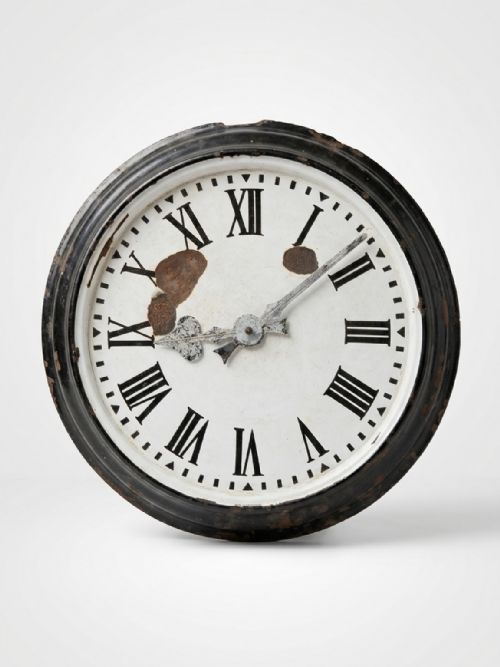
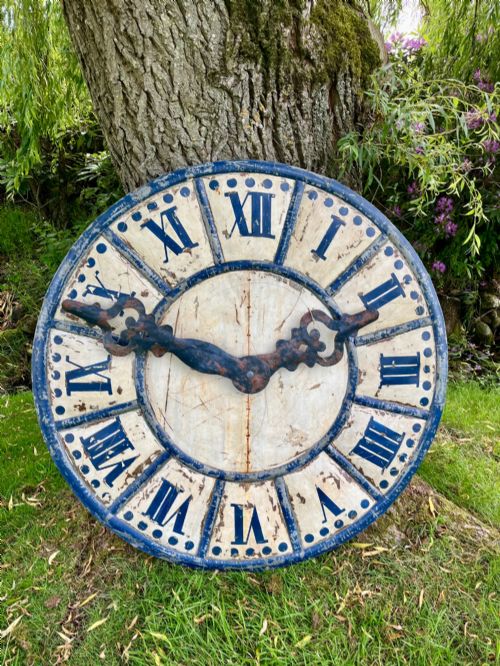


Metal Vintage Wall Clock
These metal vintage wall clock pieces bring industrial presence and utility to a room through large dials, exposed frames and factory heritage.
Metal Vintage Wall Clock
When you search for a metal vintage wall clock, you encounter heavy-duty timepieces, oversized tower dials and repurposed station clocks originating from the nineteenth and twentieth centuries. The selection spans utilitarian French turret faces, English transport board pieces and industrial factory markers dating from the eighteen-sixties through to nineteen-fifty.
The forms vary considerably across the listings, ranging from functional wall clocks and copper or enamel clock faces without hands to double-sided trade signs and architectural salvage. French industrial pieces and items associated with makers such as Smiths dominate the domestic and commercial wall clock formats.
Most examples lean towards industrial, art deco and architectural salvage styles, utilising materials salvaged from public buildings, transport networks and commercial premises. A buyer is equally likely to find a refurbished station clock as a standalone painted clock face display.
How they were made
Construction techniques reflect heavy industrial manufacturing, architectural salvage adaptation and traditional clockmaking. Bakelite and oak appear alongside painted iron and metal housings, reflecting the transition from mid-nineteenth-century architectural elements to mid-twentieth-century electrical movements.
The listings feature pieces spanning the 1860s to the 1950s, utilising materials such as enamel, zinc, copper, iron and Bakelite across industrial and art deco styles.
What varies in quality
Quality in these pieces depends on the preservation of original signage, the integrity of the metal casing and the authenticity of the dial. Items that retain their original paint, unaltered enamel surfaces and manufacturer markings hold greater documentary interest.
The distinction also lies in whether the piece functions as a working clock or survives purely as a decorative clock face display or architectural salvage element. Original provenance tied to transport boards, jewellery shops or London institutions elevates the character of the object.
The Metal Vintage Wall Clock Glossary
- Turret clock face
- The visible exterior dial of a large clock originally mounted on a tower, municipal building or institution. These large faces are frequently salvaged and displayed as standalone wall art.
- Station clock
- A robust timepiece designed for railway platforms or transport hubs, engineered for high legibility and durability. They often feature prominent metal bezels and clear painted numerals.
- Cartel wall clock
- An ornamental wall clock enclosed in a scrollwork or asymmetrical frame, typically associated with French decorative styles. These contrast with strict industrial pieces through more ornate metalwork.
- Trade sign clock
- A double-sided sign incorporating a clock face, originally hung outside a commercial premises to attract customers. They combine advertising graphics with functional timekeeping.
- Architectural salvage
- Building components, fixtures and structural elements rescued from demolition or refurbishment. In this context, it covers large clock faces and metal fittings removed from historic buildings.
Metal Vintage Wall Clock: Frequently Asked Questions
Are these clocks suitable for home use?
Many of these pieces function as working wall clocks suitable for everyday interior display in kitchens, living spaces or studies. Working examples include electric and mechanical movements from mid-century makers.
Other listings comprise standalone clock faces or architectural salvage elements meant purely as visual wall decor rather than timekeepers.
How do I hang a heavy metal wall clock?
Due to the substantial use of iron, steel, copper and glass, these clocks require secure wall fixings anchored directly into studs or masonry. Professional installation is advisable for oversized tower clock faces and heavy station clocks.
Lighter dial displays and smaller cartel clocks can standardly mount using heavy-duty picture hooks rated for the specific weight of the object.
What periods do these clocks come from?
The selection spans from the mid-nineteenth century through to the nineteen-fifties, encompassing Victorian, Edwardian and mid-century eras. You will find items dated to the eighteen-sixties, eighteen-eighties and various decades of the twentieth century.
Art deco and industrial design influences are particularly prevalent among the nineteen-thirties and nineteen-forties transport and hospital clocks.
How do I identify a transport board clock?
Transport board clocks often feature specific institutional markings, agency names or reference numbers painted directly onto the dial or bezel. Smiths of London supplied many regulated clocks to British transport networks during the mid-twentieth century.
These pieces were built to strict municipal specifications for legibility and durability in public railway and institutional environments.