



Metal Sign Board
These metal sign board pieces are robust commercial and trade artefacts that bring authentic character and history to any interior.
Metal Sign Board
When you search for a metal sign board, you encounter a range of durable advertising and trade markers from the nineteenth and twentieth centuries. These pieces encompass everything from large pictorial food advertising to tradesmen notices and architectural plaques.
The selections available here lean heavily toward early twentieth century commercial examples, alongside mid-century industrial items and a smaller number of nineteenth century pieces. Forms include wall signs, advertising plaques, and specialised trade notices made for shops and businesses.
Buyers frequently find iron, steel, and sheet metal surfaces finished with paint or vitreous enamel. These robust materials ensured the signs could withstand external environments while maintaining clear lettering and imagery for the public.
How they were made
Manufacturing methods relied on shaping sheet metal, cast iron, or steel to create a rigid substrate for display. Artisans applied protective and decorative finishes directly to the metal surface to ensure longevity.
Vitreous enamel involved fusing powdered glass to metal at high temperatures, creating a glossy, weather-resistant coloured coating. Painted metal and cast iron alternatives utilised hand-applied lettering and pictorial details directly onto prepared metal plates.
Metal Sign Board Retail Price Guide 2026
Typical asking prices for metal sign board among the pieces listed under this phrase on Sellingantiques today, from the lower quarter to the upper quarter. They describe what is for sale here now, not the wider market.
Materials across these listings span iron, steel, sheet metal, and vitreous enamel alongside traditional painted finishes.
What varies in quality
Quality in these commercial pieces rests on the crispness of the typography, the complexity of any pictorial elements, and the original preservation of the enamel or paint. Signs featuring detailed corporate branding or specific trade information display superior graphic design.
The integrity of the mounting points and the thickness of the base metal also distinguish standard utility boards from finer architectural or pictorial plaques.
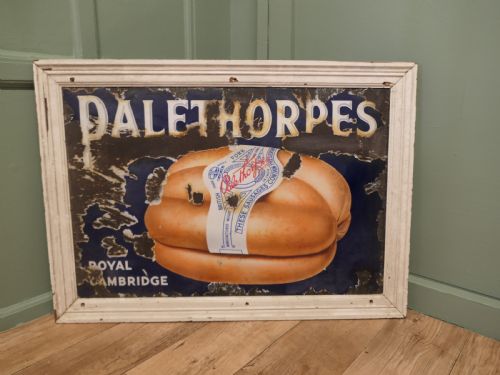
Palethorps Royal Cambridge·Wilmot
The Metal Sign Board Glossary
- Vitreous Enamel
- A material created by fusing powdered glass to a metal substrate at high heat. This process produces a durable, glossy coloured surface that resists weathering.
- Pictorial Sign
- An advertising board that incorporates illustrative images rather than text alone. These pieces often feature products or brand mascots.
- Trade Sign
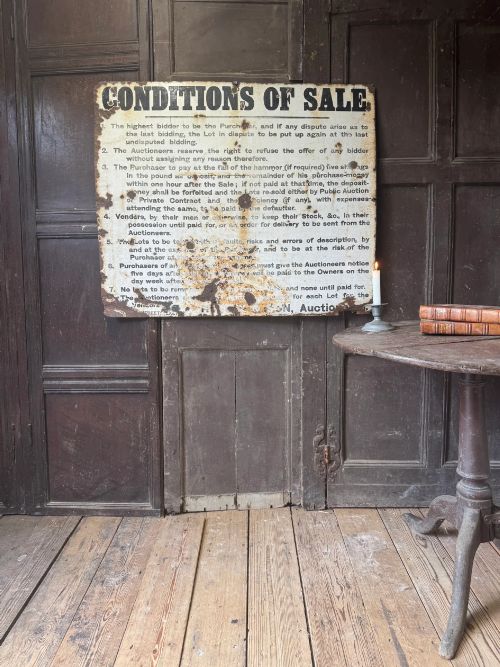
- A marker used by a specific profession, shop, or tradesman to indicate a place of business. Examples include dentist notices and painter plaques.
- Cast Iron
- An iron-carbon alloy poured into a mould to form rigid objects. It provides heavy structural stability for architectural plaques.
- Architectural Plaque
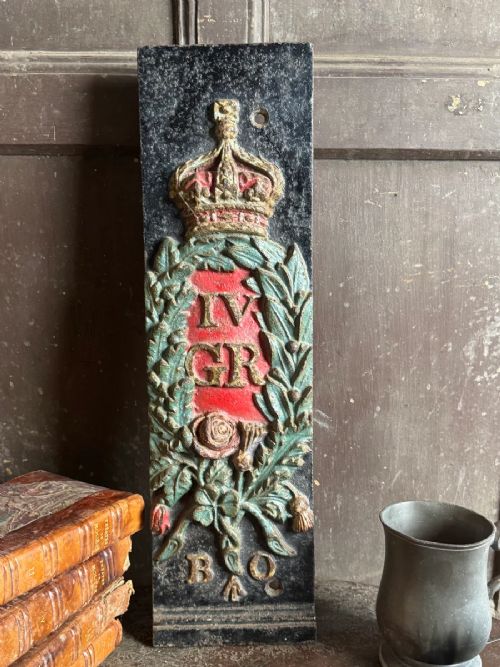
- A rigid marker designed to be mounted on a building exterior or interior wall. These often denote official bodies or organizational authority.
Metal Sign Board: Frequently Asked Questions
How were these metal signs displayed originally?
These boards were typically mounted on exterior shopfronts, interior walls, or architectural facades to attract passing trade and identify businesses.
Many featured pre-drilled fixing holes or integrated brackets designed to secure them firmly to brickwork or timber structures.
What materials are most common on these boards?
The listings show a prevalence of sheet metal, iron, and steel surfaces treated with either vitreous enamel or protective paint.
Enamelled versions offer a glossy, hard-wearing finish, while painted metal and cast iron provide a traditional textured appearance.
How do I identify the period of a sign?
Dating relies on the typography style, manufacturing technique, and the specific trade or brand named on the piece. Early twentieth century examples often use bold commercial lettering and vitreous enamel.
Nineteenth century pieces tend to utilise cast iron substrates and hand-painted details associated with specific trades and institutions.
Can these signs be hung on modern walls?
Most pieces retain their original mounting configurations, such as edge holes or hanging loops, making them straightforward to display on solid interior walls.
Due to the substantial weight of iron and enamelled steel, secure fixings suited to the specific wall type are essential.