



Metal Shelving Unit
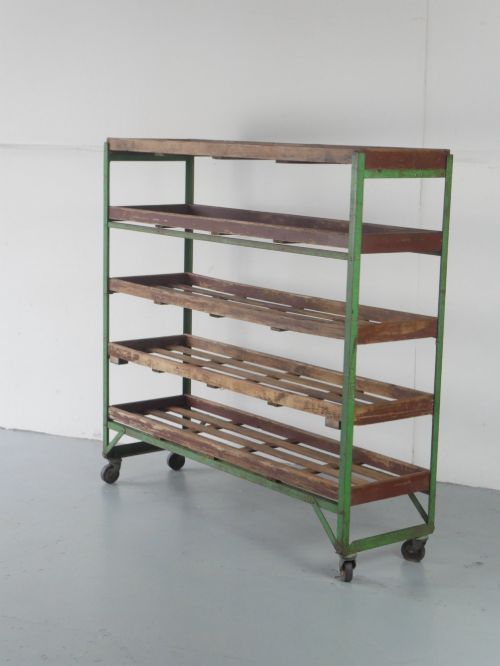
A metal shelving unit brings hard utility and enduring structure into a modern room, offering open tiers built for storage and display.
Metal Shelving Unit
A metal shelving unit takes several forms across these listings, spanning baker's racks, display shelving, plant stands, kitchen dressers and standard shelving units. These pieces emerge from periods including the nineteenth century, Victorian era, eighteen-sixties, nineteen-hundreds, nineteen-tens and nineteen-twenties.
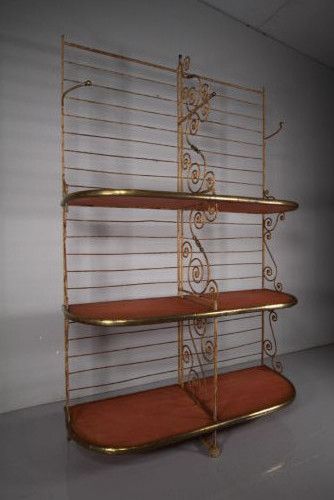
The aesthetic leans heavily toward French industrial, French country, French provincial, French chateau and general industrial styles. Buyers encounter Parisian boulangerie racks alongside English scroll-work iron bakery racks and Victorian shop display stands.
Originating largely from commercial and domestic spaces, these survivors served practical roles in bakeries, shops and field kitchens before entering the antique market. The most common iteration on this page is the French baker's rack or boulanger rack constructed for heavy daily use.
How they were made
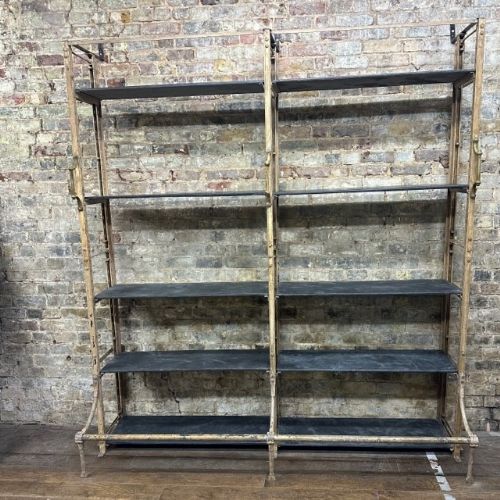
Construction relies primarily on robust metals such as wrought iron, cast iron, steel, iron, painted steel and painted metal, occasionally paired with wooden elements like pine or topped with slate shelving. Blacksmiths and metalworkers shaped these materials through forging, casting and riveting to build rigid frames capable of bearing substantial weight.
Decorative touches appear in scroll-work iron and stamped maker details, while surfaces carry original paint finishes or the natural distress accumulated over decades of service. Field kitchen dressers and boulanger racks combine metal mesh or wirework with sturdy uprights designed for drainage and ventilation.
Metal Shelving Unit Retail Price Guide 2026
Typical asking prices for metal shelving unit among the pieces listed under this phrase on Sellingantiques today, from the lower quarter to the upper quarter. They describe what is for sale here now, not the wider market.
Some French boulanger racks retain stray flour dust settled deep in their scroll-work from decades in active Parisian bakeries.
What varies in quality
Quality rests in the integrity of the original construction and the heaviness of the gauge used for the iron or steel frame. Pieces featuring intricate scroll-work, stamped maker marks or specialist materials like slate shelves stand above simpler utilitarian counterparts.
The character of the surface patina distinguishes an honest, untouched finish from later respray work. Structural balance and the original working condition of folding mechanisms or fitted wire trays also dictate the standing of an individual rack.
The Metal Shelving Unit Glossary
- Boulanger rack
- A heavy metal shelving unit originating from French bakeries, typically featuring multiple open tiers for cooling bread and pastries. These units often incorporate decorative ironwork and mesh sides.
- Baker's rack
- A versatile storage piece historically used in baking preparation, combining metal frames with open shelves and sometimes a work surface. They appear frequently in nineteenth-century French and English variants.
- Wrought iron
- Iron that has been heated and hammered into shape by hand, resulting in a fibrous structure and high resistance to fatigue. It forms the backbone of many antique scroll-work racks.
- Shop display stand
- A commercial shelving structure built for retail environments during the Victorian period. These pieces prioritize visibility and sturdy assembly for customer-facing displays.
Metal Shelving Unit: Frequently Asked Questions
How were metal shelving units used originally?
These units served demanding commercial environments like Parisian bakeries, Victorian shops and military field kitchens where robust storage was essential. Bakers utilised them to cool bread loaves, while shopkeepers displayed goods on open tiers.
Over time, many of these utilitarian frames migrated into domestic spaces for pantry storage or general display. Their open design allowed for ventilation and quick identification of contents.
What periods do these metal shelves come from?
The pieces span from the mid-nineteenth century through the early twentieth century, encompassing Victorian and Edwardian eras. French provincial and industrial workshops produced the majority of the surviving boulanger racks seen here.
Dates range from eighteen-sixty items up to nineteen-twenty industrial shelving units. Each era brings distinct manufacturing techniques, from hand-forged scroll-work to early twentieth-century steel fabrication.
How do I care for a vintage metal shelf?
Maintain the original surface by dusting gently with a dry cloth and avoiding harsh chemical cleaners that might strip historic paint or patina. Wax can be applied sparingly to bare iron or steel to inhibit oxidation.
Ensure the unit rests on a level surface, as heavy iron and slate components require stable weight distribution. Avoid placing damp items directly onto unprotected historic metal surfaces for extended periods.
What materials are typical for these racks?
Construction relies heavily on wrought iron, cast iron, steel and painted metal frames built to withstand heavy daily wear. Some variations incorporate pine woodwork or dense slate shelving slabs for specific utility.
French pieces frequently utilise wire mesh panels and decorative scroll-work alongside the primary iron structure. This combination of materials provided both structural strength and practical ventilation.