



Metal Pub Tankard
These metal pub tankard pieces span the Georgian and Victorian eras, offering robust tavern drinking vessels and measures forged from pewter, brass, and copper.
Metal Pub Tankard
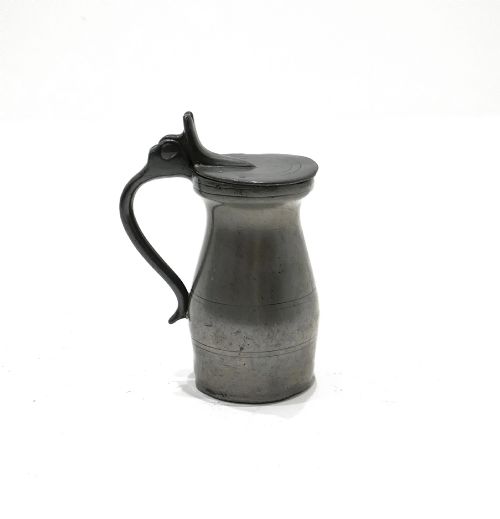
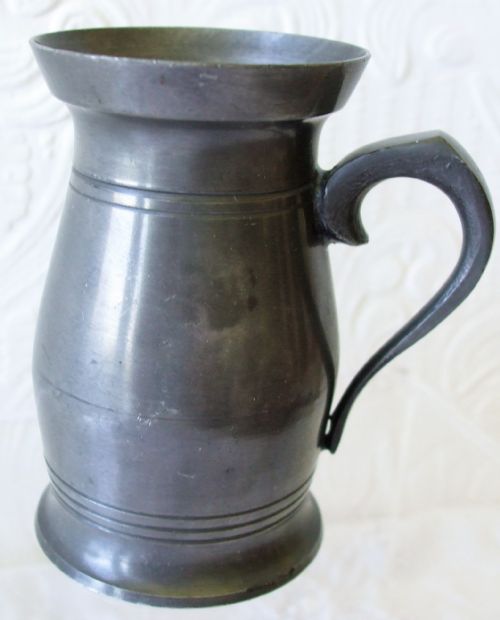
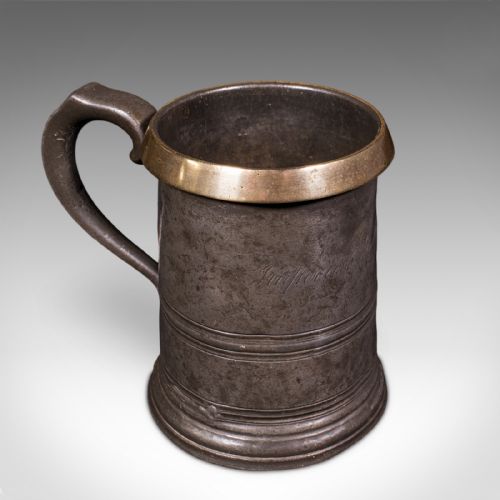
When you search for a metal pub tankard, you encounter functional drinking vessels and public house measures originating from the eighteenth and nineteenth centuries. These pieces encompass quart jugs, half gill spirit measures, bell-shaped tankards, and spire flagons.
The versions you are most likely to meet on this page are Victorian pewter quart tankards and copper measures. Many carry capacity marks such as VR or imperial verification stamps, reflecting their history in English and Irish public houses.
How they were made
These items rely primarily on pewter, copper, and brass, shaped into heavy drinking vessels and graduated measure sets. Pewter is cast and sometimes engraved, seen in pieces bearing maker details and regional inscriptions.
Makers utilised durable sheet and cast metals suitable for heavy tavern use, incorporating flat lids, sturdy handles, and spire flagon profiles. Verification marks and royal ciphers are often stamped directly into the metal surface.
Metal Pub Tankard Retail Price Guide 2026
Typical asking prices for metal pub tankard among the pieces listed under this phrase on Sellingantiques today, from the lower quarter to the upper quarter. They describe what is for sale here now, not the wider market.
Listings feature items spanning the eighteenth and nineteenth centuries, utilising pewter, copper, and brass across various tavern measures and tankards.
What varies in quality
Quality rests in the heaviness of the metal and the crispness of touchmarks, capacity stamps, and royal ciphers. Early examples from the Georgian period show distinct casting techniques compared to later Victorian sets.
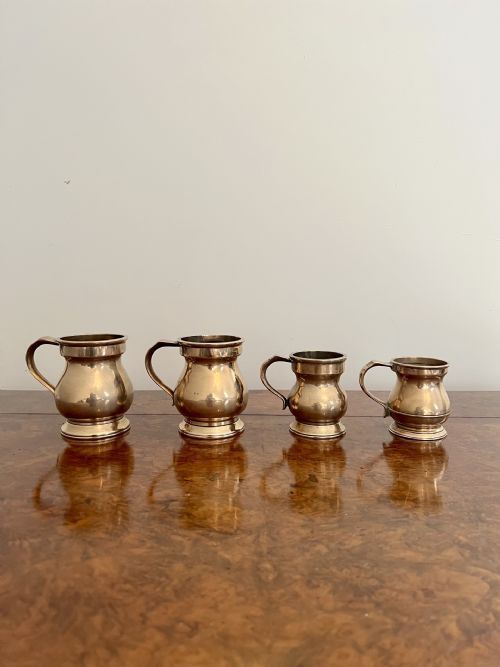
Intact sets, such as graduated groups of copper measures or matching bell-shaped quart tankards, command greater interest than isolated vessels. Crisp engraving and legible maker attributions elevate individual pieces above standard tavern utility ware.
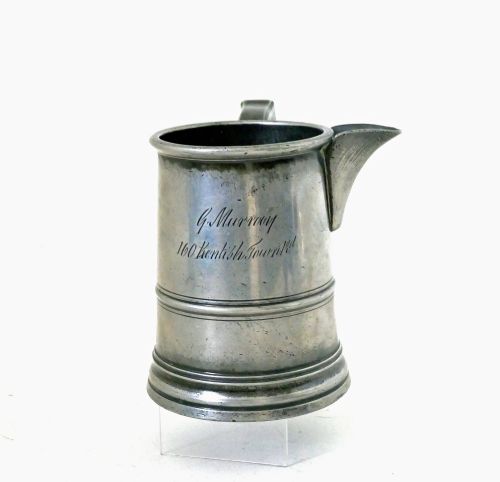
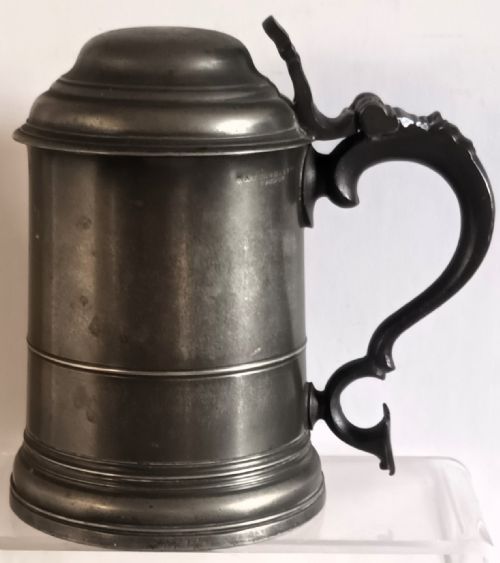
Watts and Harton·G Murrouy
The Metal Pub Tankard Glossary
- Pewter
- A malleable metal alloy consisting principally of tin, used widely for tavern tankards and measures. It provides a dull silver appearance that patinates with age.
- Quart
- An imperial unit of capacity equivalent to two pints, frequently stamped on large public house drinking vessels. Quart tankards served as standard ale containers in Victorian pubs.
- Gill
- A unit of liquid capacity equal to a quarter of a pint, often seen on small spirit measures. Half gill and gill sizes regulated public house spirits.
- Spire Flagon
- A tall, tapered vessel with a lid, often possessing large capacity such as half a gallon. These monumental pieces served public houses for storing and pouring liquids.
- Touchmark
- A stamp or hallmark impressed by a maker or guild onto pewterware to signify origin and standard. These marks aid in identifying makers like Watts and Harton.
Metal Pub Tankard: Frequently Asked Questions
What is a pewter quart tankard?
A pewter quart tankard is a large drinking vessel holding two pints of ale, commonly used in nineteenth-century English public houses. These heavy vessels often feature verification stamps and sturdy handles.
They represent traditional tavern barware designed for robust daily service. Collectors prize them for their historical touchmarks and honest wear.
What are spire flagons used for?
Spire flagons were large capacity vessels, sometimes holding half a gallon, utilised in public houses for holding and pouring bulk liquids. Their tall, tapering profile distinguishes them from standard drinking tankards.
They function today as impressive display pieces of breweriana. Their substantial size and flat lidded designs mark them out among early metalware.
How should I display antique pub tankards?
Antique pub tankards and measures sit well on open wooden shelves, sideboards, or within dedicated breweriana displays. Their metallic surfaces contrast effectively against timber backgrounds.
Keep them away from direct moisture and handle them carefully to preserve their original surface patination. Occasional gentle dusting maintains the finish without removing historical character.