



Metal Hot Water Urn
A metal hot water urn brings substantial presence and period character to a room, serving hot water with architectural grace.
Metal Hot Water Urn
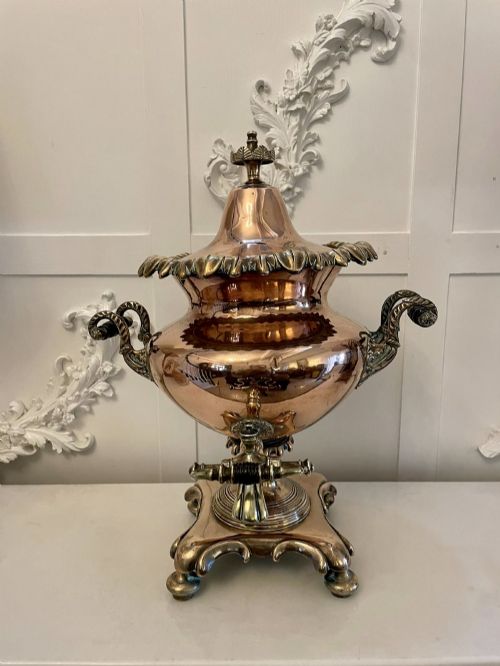
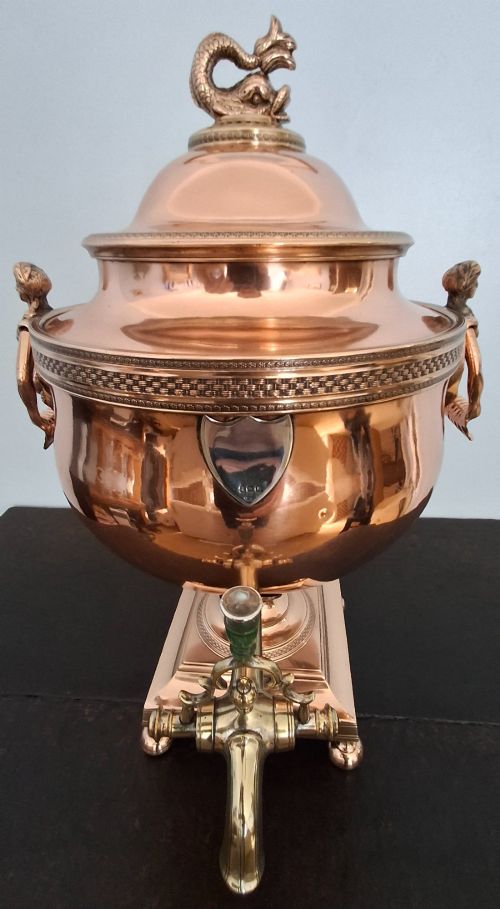
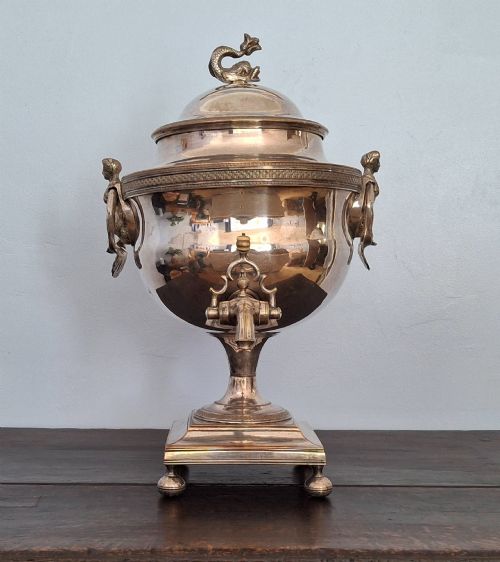
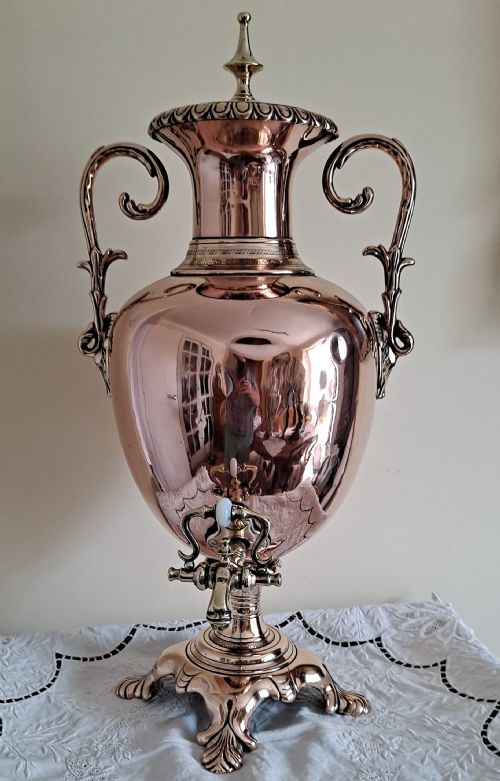
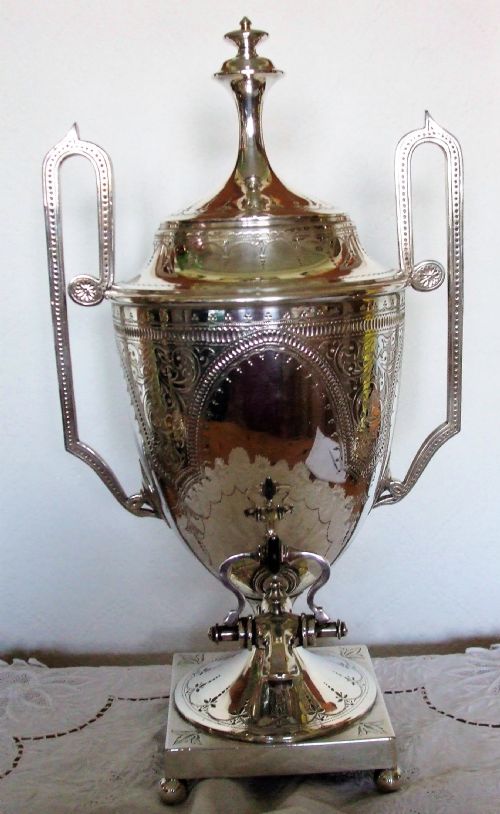
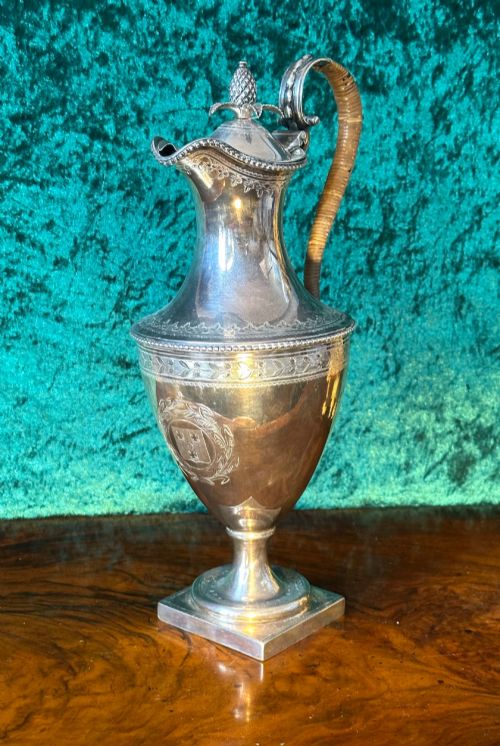
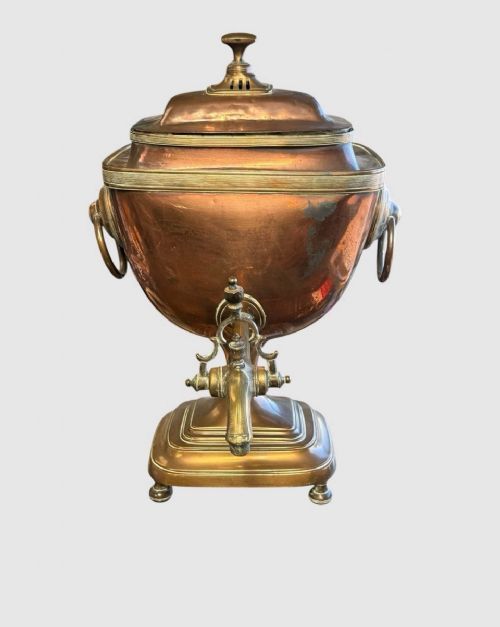
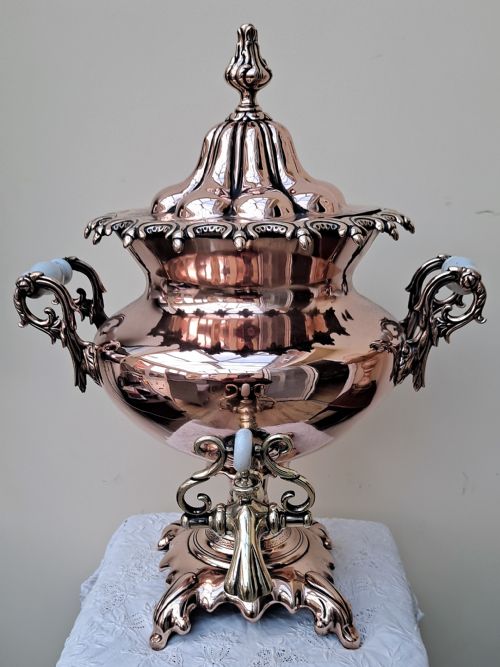
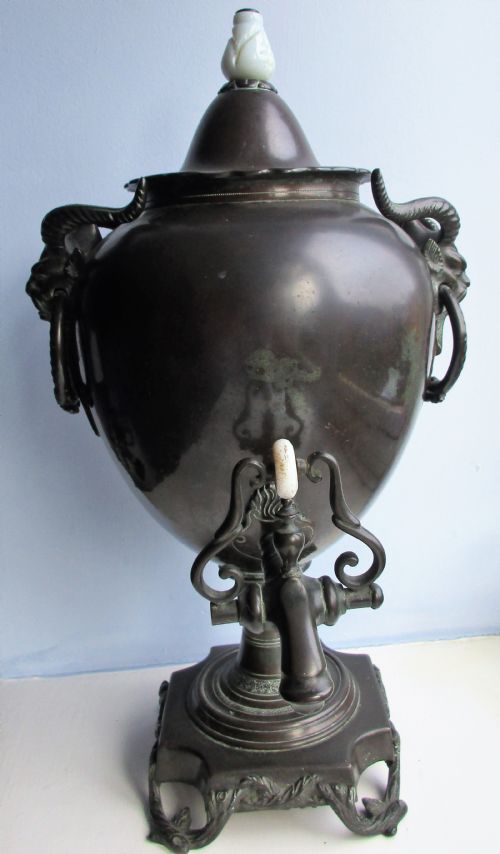
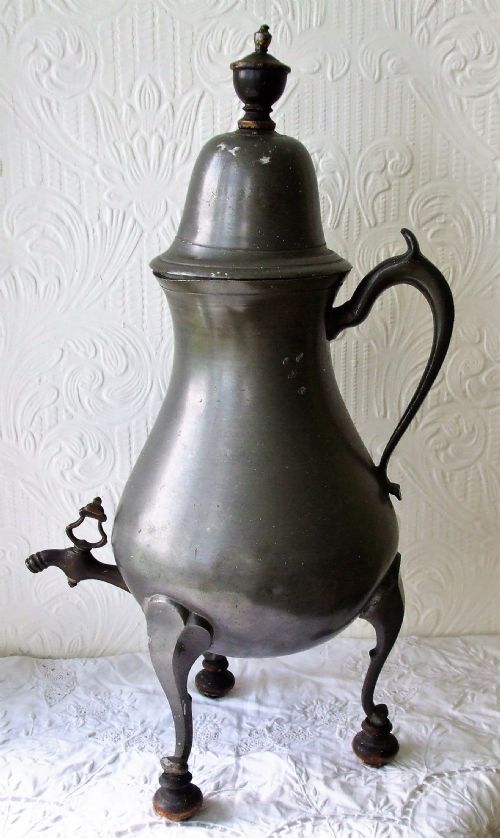
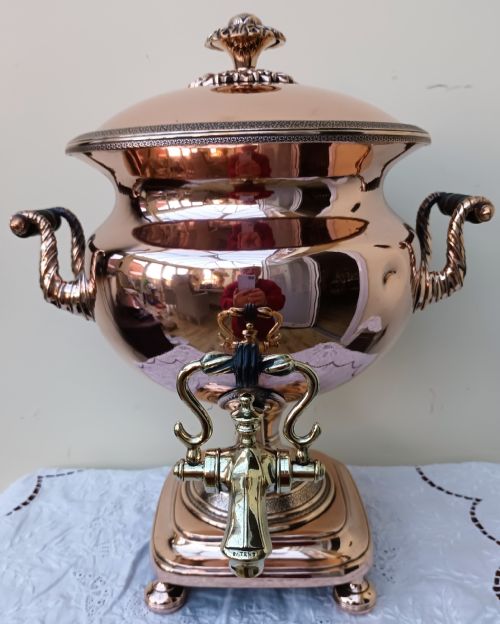
A metal hot water urn is a large vessel designed for heating and dispensing water, appearing primarily as tea urns, samovars, and coffee urns across this selection. Buyers frequently encounter copper, brass, and silver-plated examples reflecting periods from the eighteenth century through to the Edwardian era.
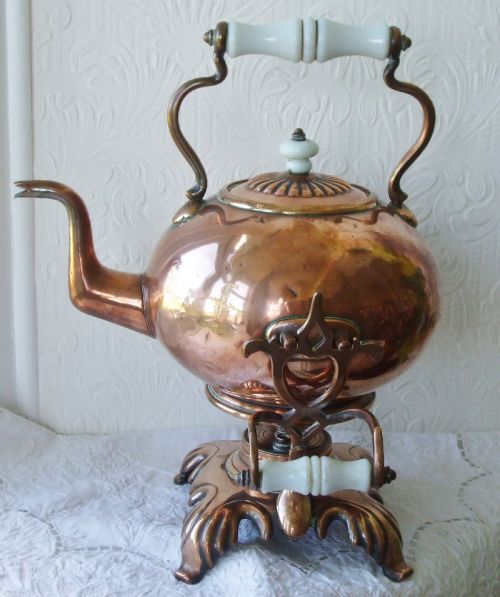
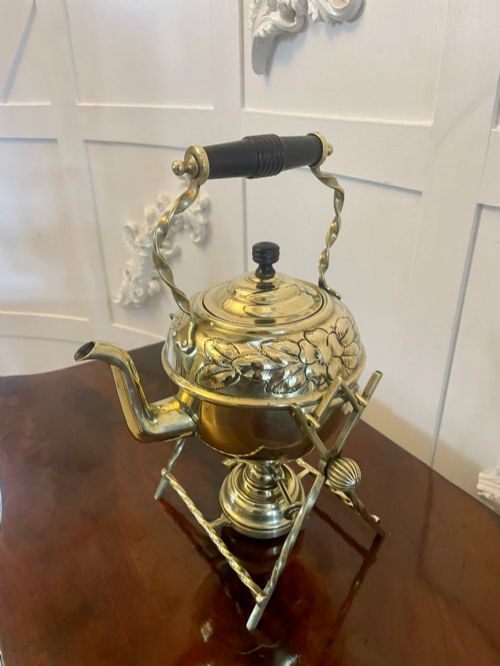
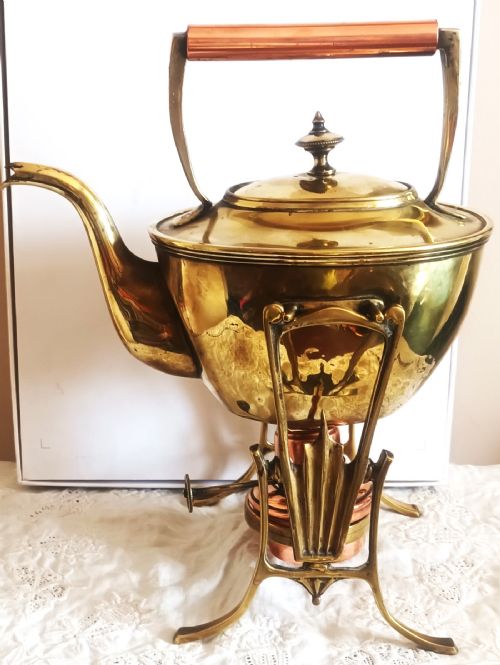
The forms span formal Georgian neoclassical designs, robust Regency styles, and ornate Victorian interpretations. Spirit kettles on stands also feature prominently among these hot water vessels, offering smaller scale utility alongside the substantial samovars.
Materials and construction
Metals such as copper and brass form the structural body of most pieces, often paired with bell metal or bronze for strength and decorative contrast. Silver plate provides a brighter finish on select Georgian and Victorian items, while ebonised wood and bone appear on handles and spigot knobs for thermal insulation.
Craftsmen shaped these vessels through disciplined metalworking techniques, combining sheet metal hammering, casting for handles and spigots, and careful soldering. Pontypool ware incorporates japanned finishes, applying layered varnishes to metal surfaces to create durable, lustrous surfaces.
Metal Hot Water Urn Retail Price Guide 2026
Typical asking prices for metal hot water urn among the pieces listed under this phrase on Sellingantiques today, from the lower quarter to the upper quarter. They describe what is for sale here now, not the wider market.
Listings span the Georgian, Regency, and Victorian periods, showcasing materials including copper, brass, silver plate, and pewter.
Judging execution and integrity
Quality rests in the heaviness of the metal gauge and the crispness of cast decorative details such as handles, feet, and spigots. Superior examples retain original fittings, including internal heating tubes and matching tap components, rather than replacement parts.
The refinement of surface finish and the harmony of proportion distinguish masterwork pieces from standard utility items. Subtle design elements, such as finely turned wood handles and balanced neoclassical shapes, elevate the visual impact.
William Soutter And Sons·Walker And Hall·Benetfink And Co
The Metal Hot Water Urn Glossary
- Samovar
- A heated metal container traditionally used to boil and heat water in Russia and throughout Europe. These vessels typically include an internal central tube for hot coals or a heating element.
- Spirit Kettle
- A small kettle mounted on a metal stand with an integrated spirit burner underneath. This setup keeps water hot at the table during tea service.
- Pontypool Ware
- British metalware finished with a japanned lacquer technique developed in Wales. It produces a smooth, glossy surface often adorned with gilt decoration.
- Bell Metal
- An alloy of copper and tin traditionally used for bells and durable vessel fittings. It offers a bright tone and robust structural integrity.
- Silver Plate
- A thin layer of silver applied to a base metal substrate such as copper or brass. This method provided the luxury appearance of solid silver at a manageable scale.
Metal Hot Water Urn: Frequently Asked Questions
How do I use a metal hot water urn today?
These historical vessels function primarily as decorative focal points on sideboards or tables. Many retain their original taps and internal compartments, though modern use requires careful assessment of historical linings.
Collectors generally display them as sculptural examples of historical metalwork rather than utilitarian kitchen appliances. Polishing depends on personal preference regarding copper and brass patina.
What is the difference between a samovar and a tea urn?
A samovar specifically incorporates an internal vertical cylinder for heating elements or charcoal, though the terms often overlap in historical records. Tea urns generally rely on external heat sources or simply hold pre-heated water for service.
Both forms share similar tap mechanisms and sturdy pedestal bases designed for safe dispensing at the table.
How do I distinguish Georgian from Victorian urns?
Georgian urns display restrained neoclassical proportions, urn-like bodies, and delicate handles reflecting ancient architectural influences. Victorian pieces frequently embrace heavier ornamentation, larger proportions, and mixed metals like copper paired with brass.
Stylistic shifts toward Arts and Crafts or Edwardian simplicity emerge in later nineteenth and early twentieth century items.
Are spirit kettles different from tea urns?
Spirit kettles are smaller vessels suspended on dedicated metal stands above a small fuel burner. Tea urns are typically larger, fixed-base containers designed to serve multiple guests from a sideboard.
Both categories utilise similar brass and copper materials with insulating handle details.