
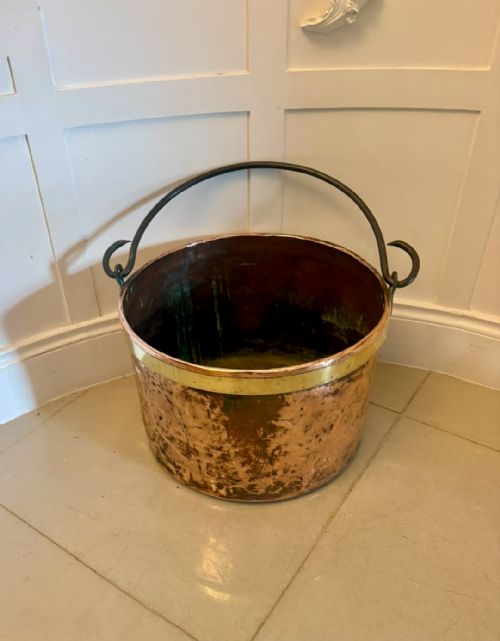


Metal Hearth Log Bin
A metal hearth log bin is a sturdy fireside vessel for fuel storage, combining utility with decorative presence near the hearth.
Metal Hearth Log Bin
A metal hearth log bin serves the functional purpose of holding firewood, kindling, or coal beside the fireplace while adding a distinct decorative element to the room. When searching this phrase, buyers encounter vessels designed for domestic hearth management, often doubling as planters or general storage.
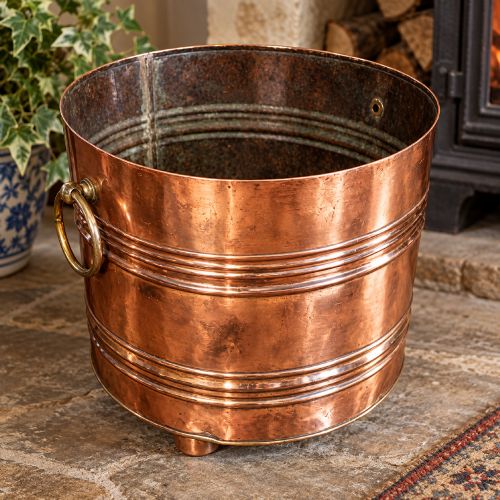
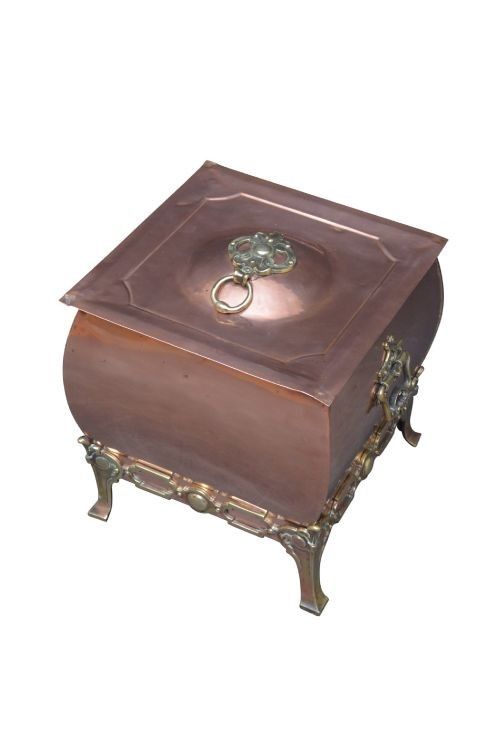
The pieces represented span from the Georgian period through the Victorian and Edwardian eras into the early twentieth century. Common forms include cylindrical buckets, scuttles, cauldrons, and rectangular boxes intended to sit neatly on the hearth.
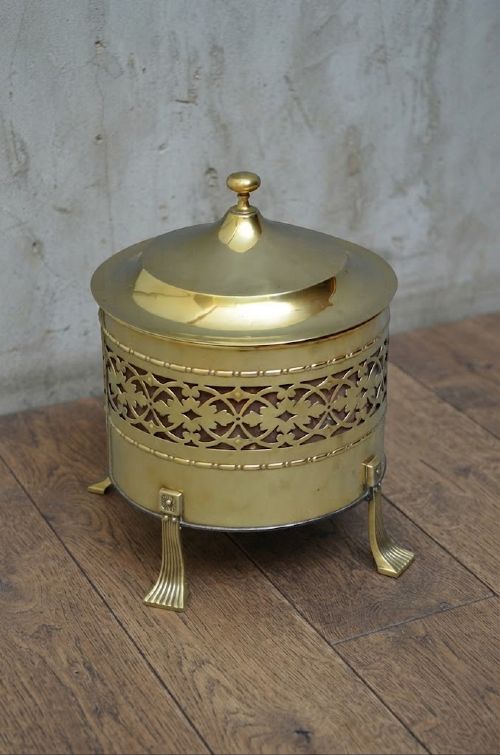
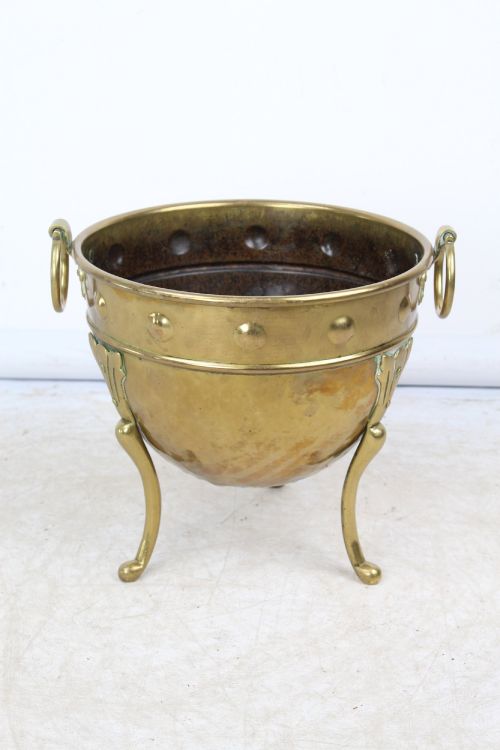
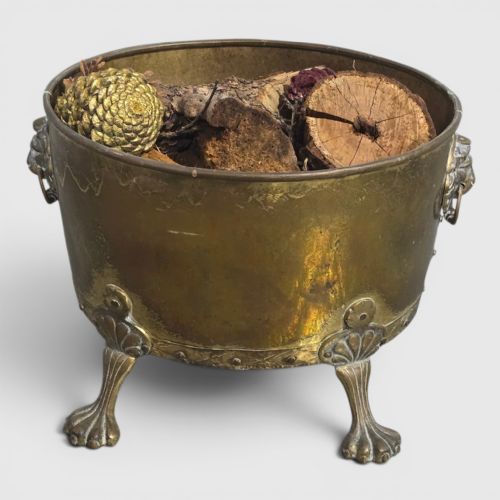
Makers and manufacturers produced these items in various regional styles, encompassing English and French examples alongside pieces bearing the distinct hallmarks of the Arts and Crafts movement. The most frequent versions on this page are copper and brass vessels from the nineteenth century, often featuring riveted construction or decorative fretwork.
How they were made
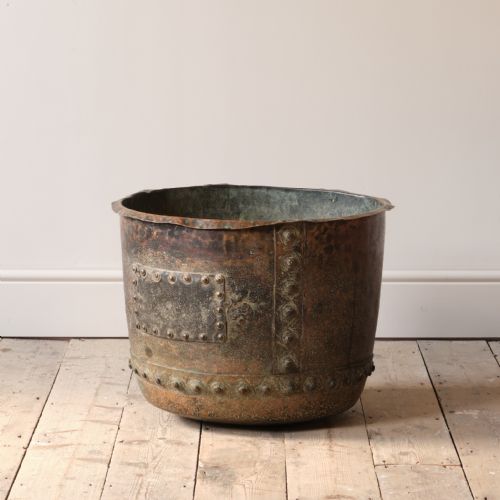
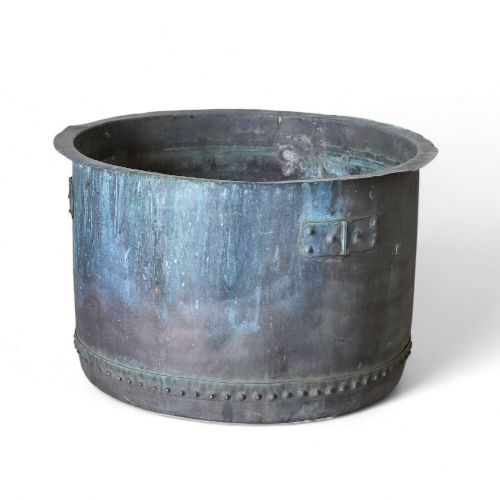
Metals form the core of these objects, with copper and brass appearing most frequently alongside wrought iron and tin. Smiths and metalworkers shaped sheet metal by hand, joining the seams with visible hand-riveting to ensure strength when filled with heavy fuel.
Many items incorporate contrasting materials, such as iron frames supporting heavy copper bodies, or wooden elements like mahogany and oak used in coopered fire buckets and coal boxes. Surface finishing involved polishing, hammering, or leaving the metal with a natural patina developed over decades of use.
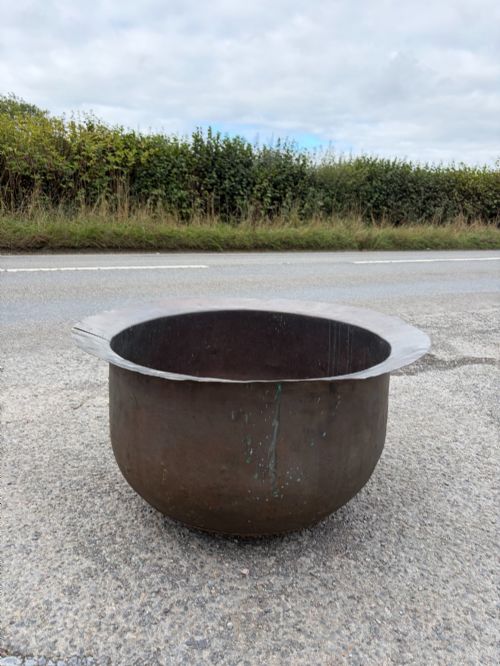
One heavy copper grain measure found a second life keeping kindling dry by the hearth.
What varies in quality
Quality rests on the weight of the metal and the integrity of the construction, distinguishing substantial hand-riveted vessels from lighter, mass-produced containers. Heavier gauge copper and brass retain their structural form better under the daily strain of holding logs and coal.
Design execution separates standard utilitarian items from finer examples, particularly where decorative details like Art Nouveau motifs, fretwork, or tavern scenes are applied. The presence of original supporting iron frames, swing handles, and internal metal liners also elevates the standing of a piece.
Henry Loveridge·Petrus Ramus·William Soutter And Sons
The Metal Hearth Log Bin Glossary
- Coal scuttle
- A container designed for carrying and storing coal, often featuring a sloping opening or a hinged lid for easy access at the fireside.
- Cauldron
- A large, rounded metal pot with a wide rim and usually a swing handle, frequently adapted from domestic brewing or boiling use to hold logs.
- Planter
- A secondary function often ascribed to these metal vessels when their water-tight properties and decorative appearance make them suitable for holding large plants.
- Coopered
- A method of construction where narrow strips of wood are bound together with metal hoops, used for wooden fire buckets and bins.
- Patina
- The surface sheen and colour acquired by metal through age, handling, and exposure to the atmosphere over many years.
Metal Hearth Log Bin: Frequently Asked Questions
What is a metal hearth log bin used for?
These vessels were originally made to store coal, logs, and kindling directly beside the fireplace for easy access during cold weather.
Today, they serve the same practical function while acting as decorative focal points in traditional and contemporary living spaces.
How do I date a copper log bin?
Dating relies on examining the construction techniques, such as hand-riveted seams which are typical of nineteenth-century work, alongside stylistic indicators like Arts and Crafts or Art Nouveau motifs.
Heavier gauge metals and specific maker marks stamped onto the brass or copper also help narrow down the period of manufacture.
Can these bins be used for plants?
Many of these metal vessels function effectively as indoor planters because their solid construction and waterproof metal bodies easily contain soil and moisture.
Their robust nature and decorative surface appeal make them suitable for housing large ferns and houseplants.
How do I clean antique copper and brass?
Maintenance generally involves dusting and gentle cleaning with a soft cloth to preserve the accumulated surface character.
Aggressive metal polishes are often avoided by collectors who prefer to maintain the natural, dark patina developed over generations.