
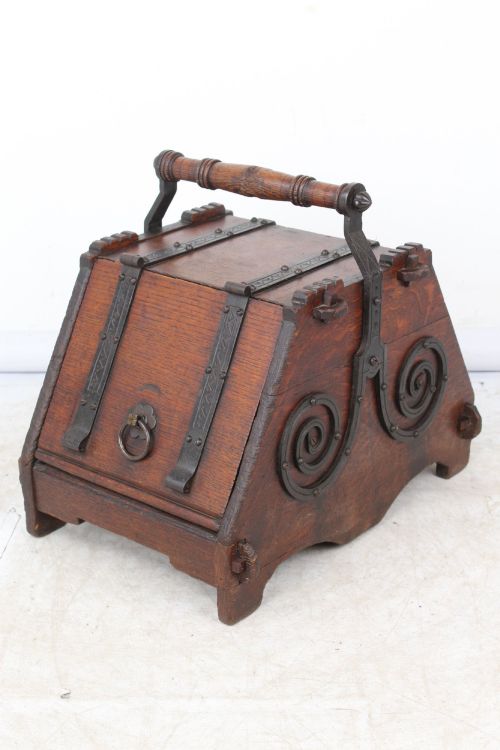


Victorian Iron Coal Box
These robust victorian iron coal box designs combine industrial utility with period character, offering a practical hearth accessory that anchors a fireside scheme.
Victorian Iron Coal Box
A victorian iron coal box brings heavy metal construction and utilitarian design directly to the hearth, serving as both storage and decorative fireside furniture. These pieces span the nineteenth century into the early twentieth, reflecting changing domestic habits from industrial workshops to decorated parlours.
You will most commonly encounter cast iron, wrought iron, and painted metal forms on this page, often paired with copper or brass details. Styles range from plain industrial items to Gothic Revival and Arts and Crafts creations.
The inventory includes specialised forms such as log bins, coal receivers, and purdoniums alongside classic scuttles and wagons. These household accessories demonstrate how utilitarian objects received careful artistic attention during the Victorian and Edwardian eras.
Materials and Construction
Makers utilised cast iron and wrought iron for structural strength, often shaping metal by hand in blacksmith workshops to create durable coal boxes and scuttles. Painted finishes and applied toleware provided protective coatings while introducing decorative colour to the utilitarian metal surface.
Copper and brass components frequently accent the iron bodies, appearing as rims, hinges, or main body panels in Arts and Crafts examples. Oak elements sometimes supplement the metal framework, particularly in hybrid log bins and storage boxes.
The listings span from 1850 through the Arts and Crafts movement into 1920, utilising iron, copper, brass, oak, and painted metal.
Evaluating Quality and Design
Quality rests upon the integrity of the metalwork, whether achieved through refined Arts and Crafts copper detailing or direct blacksmith craftsmanship. Pieces showing thoughtful integration of brass rims, painted surfaces, and robust hinges stand apart from simpler utility items.
The distinction lies in the balance between industrial function and stylistic expression, such as Gothic Revival motifs or folk art barge wear painting. Heavier construction and deliberate aesthetic choices mark the finer examples in this category.
Christopher Dresser
The Victorian Iron Coal Box Glossary
- Purdonium
- A domestic container designed for storing coal beside the fireplace, typically featuring a sloping front and a hinged lid.
- Toleware
- Metalware coated with tin or iron and painted or lacquered, frequently decorated with folk art designs.
- Barge Wear
- Traditional brightly painted folk art associated with canal narrowboats, often found decorating tin and metal household items.
- Gothic Revival
- An architectural and decorative style drawing on medieval ecclesiastical forms, prominent in nineteenth-century metalwork.
Victorian Iron Coal Box: Frequently Asked Questions
What is a purdonium?
A purdonium is a specialised indoor coal box featuring a slanted front drop-down door designed for easy coal retrieval. These containers kept fuel tidy near the fireplace.
Victorian versions often incorporated internal metal liners and carrying handles to simplify replenishment from outdoor storage.
How do I date these metal boxes?
Dating relies on stylistic clues like Gothic Revival motifs or Arts and Crafts hand-beaten copper panels. Materials such as cast iron versus painted tin also help narrow the era.
Earlier nineteenth-century pieces often display heavy blacksmith construction, while twentieth-century examples lean towards industrial utilitarian forms.
Were these used only for coal?
While primarily built for coal storage, many of these metal and iron boxes served double duty as log bins or ash containers. Some hybrid designs incorporated wine bottle holders.
Their sturdy construction made them adaptable for various hearthside and domestic storage needs across different rooms.
How do I maintain painted iron?
Keep painted iron and toleware surfaces dry and clean them gently with a soft, dry cloth to protect the original finish. Avoid abrasive cleaners that might damage folk art or painted details.
Placing them away from direct moisture prevents rust formation on exposed iron and wrought metal surfaces.