




Metal Hat Rack
These metal hat rack designs combine everyday utility with enduring period character, offering functional storage for hats, coats, and hallway essentials.
Metal Hat Rack
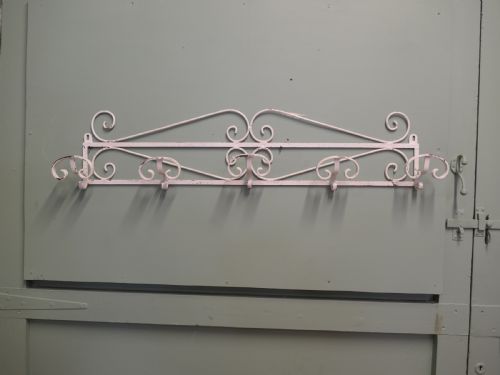
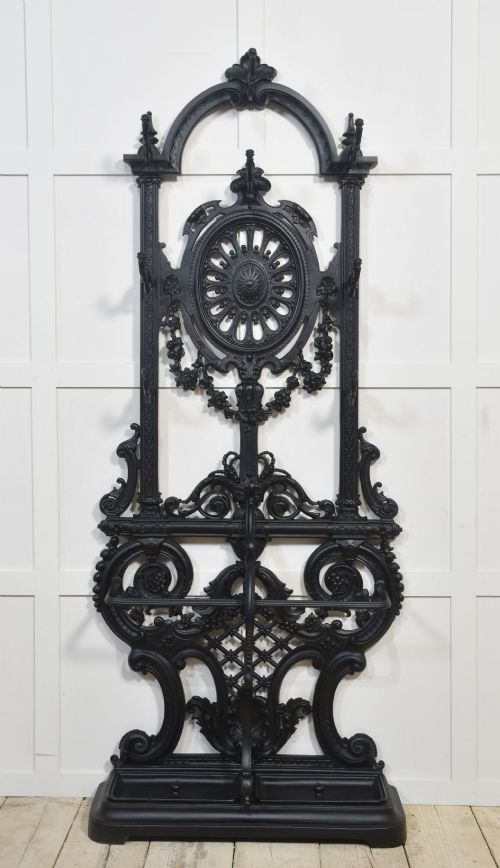
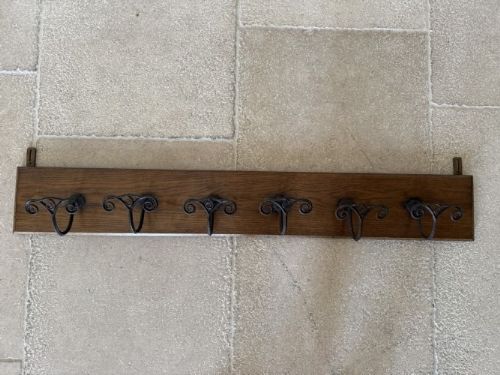
A metal hat rack serves as a practical piece of entrance hall furniture, designed to keep garments organised while greeting visitors. When exploring metal hat rack examples, buyers encounter various forms ranging from wall-mounted hooks and luggage racks to substantial freestanding hall stands.
The selections span distinct periods including the Victorian era, the Edwardian period, and the 1930s. Pieces frequently incorporate matching elements like wall mirrors, umbrella stands, or integrated oak shelving alongside the primary hooks.
French Art Deco and Victorian styles dominate the available options, showing regional variety from English cloakroom fixtures to French chateau items. Hall stands and coat racks represent the most common object types found within these listings.
How they were made
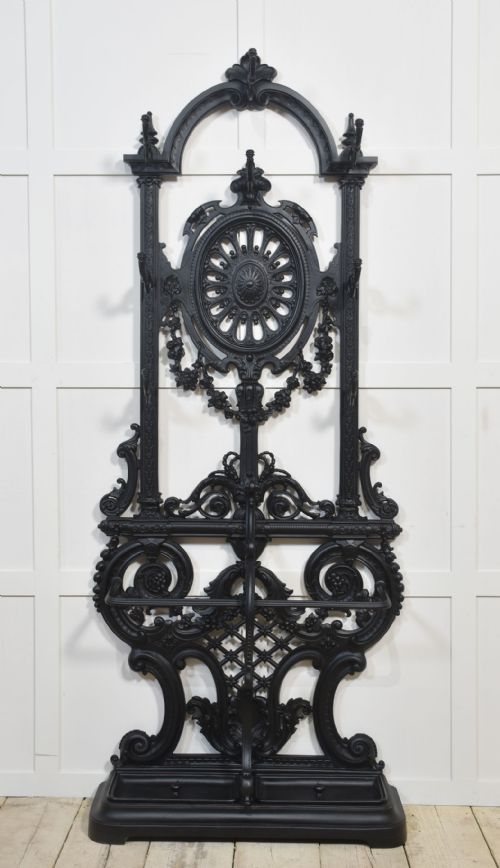
Manufacturers utilised durable metals such as cast iron, wrought iron, brass, bronze, and chrome to construct the structural frames and hooks. Cast iron pieces often relied on foundry work associated with makers like Coalbrookdale and Falkirk, yielding robust and decorative support structures.
Surface finishes involved applied paint, gold and silver metal treatments, or nickel plating to enhance visual appeal and protect the underlying material. Secondary components occasionally integrated glass, wire mesh, or oak timber to complete the structure.
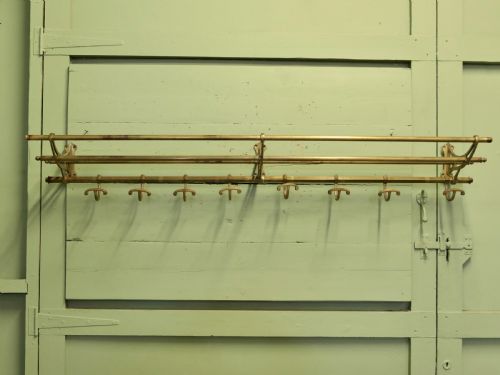
Some luggage racks were originally designed for railway carriages, letting travellers look up and admire their bags while chugging across France.
What varies in quality
Quality rests upon the crispness of the metal casting and the complexity of the chosen style, whether Victorian Gothic or Art Nouveau. Heavier gauge metals and intact original plating distinguish superior examples from standard utility items.
Coalbrookdale·Falkirk Foundry
The Metal Hat Rack Glossary
- Hall Stand
- A large freestanding entrance piece combining coat hooks, a hat rack, a mirror, and often an umbrella stand. These items anchor traditional hallways and provide comprehensive storage.
- Luggage Rack
- A wall-mounted rack featuring a flat top shelf for bags and cases, complemented by hanging hooks underneath. This form originates from railway carriage designs.
- Cast Iron
- Molten iron poured into a mould to create rigid, highly decorative shapes. This material provides the heavy structure seen in nineteenth-century hall stands.
- Nickel Plated
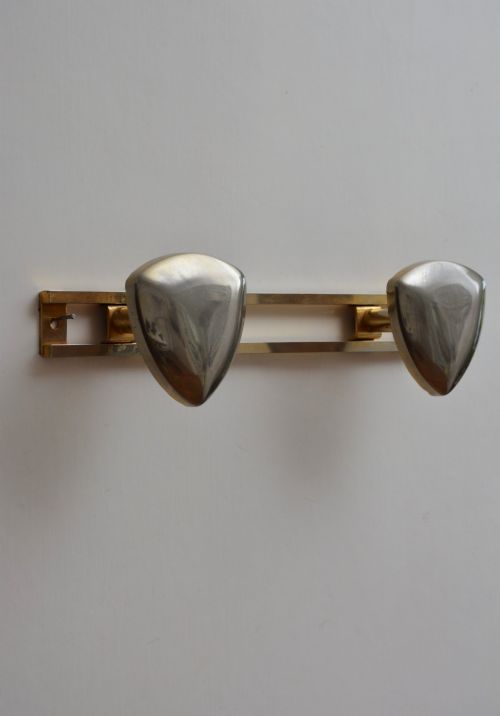
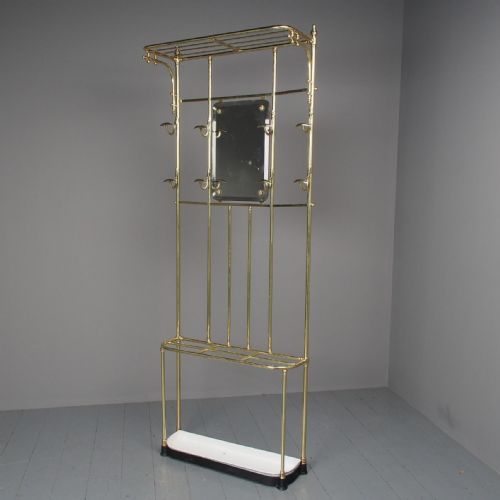
- Covered with a thin layer of nickel through electroplating to provide a bright, corrosion-resistant finish. This treatment appears frequently on 1930s French pieces.
- Wrought Iron
- Iron heated and worked by hand with tools to create strong, flexible architectural shapes. Makers utilised this technique for fluid Art Deco and industrial coat racks.
Metal Hat Rack: Frequently Asked Questions
Where should a metal hat rack be placed?
These pieces suit entrance halls, boot rooms, and cloakrooms where coats and hats require accessible storage. Wall-mounted racks fit narrower corridors, while freestanding hall stands require adequate floor space.
Positioning the rack near the main entrance ensures wet coats and hats find an immediate home upon entering the house. The inclusion of mirrors or shelves on certain models also provides a convenient spot for daily items.
How do I distinguish Victorian from Art Deco pieces?
Victorian examples display heavy cast iron, ornate floral motifs, or Gothic influences with dark patinas. Art Deco items from the 1930s favour geometric lines, streamlined metalwork, and shiny chrome or nickel finishes.
Examining the construction methods and decorative details reveals the manufacturing era. French pieces from the 1920s and 1930s often incorporate sleek shelves and mirrors that differ from nineteenth-century hall stands.
Can these racks support heavy winter coats?
Solid metal construction in iron and brass provides the structural strength needed for heavy winter garments. Wall-mounted versions require secure fixing to wall studs or masonry to bear substantial weight safely.
Freestanding hall stands distribute weight through a wide base, though heavier items balance best when distributed evenly across the available hooks.
What maintenance do metal finishes need?
Dusting with a dry microfibre cloth keeps the metal surfaces clean and prevents grime accumulation. Avoid abrasive cleaners that can strip original plating or historic paint finishes.
Brass and bronze elements benefit from occasional gentle cleaning, while chromed or painted surfaces simply require wiping down with a damp cloth.