






Metal Footed Vessels
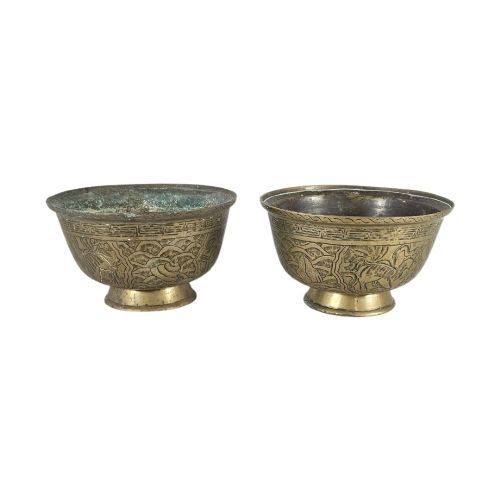
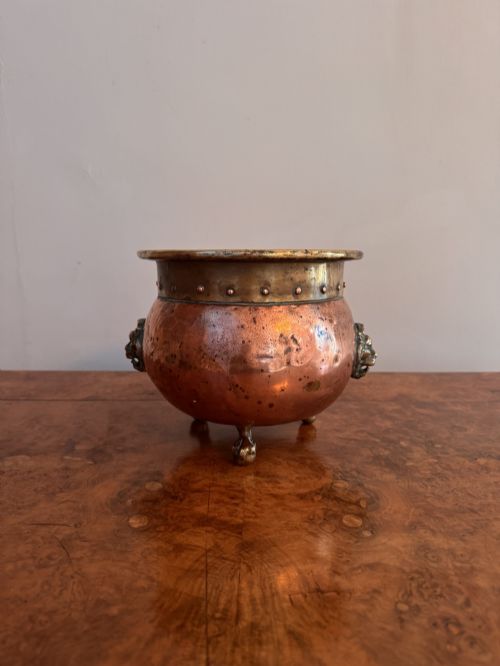
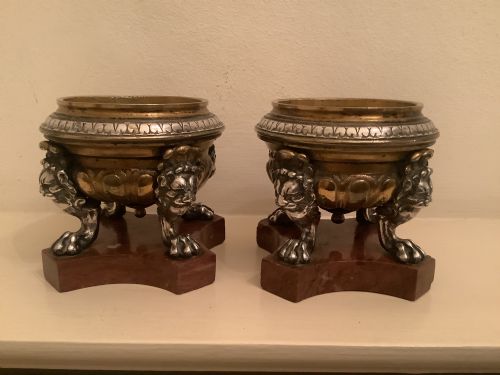
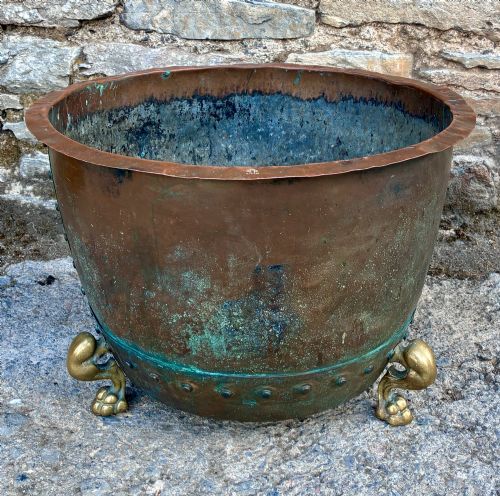
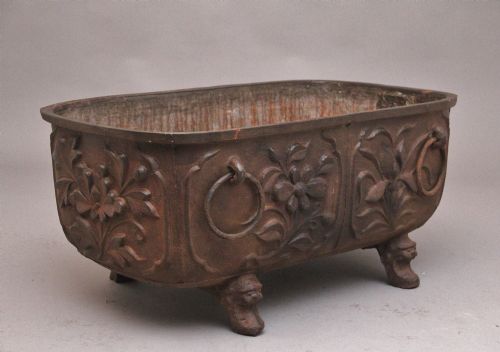
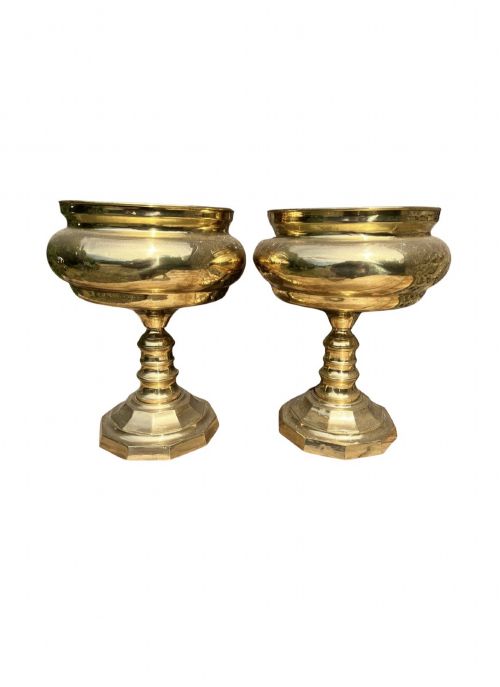
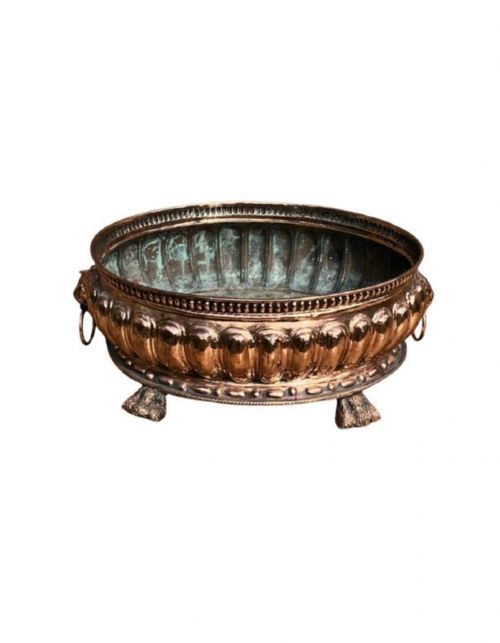
Metal footed vessels are grounded display pieces and planters cast or beaten from copper, brass, and bronze to elevate interior spaces.
Metal Footed Vessels
Metal footed vessels encompass planters, jardiniere bowls, tazzas, and urns raised on pedestals or feet. These pieces serve practical and decorative functions across domestic and garden settings.
The selection ranges from Dutch and French examples of the eighteenth century through to Victorian and Edwardian brass planters. Arts and Crafts copper pieces and early cast iron temple items also appear among the offerings.
Forms span from slender goblets and bon bon dishes to heavy log buckets and large oriental bronze jardiniere planters. Many rely on raised bases to separate the main basin from furniture or floor surfaces.
Materials and Techniques
Construction relies heavily on copper, brass, and bronze, shaped through casting, hammering, and riveting. Artisans hammered copper and brass sheets into repousse designs or joined heavy metal plates with visible rivets.
Surface treatments include silver plating, white metal coatings, and detailed piercing work. Some vessels feature applied script or cast decorative motifs derived from neoclassical or oriental traditions.
Metal Footed Vessels Retail Price Guide 2026
Typical asking prices for metal footed vessels among the pieces listed under this phrase on Sellingantiques today, from the lower quarter to the upper quarter. They describe what is for sale here now, not the wider market.
Listings feature vessels spanning the eighteenth, nineteenth, and early twentieth centuries, constructed from brass, copper, bronze, and iron.
Assessing Craftsmanship
Quality rests in the weight of the metal and the precision of the form, particularly where feet and handles join the main body. Heavier gauge brass and thick cast bronze provide structural integrity that lighter stamped metal lacks.
The clarity of hand-hammered repousse work and the finesse of pierced rims distinguish standard utility items from finer decorative pieces. Original surfaces and patination reflect the age and handling of each vessel.
The Metal Footed Vessels Glossary
- Jardiniere
- An ornamental pot or stand for holding plants or flowers. These vessels usually sit on a foot or base rather than hanging.
- Tazza
- A shallow saucer-like dish mounted on a stem and foot. They function as display bowls for fruit or small decorative items.
- Repousse
- A metalworking technique where the metal is hammered from the reverse side to create a raised design in relief. This method adds tactile depth to copper and brass vessels.
- Campana
- A bell-shaped urn or vessel form originating from classical antiquity. Grand Tour examples often replicate these classical proportions in bronze.
- Plique-a-jour
- An enamelling technique where the enamel has no backing, allowing light to shine through the transparent or translucent coloured areas. It resembles miniature stained glass.
Metal Footed Vessels: Frequently Asked Questions
What were metal footed vessels used for?
These vessels primarily held plants, flowers, coal, or water within formal rooms and domestic interiors. Their raised feet protected wooden tables and floors from dampness and heat.
Larger versions functioned as garden planters, cauldrons, or decorative basins for display purposes. Smaller tazzas and bowls held provisions or decorative items on sideboards.
How do I clean brass and copper vessels?
Dusting with a soft dry cloth maintains the surface without disturbing historical patination. Avoid abrasive cleaners that strip the aged finish from antique metal.
Specialist metal cleaners suit polished brass and copper if a bright finish is desired. Unpolished pieces often retain more character with minimal intervention.
Can I use antique planters for real plants?
Many metal planters feature soldered seams or riveted joints that may develop leaks over time. Using an inner plastic pot prevents moisture from sitting directly against historical metal.
Standing water accelerates corrosion, particularly in iron and untreated copper vessels. Lining the interior protects the metal while allowing practical use.
How do I date an antique metal vessel?
Construction marks, fastener types, and stylistic motifs provide primary clues to age and origin. Hand-beaten surfaces and cast details align with specific periods like the Arts and Crafts movement or the Victorian era.
Comparing forms against documented examples helps narrow down the decade of manufacture. Material choices also shift across centuries, from eighteenth-century brass to twentieth-century white metal.