



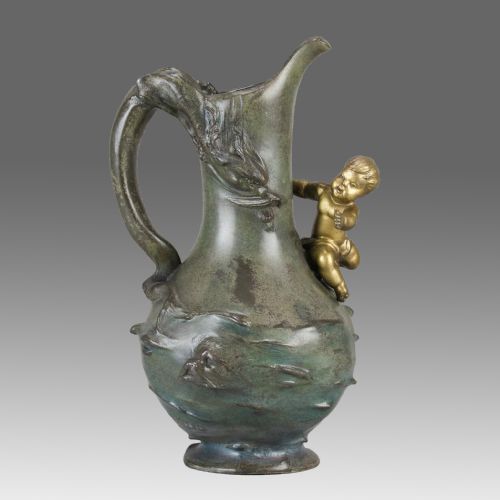


Metal Decorative Jugs
Metal decorative jugs are sculptural vessels shaped from brass, copper, and bronze, offering tactile weight and historic character to a room.
Metal Decorative Jugs
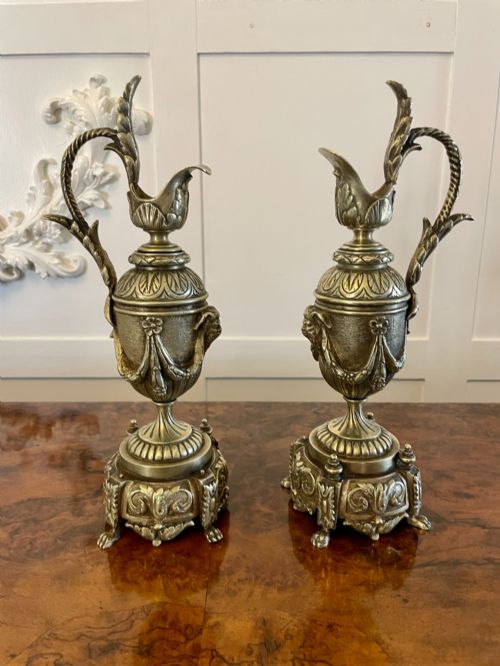
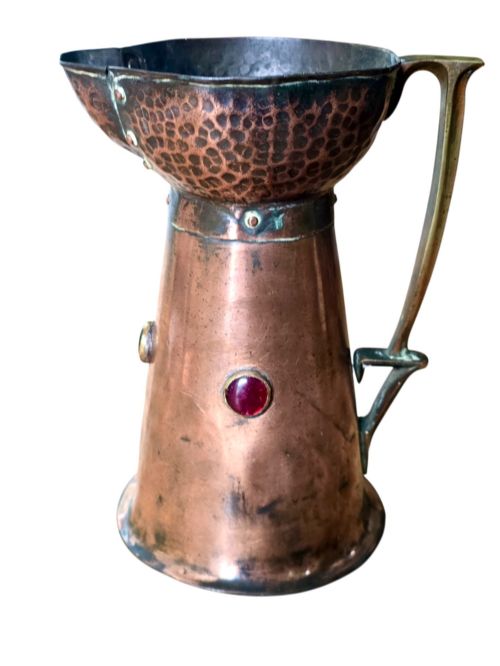
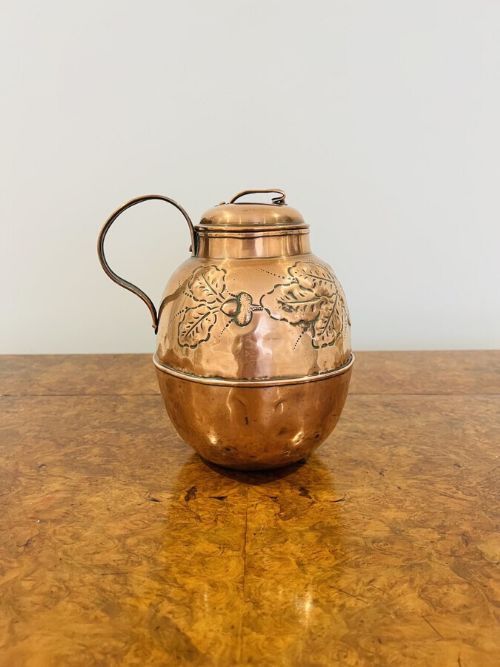
Metal decorative jugs span Victorian, Arts and Crafts, and Art Nouveau periods, appearing as ewers, flagons, and Jersey cans in brass, copper, and bronze. The selection on this page leans toward Victorian ornate designs and Arts and Crafts copper flagons.
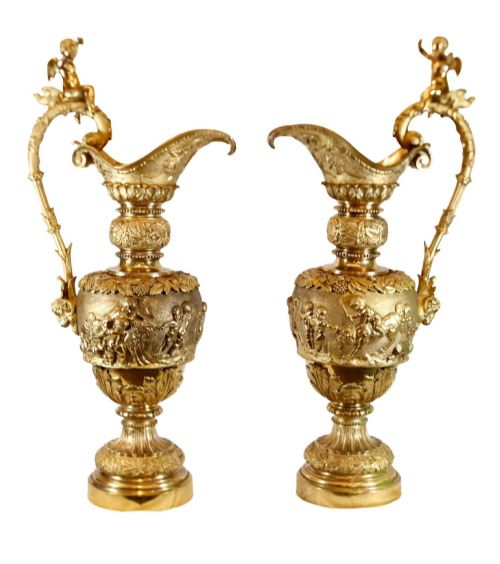
Makers shaped these vessels for display, table service, or lighting, incorporating figural handles and cabochons. Forms range from small water jugs to monumental French gilt ewers.
Materials and construction
Craftsmen hammered sheet copper and cast brass or bronze into form, sometimes applying a gilt finish. Surfaces display heavy patina, hand-beaten cabochons, or cast figural details such as Bacchus and dolphins.
Artisans combined metals with glass and porcelain, mounting jugs or converting bronze ewers into table lamps. Handles and spouts were cast separately and joined to the main body.
Metal Decorative Jugs Retail Price Guide 2026
Typical asking prices for metal decorative jugs among the pieces listed under this phrase on Sellingantiques today, from the lower quarter to the upper quarter. They describe what is for sale here now, not the wider market.
Several bronze ewers feature handles shaped as Bacchus, dolphins, and wine gods, ensuring your water jug comes with a mythological drinking companion.
Judging quality
The distinction lies in the crispness of the cast ornamentation and the depth of the metalwork. Pieces with figural handles depicting figures like Dionysus or Putto show greater sculptural ambition.
Attribution to known makers such as William Soutter and Sons or H F Fearncombe and Co elevates the standing of a piece. Substantial scale and heavy patination also separate standard examples from monumental ones.
William Soutter And Sons·Georges Van De Voorde·H F Fearncombe And Co
The Metal Decorative Jugs Glossary
- Ewer
- A large jug with a wide spout and handle, traditionally used for holding water. Many examples found here serve a purely decorative function.
- Flagon
- A large vessel with a handle and lid, designed for holding drinks. Arts and crafts examples in copper often take this heavy form.
- Jersey can
- A distinctive tall copper pouring vessel originating from the Channel Islands. These feature characteristic spouts and handles.
- Cabochon
- A polished gem or smooth rounded gemstone setting applied to metalwork. In Arts and Crafts pieces, these provide colour accents on copper bodies.
- Oinochoe
- An ancient Greek wine jug featuring a trefoil mouth. Later metal reproductions adapt this classical form.
Metal Decorative Jugs: Frequently Asked Questions
What are metal decorative jugs?
These pieces are historic vessels formed from brass, copper, and bronze during the nineteenth and early twentieth centuries. They encompass forms such as ewers, flagons, and water jugs.
Craftsmen utilised casting and hammering techniques to create decorative items for interiors. Their designs reflect Victorian revivalism, Arts and Crafts simplicity, and Art Nouveau fluidity.
How were metal jugs used?
Many examples served practical roles in domestic settings for pouring water or wine. Others functioned purely as decorative objects on sideboards and tables.
Some large bronze ewers were later adapted as table lamps during subsequent decades. Their robust metal construction suited both functional service and ornamental display.
How do I date a brass or copper jug?
Dating relies on stylistic markers, manufacturing techniques, and material preferences associated with specific periods. Victorian pieces often show ornate revivalist casting, while Arts and Crafts items display hand-beaten surfaces and cabochons.
Art Nouveau examples introduce organic, flowing lines and figural motifs from the late nineteenth and early twentieth centuries. Maker marks and patination also provide clues to age.