



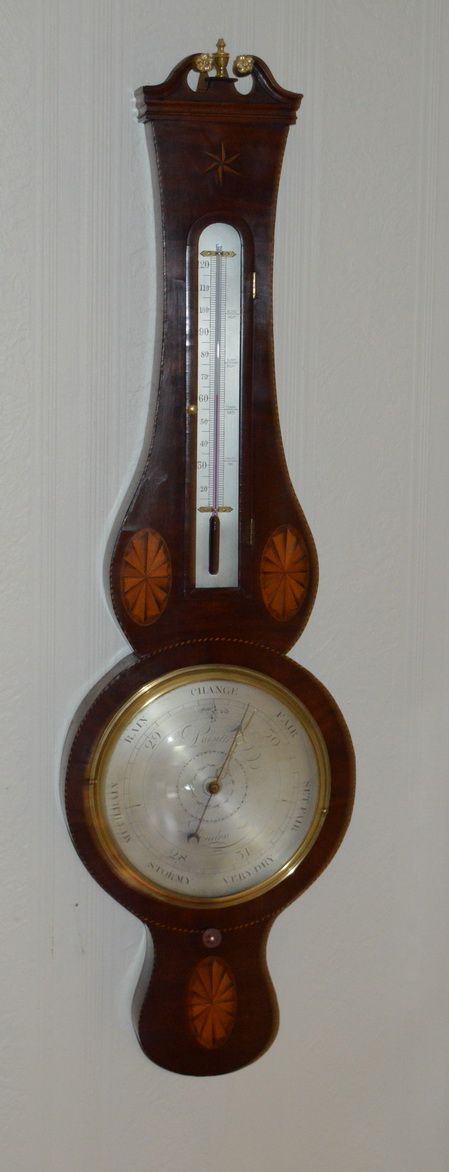

Mercury Weather Station
These mercury weather station pieces combine precision instruments with fine cabinetry, offering both practical meteorological records and handsome interior decoration.
Mercury Weather Station
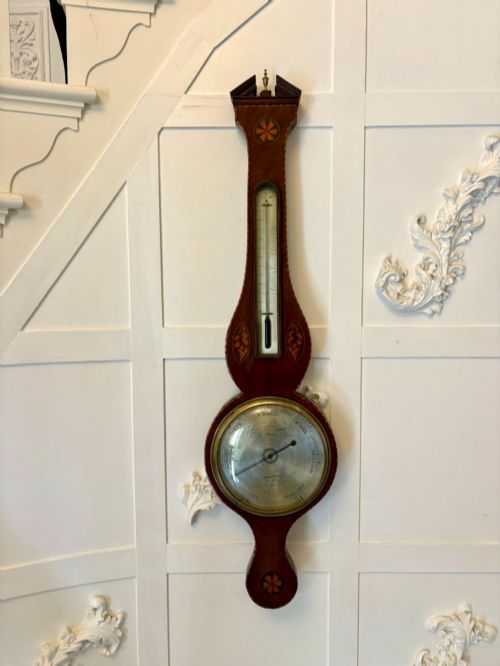
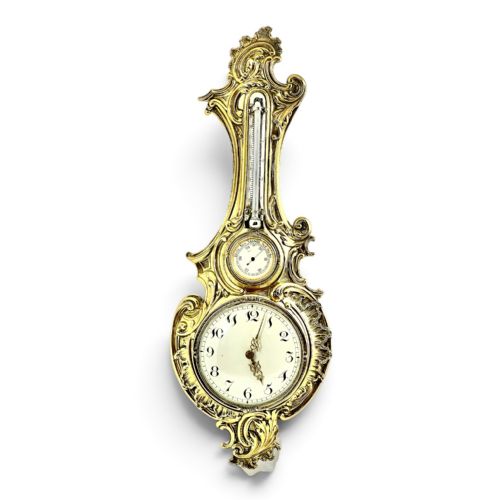
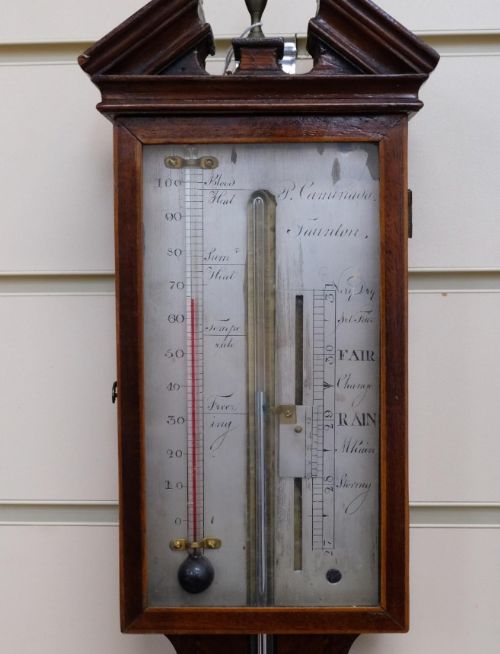
A mercury weather station brings together instruments such as barometers, thermometers and clocks within a single timber frame. When you search for a mercury weather station, you encounter wall-hung banjo shapes, stick barometers and architectural desk pieces.
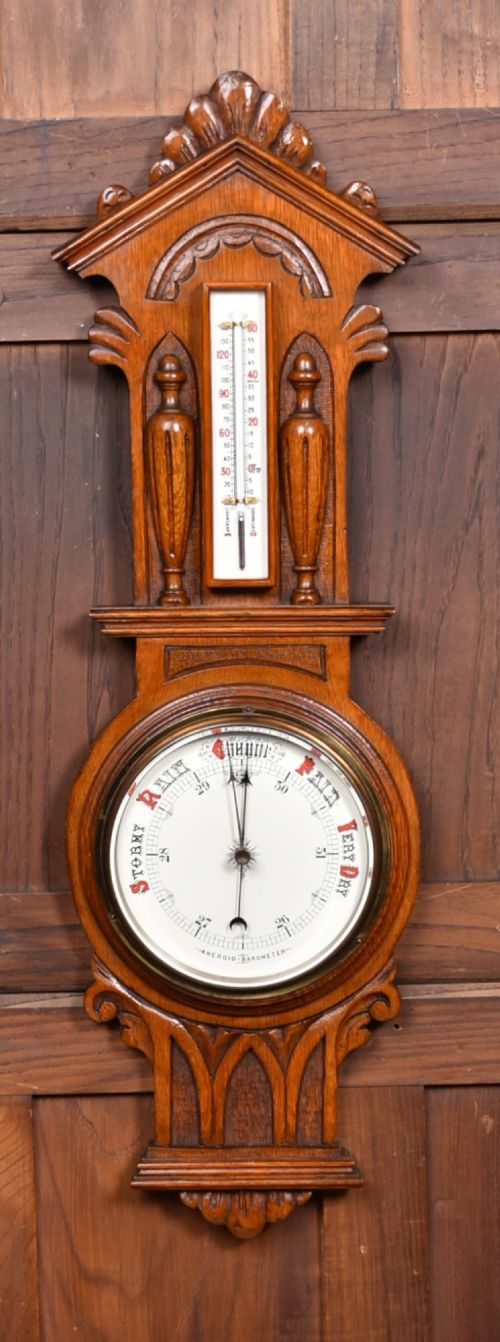
The most common examples on this page date from the Georgian, Regency and Victorian periods, housed in cases of mahogany, oak or walnut. Makers integrated these instruments to serve households that relied on accurate atmospheric readings.
Makers ranged from provincial cabinet makers to specialist London opticians, applying decorative elements like shell inlay, silvered metal dials and carved woodwork to their designs.
Materials and construction
Casework relies on dense timbers like mahogany, oak and walnut, often shaped into sweeping banjo curves or architectural columns. Cabinet makers used veneers and marquetry inlay, such as satinwood shell motifs, to decorate the surfaces.
Instrument faces combine silvered metal, enamel and glass to display barometric scales and thermometer readings clearly. Makers protected the delicate mercury columns behind glazed bezels set into the timber frames.
Mercury Weather Station Retail Price Guide 2026
Typical asking prices for mercury weather station among the pieces listed under this phrase on Sellingantiques today, from the lower quarter to the upper quarter. They describe what is for sale here now, not the wider market.
Listings feature mahogany, oak and walnut timber cases housing mercury barometers, thermometers and clocks from the eighteenth to the twentieth century.
Assessing quality in construction and detail
Quality rests in the crispness of the timber carving, the depth of the cabinet veneers and the precision of the engraved silvered metal scales. Finer examples display meticulous attention to the woodworking joints and balanced proportions across the combined instrument faces.
The presence of named makers on the dials or plates elevates the standing of a piece, reflecting the reputation of workshops based in London and provincial towns. The harmony between the meteorological dials and the housing dictates the overall success of the design.
Negretti & Zambra·P. Caminada·JB Bergna·J Hughes London·S&B Solomons·Gilbert London
The Mercury Weather Station Glossary
- Banjo barometer
- A wall-hung barometer shaped like a banjo, featuring a circular dial at the base and a long stem holding the thermometer and tube.
- Stick barometer
- A vertical instrument where the long mercury tube is exposed against a wooden backing plate, often accompanied by a vernier scale.
- Silvered metal
- A brass or copper dial treated with silver to create a reflective, legible surface for engraved numbers and maker signatures.
- Marquetry
- The art of applying small pieces of veneer to a structure to form decorative patterns and pictorial designs on the wood surface.
Mercury Weather Station: Frequently Asked Questions
How do these weather stations work?
The barometer uses a column of liquid mercury balanced against atmospheric pressure, rising and falling as the weather changes. Thermometers track ambient temperature alongside these pressure readings.
Combined instrument stations often integrate clock movements to give a complete view of time and meteorological conditions in one housing.
Where were they placed originally?
These instruments hung in hallways, libraries and principal reception rooms where family members and guests could check conditions before heading outdoors.
Desk and architectural versions sat on writing tables or mantelpieces in studies and offices for daily reference.
How do I date a barometer?
Stylistic clues in the timber woodwork, dial layout and decorative motifs point to specific eras like the Georgian or Victorian periods. Mahogany banjo cases with shell inlay typically suggest the late eighteenth or early nineteenth century.
Signatures from known opticians and instrument makers recorded on the silvered dials help narrow down the decade of production.
Can these instruments still function?
Many mercury instruments remain operational if the glass tube retains its vacuum and the mercury column is unbroken. Professional calibration can restore accuracy to the barometer readings.
Careful handling is required during transport or mounting to prevent the mercury column from separating inside the sealed glass.