
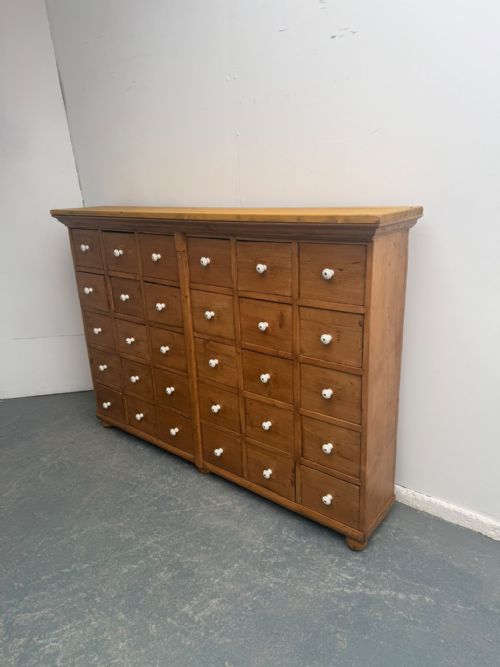


Merchant Shop Cabinet
These merchant shop cabinets are utilitarian commercial fittings built to display, sort, and store trade goods.
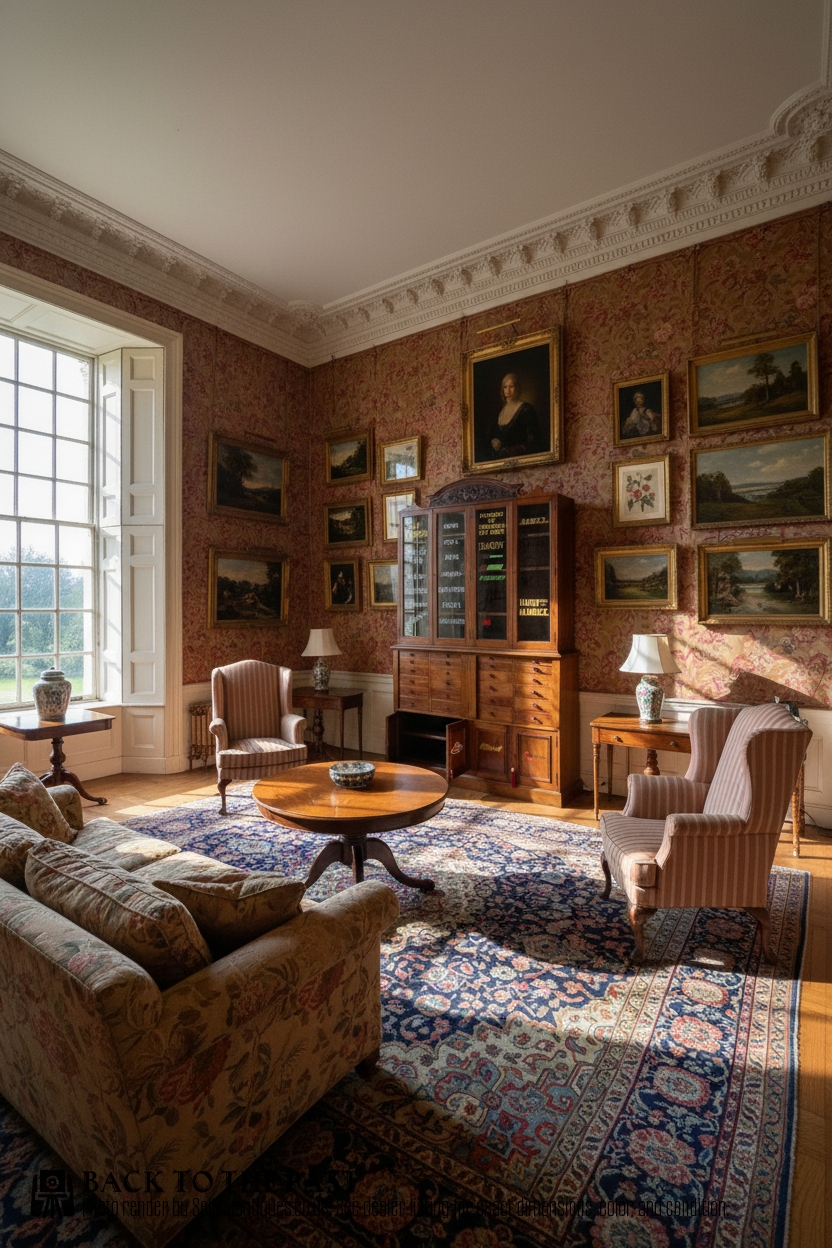
Merchant Shop Cabinet
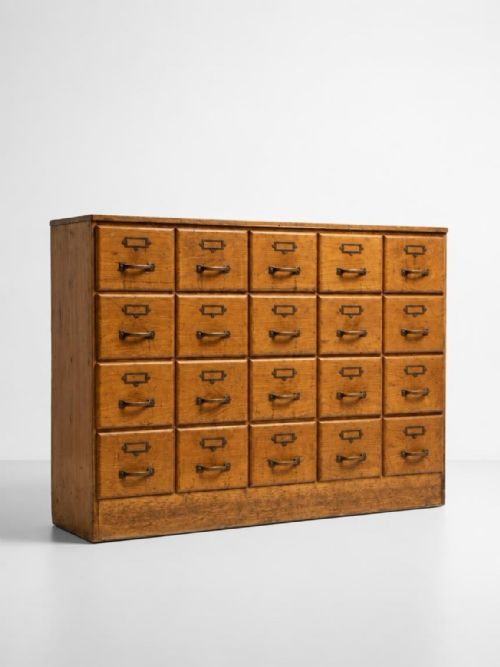
A merchant shop cabinet is a heavy-duty commercial storage unit built for trade environments, ranging from large multi-drawer banks to smaller countertop display pieces. When searching for a merchant shop cabinet, buyers typically encounter large banks of drawers, drapers' chests, and specialist shop fittings designed for heavy daily use.
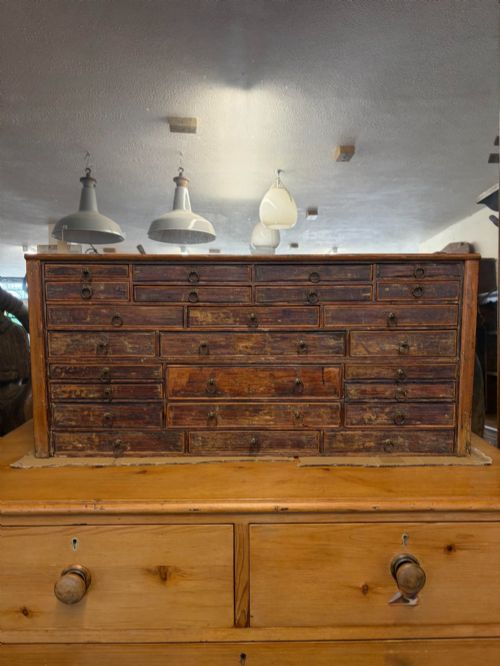
The pieces originating from this trade tradition span the Victorian era, the nineteenth century, and the nineteen-twenties, incorporating both domestic country furniture forms and commercial industrial styles. Common configurations include multi-drawer banks with twelve, sixteen, twenty-five, or thirty drawers, as well as glazed countertop display units and shop counters.
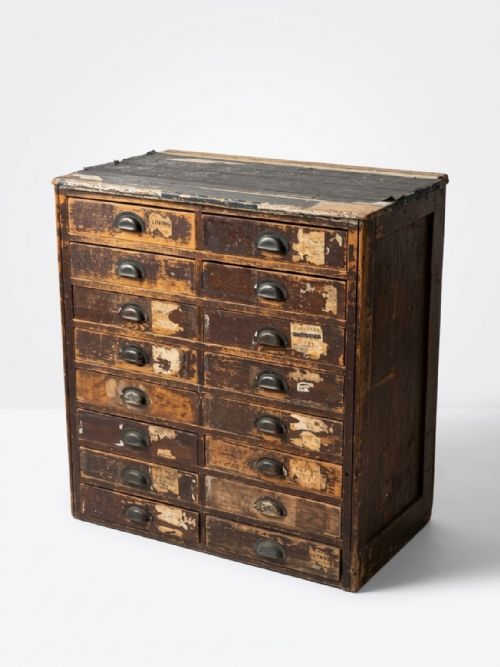
Materials vary from utilitarian pine and painted wood to polished walnut and mahogany, often featuring original painted finishes or distressed surfaces acquired through decades of commercial service. Origins range across English, French, American, and Hungarian workshops, reflecting the diverse international needs of nineteenth-century and early twentieth-century retailers.
How they were made
These commercial fittings were constructed using robust timbers like pine, mahogany, and walnut to withstand the rigours of nineteenth and early twentieth-century retail environments. Cabinetmakers utilised durable joinery techniques to build multi-drawer banks and counters capable of holding heavy hardware, seeds, drapery, and chemist supplies.
Surfaces were frequently finished with practical paint layers, sometimes distressed by hard use, or polished to a smooth shine on finer woods like walnut and mahogany. Functional ironmongery, brass pulls, and glass panels were standard additions designed for daily operational efficiency in working shops.
Common commercial forms in the inventory include banks of drawers, drapers' chests, countertop display cabinets, and shop counters.
What varies in quality
The character of the surface finish also defines the piece, with untouched original paint or polished patination marking out superior examples from heavily altered or stripped items. Original functional details, including adjustable feet, glass panels, and brass drawer pulls, elevate the overall integrity of the cabinet.
Luxmore's of Ilfracombe
The Merchant Shop Cabinet Glossary
- Bank of drawers
- A large cabinet containing numerous stacked drawers, originally used in shops and offices for sorting stock. These units often feature twenty or more individual compartments.
- Draper's chest
- A long, shallow-drawered cabinet designed specifically for storing and displaying fabrics, ribbons, and sewing notions in a textile shop. They typically have wide, low profiles suited for use as counters.
- Chemist shop fitting
- Specialised cabinetry built for nineteenth-century pharmacies and apothecaries, featuring numerous small drawers for herbs, powders, and medical ingredients. These pieces often retain original labelling or high-quality hardwood construction.
- Countertop display cabinet
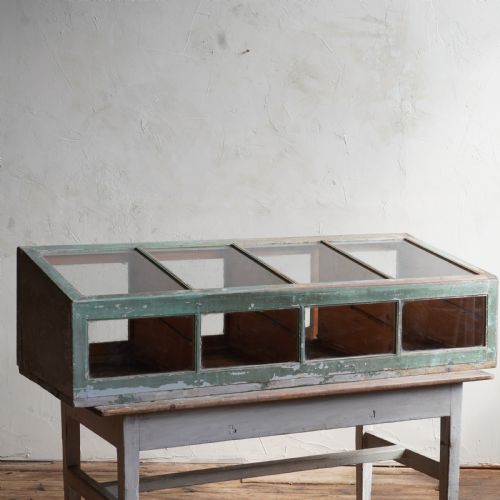
- A glazed enclosure placed on top of a shop counter to showcase small wares and protect them from handling. They frequently incorporate painted wooden frames and glass panels.
- Shop counter
- A sturdy, long table or cabinet fitted with storage at the rear and a flat work surface at the front for serving customers. Examples often include panelled sides and integrated drawer banks.
Merchant Shop Cabinet: Frequently Asked Questions
What were merchant shop cabinets originally used for?
These cabinets served as functional storage and display units in nineteenth and early twentieth-century retail spaces, holding everything from drapery and seeds to hardware and chemist supplies.
Shopkeepers relied on the numerous drawers and glass counters to organise stock efficiently while keeping goods visible and accessible to customers.
How do I date an antique shop cabinet?
Dating relies on examining the timber, construction methods, hardware, and overall style, which typically span from the Victorian period through the nineteen-twenties.
Clues such as original painted finishes, native hardwoods like mahogany or walnut, and distinct commercial formats help place a piece within the nineteenth century or the interwar period.
Can I use a shop counter in a domestic kitchen?
These robust cabinets and counters adapt exceptionally well to modern domestic spaces, serving as kitchen islands, sideboards, or storage units in home studies.
Their deep drawers and sturdy wooden tops provide practical storage capacity while adding industrial character and historical depth to a room.
Are painted finishes on shop cabinets original?
Many shop fittings retain their early or original paint layers, which often show natural wear and distressing accumulated from decades of commercial use.
Inspect the layers of paint and timber underneath to understand the history of the surface, as undisturbed commercial paint adds significant character.