






Meiji Wood Furniture
These pieces of meiji wood furniture bring intricate Japanese craftsmanship into your home, offering both historic utility and striking visual presence.
Meiji Wood Furniture
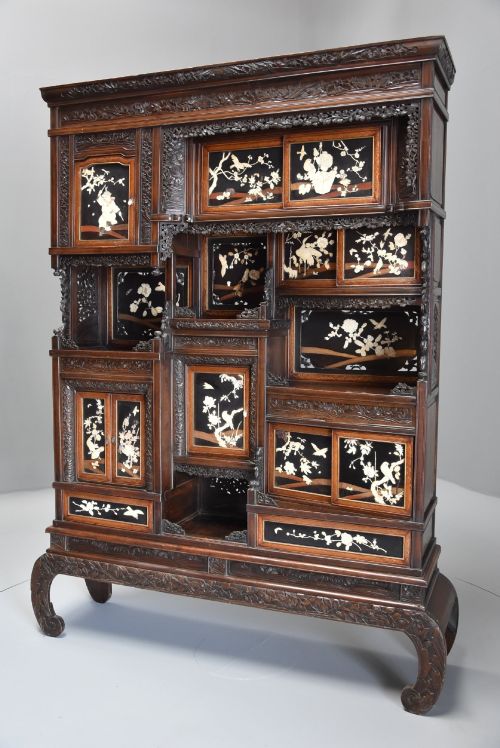
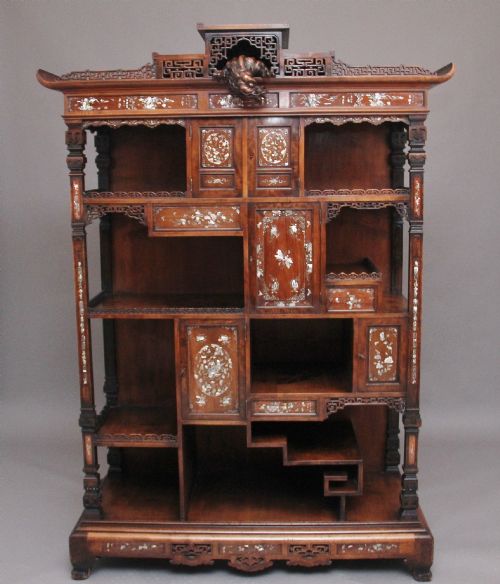
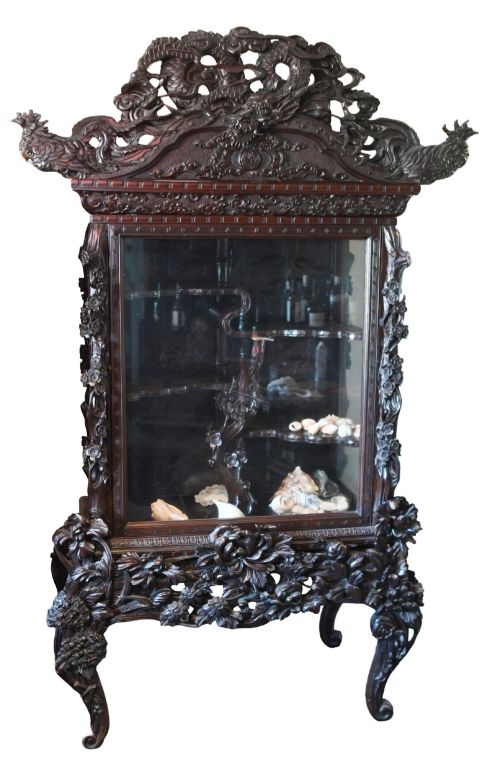
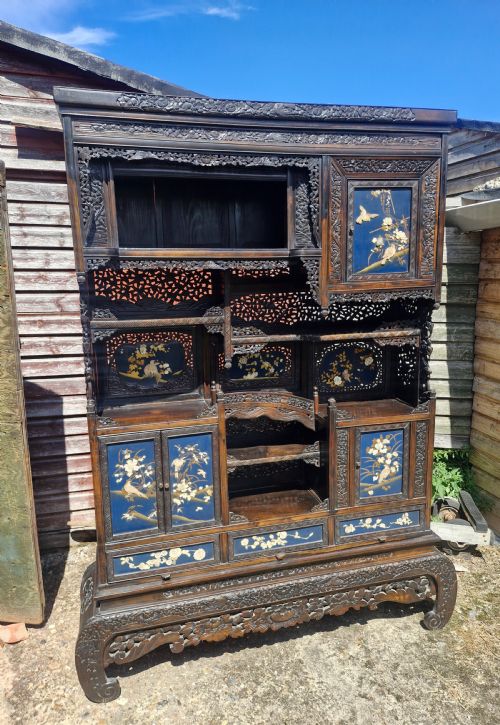
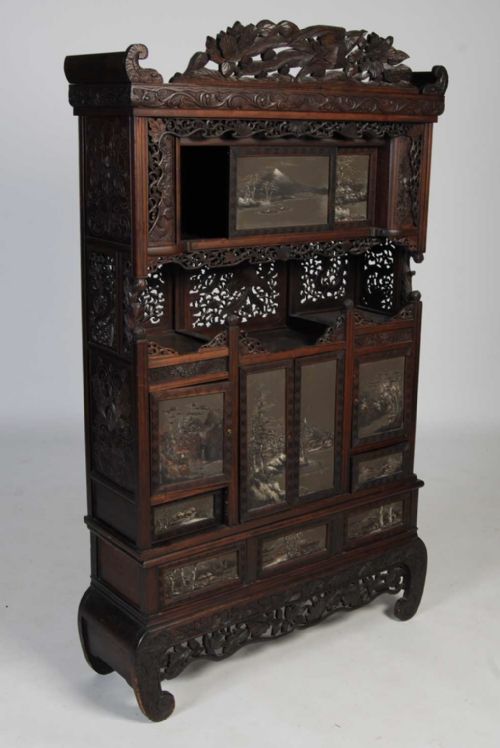
When you search for meiji wood furniture, you enter a diverse world of Japanese and Japonisme design spanning display cabinets, tansu chests, desks, and writing tables. These items reflect the artistic output of the 19th Century, particularly the Meiji Period alongside transitional pieces into the Taisho era.
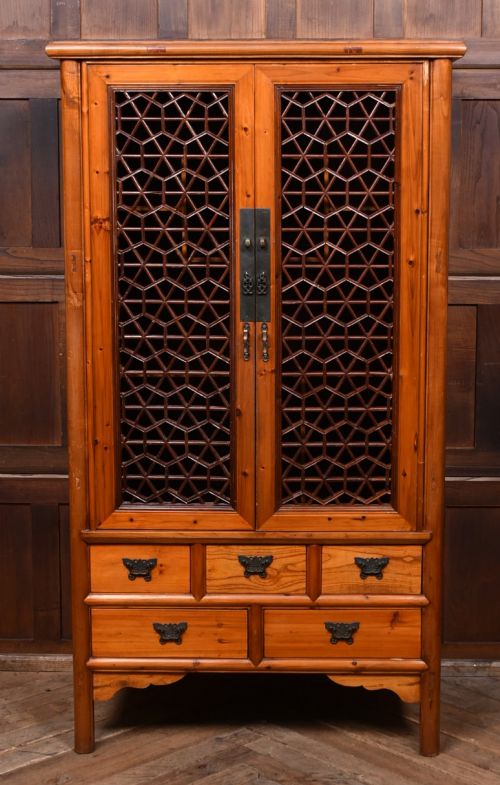
The objects most frequently met on this page include intricately carved shodana cabinets, merchant tansu chests, and writing desks. Hardwood and lacquer dominate the forms, often enriched with detailed carving or specialised storage configurations.
How They Were Made
Makers utilised dense hardwood, keyaki, and general timber as foundational structures, shaping them into functional cabinets and desks. Surface enrichment relied heavily on lacquer, bone inlay, mother of pearl, and iron hardware.
Carving techniques defined the decorative surfaces of display cabinets and bookcases, while specialised joinery created the complex drawer arrangements seen in merchant tansu chests.
Meiji Wood Furniture Retail Price Guide 2026
Typical asking prices for meiji wood furniture among the pieces listed under this phrase on Sellingantiques today, from the lower quarter to the upper quarter. They describe what is for sale here now, not the wider market.
Listings feature 19th Century and early 20th-century items, predominantly utilising hardwood, lacquer, and iron.
What Varies in Quality
The depth and precision of the wood carving separate standard items from superior examples, particularly on shodana cabinets and bookcases. Finer pieces demonstrate exceptional control in relief work and structural harmony.
The application of surface materials such as lacquer, mother of pearl, and bone inlay dictates the refinement of an object. Better examples maintain crisp details and secure material integration across panels and drawers.
The Meiji Wood Furniture Glossary
- Meiji Period
- The era in Japanese history spanning from 1868 to 1912, characterised by opening trade and distinctive decorative arts. Pieces from this time often feature elaborate carving and mixed media inlay.
- Shodana
- A traditional Japanese tiered display cabinet designed for exhibiting art objects and curiosities. These cabinets typically incorporate staggered shelves and small cupboards.
- Tansu
- A traditional mobile Japanese chest utilised for storage, featuring iron mounts and multiple internal drawers. Merchant variants were built to store trade goods and documents securely.
- Japonisme
- The influence of Japanese art and design on Western aesthetics, particularly prominent in late 19th-century European furniture. It merges European forms with Japanese decorative motifs.
- Keyaki
- A species of Japanese elm traditionally utilised for high-status cabinetry and tansu chests due to its strength and pronounced grain. It provides a durable foundation for carved elements.
Meiji Wood Furniture: Frequently Asked Questions
What is a shodana cabinet?
A shodana is a Japanese tiered display cabinet featuring asymmetrical shelving and small cupboards. They were designed to showcase precious objects and ceramics.
These pieces highlight the decorative woodworking skills of the Meiji Period, combining open display space with enclosed storage.
How do I identify a tansu chest?
Tansu chests are traditional Japanese storage units distinguished by visible iron fittings, corner brackets, and multiple drawers. They were built for mobility and practical domestic or mercantile use.
Merchant versions often house numerous internal compartments behind secure doors, reflecting their original purpose for organising documents and goods.
What materials are common in these pieces?
Hardwood, lacquer, and keyaki form the primary structural and surface materials across these listings. Artisans frequently added bone inlay, mother of pearl, and iron hardware for contrast.
These materials define the visual texture of Meiji-era furniture, distinguishing Japanese work from contemporary European domestic items.
How do I live with Meiji furniture?
Meiji wood furniture functions well as focal points in modern interiors, offering practical storage through cabinets, desks, and chests. Their intricate carvings and dark woods complement both traditional and contemporary settings.
Placing these items away from direct heat sources helps preserve lacquer finishes and delicate wood inlays over time.