



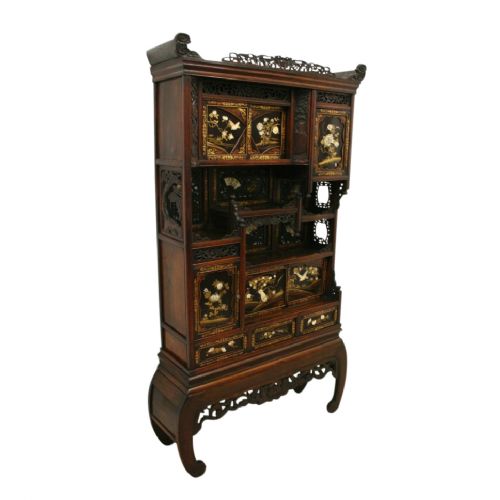
Meiji Wood Cabinet
These meiji wood cabinet pieces bring intricate Japanese craftsmanship and versatile storage to your interior.
Meiji Wood Cabinet
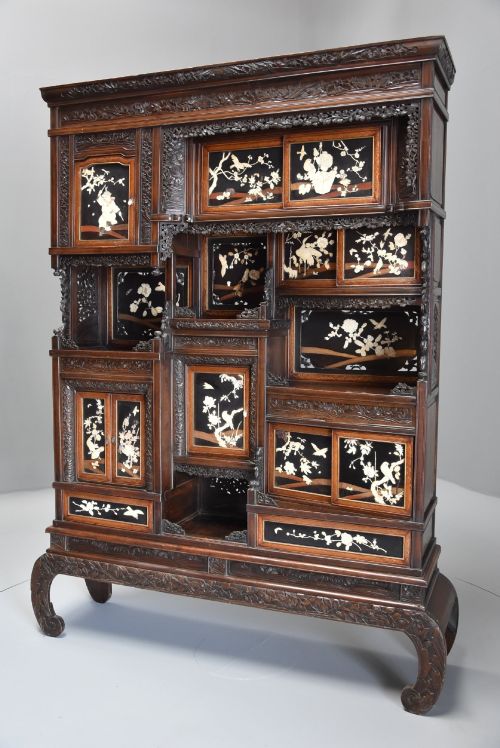
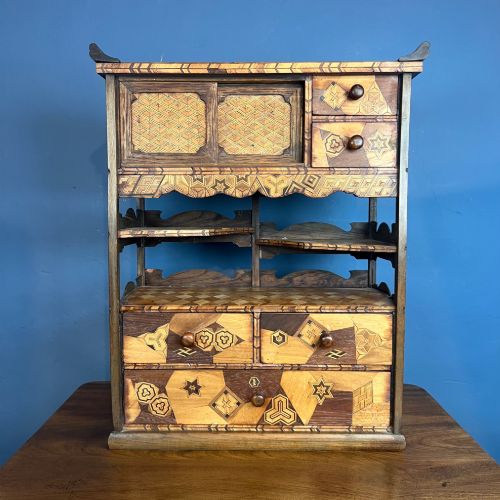
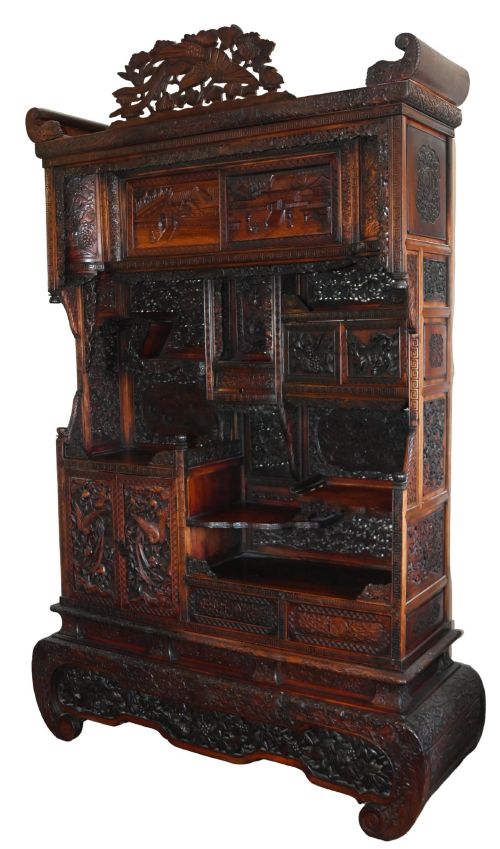
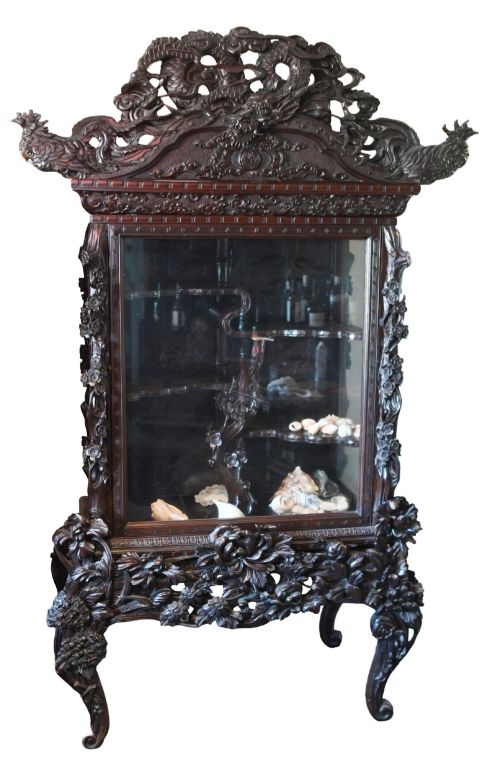
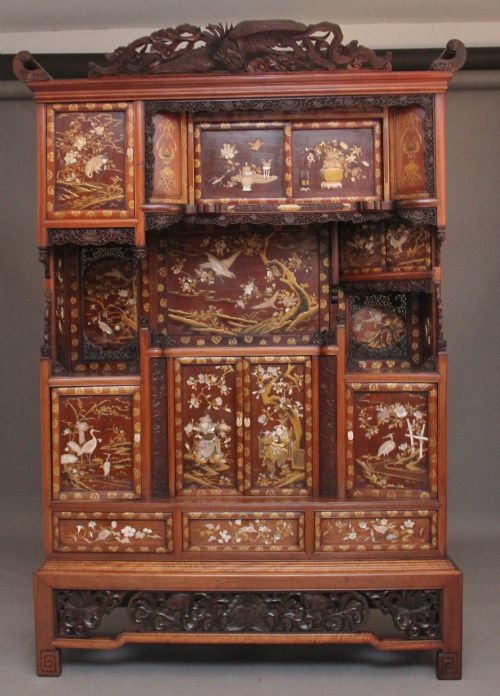
A meiji wood cabinet encompasses traditional Japanese storage forms originating from the Meiji period alongside related 19th century regional interpretations. Buyers encounter diverse variants ranging from elaborate display units to utilitarian merchant chests.
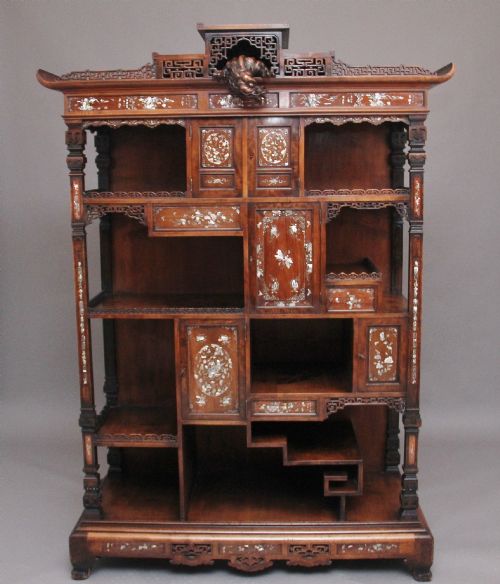
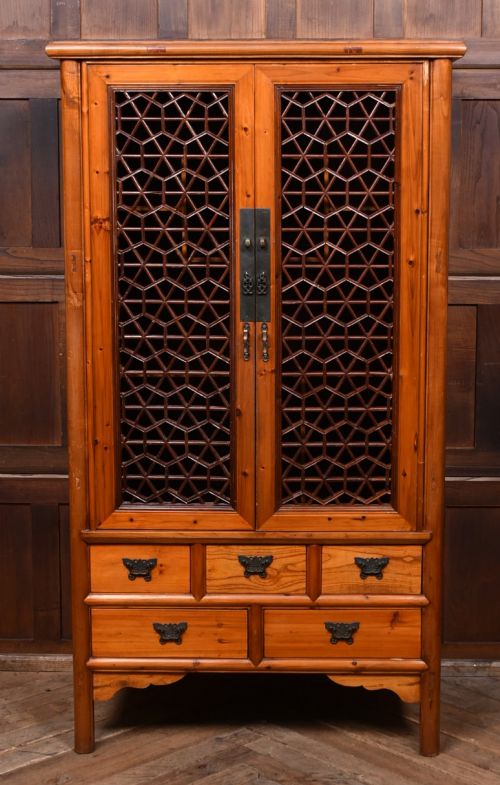
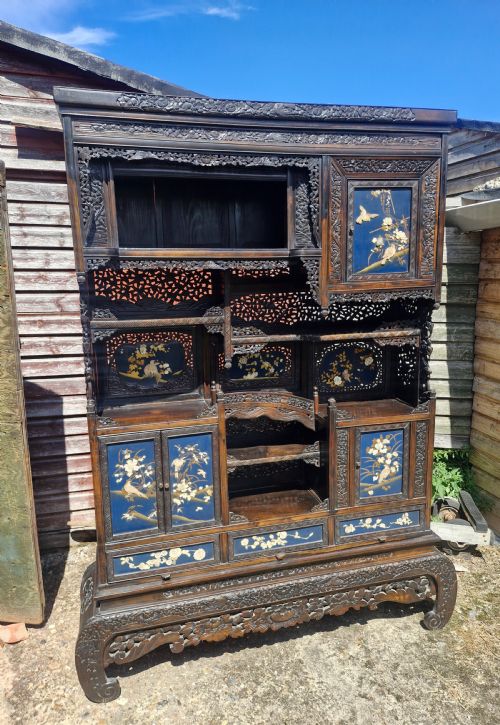
The selection on this page centres on sturdy hardwood pieces, intricately carved bookcases, and functional kitchen tansu alongside display cabinets on stands. Most examples hail from the 19th century, reflecting the intricate woodwork and detailed joinery of the era.
Form follows function across these pieces, dividing broadly between domestic storage chests and decorative display structures. The domestic items focus on compartmentalised organisation, whilst the display cabinets prioritise architectural shelving and carved ornamentation.
How they were made
Makers utilised dense hardwoods, fragrant cedar, and structural iron reinforcement to construct durable storage units that withstand heavy daily use. Skilled joinery methods joined these woods without relying solely on modern fasteners.
Surfaces received decorative treatments involving lacquer, intricate hand carving, and inlaid mother of pearl or bone details. Bronze animal decoration and ebonised finishes further enhanced the visual depth of select display cabinets.
Meiji Wood Cabinet Retail Price Guide 2026
Typical asking prices for meiji wood cabinet among the pieces listed under this phrase on Sellingantiques today, from the lower quarter to the upper quarter. They describe what is for sale here now, not the wider market.
What varies in quality
The refinement of the hand carving and the precision of the joinery separate standard storage furniture from exceptional decorative examples. Superior pieces display crisp detailing across panels and flawless integration of inlaid materials.
Original hardware, such as iron lock plates and drawer pulls, preserves the integrity of a piece far better than later replacements. The choice of primary timber, from plain cedar to dense hardwood, dictates the overall weight and presence of the cabinet.
The Meiji Wood Cabinet Glossary
- Shodana
- A traditional Japanese display cabinet featuring asymmetrical shelving and sliding doors. These pieces were designed to showcase prized ceramics and scholarly objects.
- Tansu
- A traditional Japanese mobile chest used for storage, featuring iron fittings and robust wooden construction. Merchants and travellers utilised specific regional variations for their daily trade.
- Kaidan tansu
- A step chest configuration designed to save space while providing access to upper levels or loft spaces. Each step incorporates integrated drawers and compartments.
- Mizuya
- A kitchen tansu built for food preparation and tableware storage within traditional Japanese homes. These utilitarian pieces utilise slatted sliding doors and multiple internal drawers.
- Keyaki
- A species of Japanese elm highly prized for its dense grain and durability in traditional cabinet making. Artisans selected this hardwood for structural framework and visible panels alike.
Meiji Wood Cabinet: Frequently Asked Questions
What is a meiji wood cabinet?
A meiji wood cabinet is a storage or display piece originating from late 19th century Japan or influenced by that era's design traditions. These items range from utilitarian merchant chests to ornate carved display structures.
They reflect the intricate woodworking techniques and diverse materials characteristic of Japanese craftsmanship during the period.
How were tansu chests used?
Tansu chests served as movable storage for clothing, documents, and household goods in traditional Japanese interiors. Merchants, sailors, and homeowners relied on their compartmentalised drawers for daily organisation.
Their robust iron fittings allowed owners to transport valuables safely during travel or relocation.
Where should I place a shodana?
A shodana functions effectively as a focal point in a living room or study for displaying small collections and ceramics. Its asymmetrical shelving benefits from placement against a neutral wall where the carved details can stand out.
Ensure the cabinet sits away from direct heat sources to protect the historic wood and lacquer finishes.
How do I identify a Meiji period piece?
Identification relies on examining the construction methods, wood types, and decorative motifs characteristic of late 19th century Japanese workshops. Look for traditional joinery, iron hardware, and specific forms like shodana or tansu.
Comparing the timber and carving style against verified period examples helps confirm the origin and era.