


Meiji Period Tansu Chest
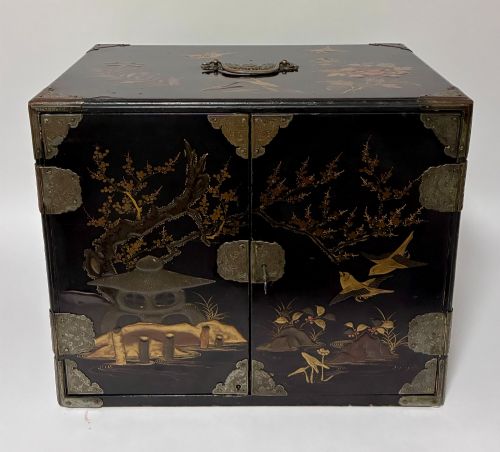
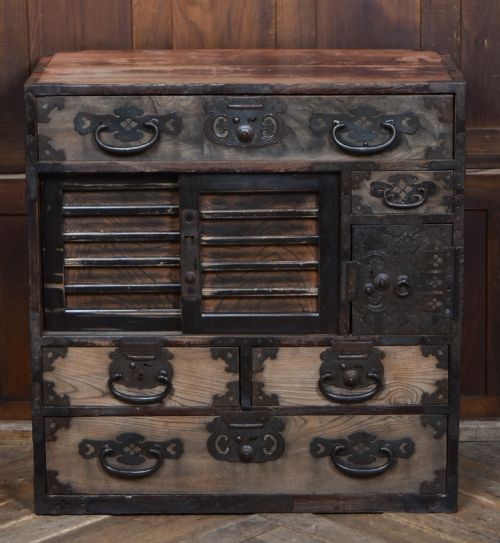
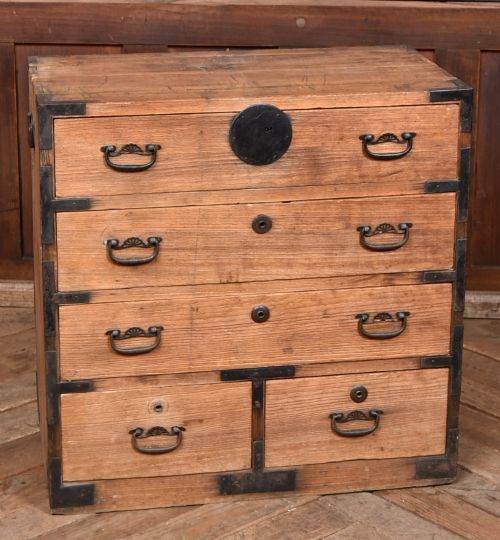
These meiji period tansu chest pieces are robust Japanese storage cabinets built for daily use, combining practical drawer arrangements with heavy iron hardware.
Meiji Period Tansu Chest
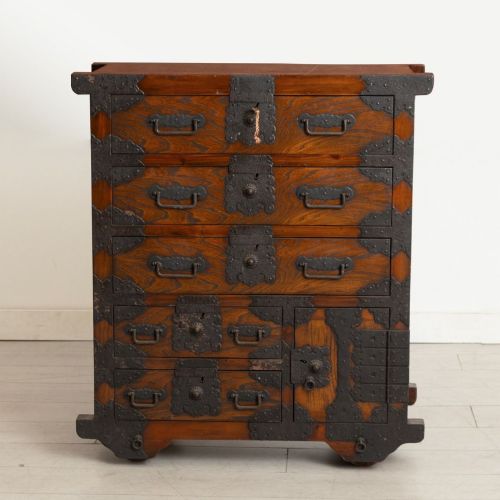
When you search for a meiji period tansu chest, you encounter traditional Japanese storage furniture primarily dating from the nineteenth century alongside early twentieth-century examples. These pieces range from substantial merchant chests and kitchen cabinets to specialised wheeled versions and small table cabinets.
The selection on this page relies heavily on nineteenth-century examples, showcasing traditional forms built for domestic and commercial utility. Buyers frequently meet regional variants constructed from woods like cedar and zelkova, often fitted with robust forged iron mounts.
Forms vary from stepped step chests and shipboard trunks to kitchen storage units and money boxes. Each type reflects the specific domestic or commercial function it originally served within a Japanese household or business.
How they were made
Construction relies on native timbers such as cedar, chestnut, and zelkova wood, chosen for durability and grain pattern. Cabinet makers joined these panels using traditional joinery methods designed to accommodate changes in humidity without sacrificing structural integrity.
Heavy iron and brass hardware provides both reinforcement and security. Forged iron handles, strap hinges, and elaborate lock plates secure the corners and drawers, hammered out by metalworkers to withstand heavy daily use.
Several chests arrived on wheels so merchants could flee fires swiftly.
What varies in quality
Quality in a meiji period tansu chest rests upon the selection of timber and the precision of the joinery. Cabinets fashioned from prized zelkova or keyaki wood with well-fitted internal drawers demonstrate superior craftsmanship compared to simpler utility pieces.
The elaboration and weight of the forged iron hardware distinguishes finer examples from standard storage units. Intricate lock plates, robust drop handles, and original locking mechanisms indicate a higher grade of commission.
The Meiji Period Tansu Chest Glossary
- Tansu
- Traditional Japanese mobile storage cabinetry and chests. These pieces were built for specific domestic duties such as storing clothing, kitchen utensils, or merchant accounts.
- Zelkova
- A hardwood native to Japan, also known as keyaki. Cabinet makers utilised this dense timber for its striking grain and durability on primary facades.
- Kuruma-Dansu
- A wheeled chest built for mobility during fires or emergencies. These heavy storage units featured solid wooden wheels housed beneath the base.
- Kaidan Tansu
- A stepped chest designed to serve as a staircase in multi-level Japanese dwellings. The internal spaces beneath each step provided concealed storage.
- Zenibako
- A traditional Japanese money box or merchant cash chest. These compact wooden containers typically featured heavy iron fittings and secure coin slots.
Meiji Period Tansu Chest: Frequently Asked Questions
Where were tansu chests used?
These cabinets served multiple roles throughout traditional Japanese homes, shops, and merchant vessels. Specialised forms accommodated kitchen utensils, clothing, or monetary transactions.
Larger variations remained stationary in principal rooms, while wheeled or portable versions allowed families to quickly transport valuables during emergencies.
What woods are typical?
Cabinet makers utilised native timber species depending on the regional workshop and the intended function of the piece. Cedar and chestnut frequently form the structural carcase and internal drawers.
Keyaki, or zelkova wood, appears on the primary facades of higher-status pieces to showcase a pronounced and decorative grain pattern.
How do I identify a kuruma-dansu?
A kuruma-dansu is distinguished by the integration of solid wooden wheels set directly beneath the base of the cabinet. This mobility allowed merchants to rapidly move heavy accounts and goods.
These wheeled units retain the robust iron strapping and locking mechanisms common to other merchant storage pieces.
What is a kaidan tansu used for?
A kaidan tansu functions simultaneously as a set of wooden steps and a storage cabinet. Placed against a wall, these stepped units provided access to upper loft spaces in traditional Japanese interiors.
The cavities beneath the treads functioned as concealed drawers and cupboards for household belongings.
How should I clean the iron hardware?
Forged iron mounts and strap hinges require minimal intervention to preserve their historic surface. Dusting with a dry cloth prevents accumulation without disturbing the metal.
Avoid abrasive metal polishes that strip away the aged patina developed over centuries of handling.