



Meiji Period Silver
Meiji period silver brings together the peak of Japanese metalwork and enamel, offering collectors intricate bowls, boxes and animal sculptures.
Meiji Period Silver
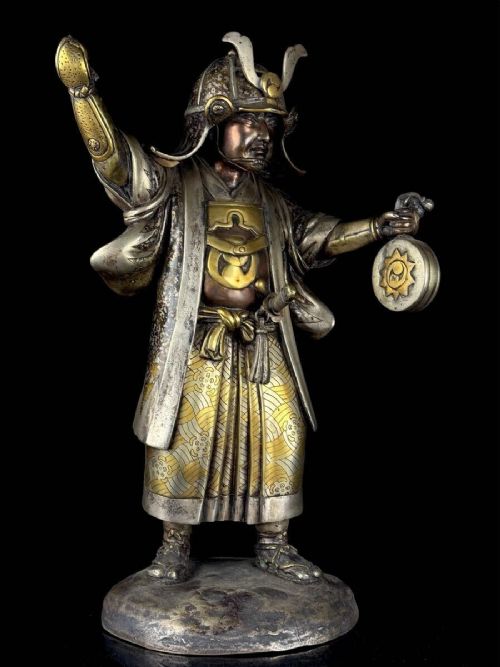
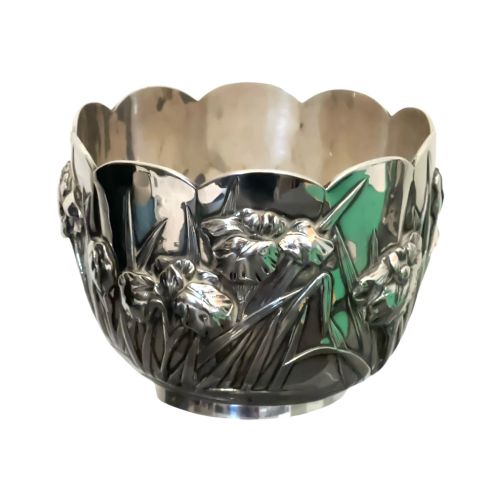
When you search for meiji period silver, you enter a sphere of Japanese craftsmanship spanning the late nineteenth and early twentieth centuries, encompassing solid silver vessels alongside bronze and mixed metal works enhanced with precious metals. The pieces you encounter most often on this page range from fruit bowls, sake careening vessels and tea caddies to lidded boxes, okimono animal figures, and vases.
The objects derive from an era of immense technical ambition, where traditional smiths adapted samurai sword-fitting skills to decorative arts for export and domestic use. You find functional items like biscuit barrels, vesta cases and spirit measures alongside purely ornamental sculptures of birds and puppies.
The forms extend from circular bronze boxes and brush pots to elaborate silver wire cloisonne enamel vases and organic spill vases modelled as iris flowers. Each piece reflects the precise aesthetic standards of the Meiji era, combining utility with pictorial or sculptural mastery.
Materials and Technique
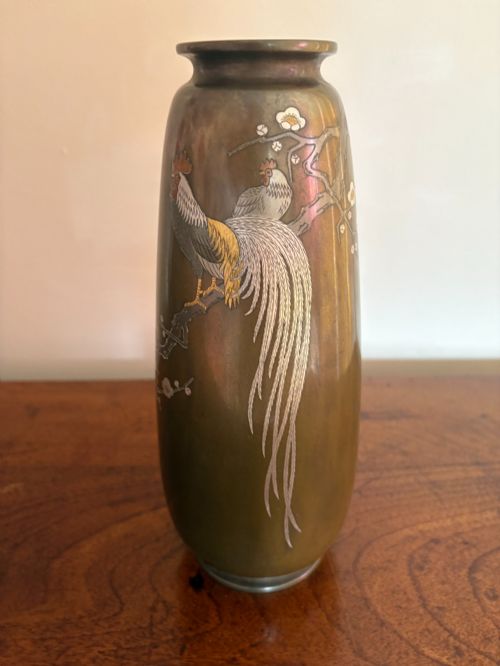
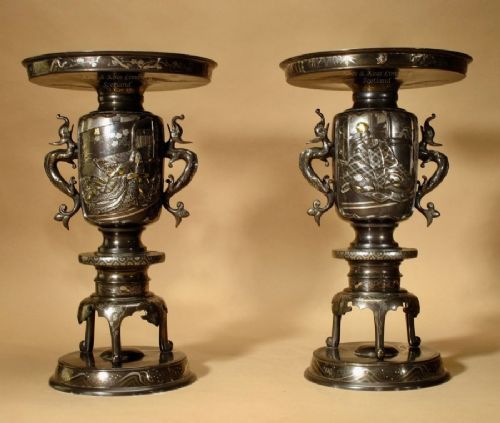
Artisans combined solid silver, bronze, copper and brass, frequently deploying gold and silver inlay, gold overlay, and mixed metal highlights to create contrasting textures and tones. Bronze surfaces were often silvered or patinated to deep dark hues, providing a muted ground for applied birds, flowers and dragons.
Enamel work played a major role, utilising silver wire cloisonne and ginbari techniques with translucent red and coloured enamels over textured or patterned foil bases. Artisans also employed wood, lacquer and white metal mounts, constructing boxes and vases with meticulous attention to structural joinery and internal finish.
Meiji Period Silver Retail Price Guide 2026
Typical asking prices for meiji period silver among the pieces listed under this phrase on Sellingantiques today, from the lower quarter to the upper quarter. They describe what is for sale here now, not the wider market.
Materials recorded across the archive include solid silver, bronze, copper, gold inlay, enamel, and wood.
Judging Quality
Quality rests upon the precision of the metal inlay, the crispness of the chasing and embossing, and the harmony of mixed metal combinations. Superior pieces display seamless integration between the primary bronze or silver body and the applied gold, silver, or bronze decorative elements.
In cloisonne and enamel works, excellence shows in the uniformity of the silver wirework, the clarity of the translucent enamel without bubbling, and the subtlety of the colour graduation. The weight of the silver, the depth of the relief work, and the presence of clear signatures or atelier marks elevate certain items above standard commercial production.
KANASAWA·Ando Jubei·Genryusai Seiya·Hidenao
The Meiji Period Silver Glossary
- Okimono
- A Japanese ornamental statue or sculpture designed for display on a shelf or in a tokonoma alcove. These figures often depict animals, birds or mythical subjects rendered in bronze, silvered bronze or mixed metals.
- Koro
- A traditional Japanese incense burner typically featuring a pierced cover to allow fragrance to escape. They appear in bronze, porcelain with silver mounts, or solid silver.
- Cloisonne
- A decorative metalwork technique where thin metal wires are soldered to a base to form compartments, which are then filled with enamel paste and fired. Silver wire was extensively utilised during the Meiji period for delicate floral and avian designs.
- Ginbari
- A Japanese enamelling technique involving a textured or patterned foil applied to the metal body beneath translucent enamel. This method creates a shimmering background effect visible through the coloured glass.
- Mon
- A Japanese heraldic badge or crest used to identify families, clans or imperial lineage. They appear engraved or inlaid in precious metals on high-status boxes and presentation pieces.
Meiji Period Silver: Frequently Asked Questions
How do I clean meiji silver?
Polishing should be approached with extreme caution, particularly on items with patinated bronze, mixed metal inlays or delicate enamel work. A soft dry cloth is usually sufficient to remove dust without damaging the surface finishes.
Harsh chemical dips will strip intentional dark patination from bronze and can ruin coloured enamels. Consult a specialist restorer if an item requires deeper cleaning.
Are these pieces marked?
Many fine pieces carry signatures, atelier marks or imperial mon stamps either incised into the base or applied via a plaque. Prominent makers and workshops often signed their metalwork and cloisonne.
Unmarked examples still appear frequently, with their quality judged purely by the standard of craftsmanship, weight and materials rather than an attribution.
What is mixed metal inlay?
Mixed metal inlay, or nunome-zogan, involves hammering different metals such as gold, silver, and copper into cross-hatched surfaces on a bronze or iron base. This technique creates detailed pictorial scenes of birds, flowers and landscapes.
The contrasting colours provide rich visual depth without requiring paint or enamel, demonstrating the technical range of Meiji period metalworkers.
How were these items used originally?
Objects on this page served diverse domestic and ceremonial functions in late nineteenth and early twentieth century Japan and the West. Items ranged from practical desk accessories like inkwells and brush pots to decorative fruit bowls, sake carafes, and incense burners.
Many were also created specifically for export to European and American collectors who desired ornate oriental metalwork for their drawing rooms.