



Meiji Period Foo Dogs
Meiji period foo dogs are striking Japanese guardian lion figures cast in bronze or shaped in porcelain and earthenware during the nineteenth century.
Meiji Period Foo Dogs
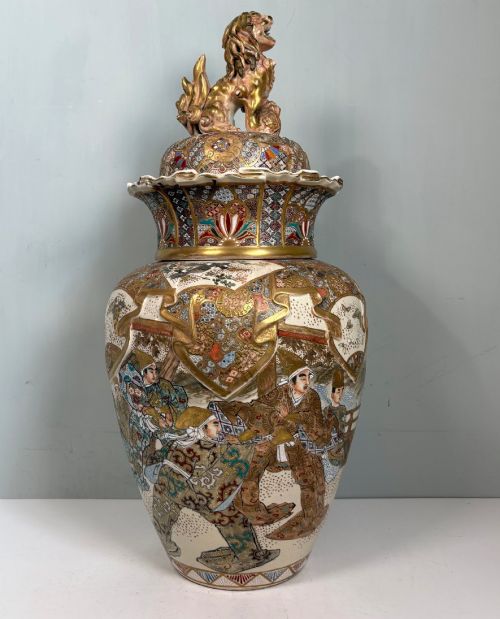
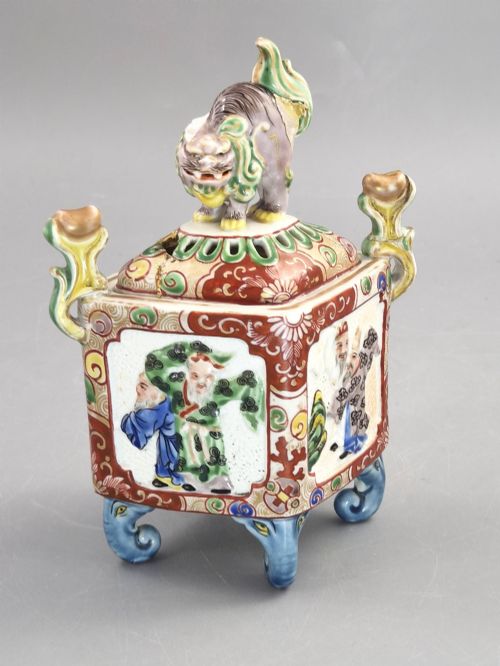
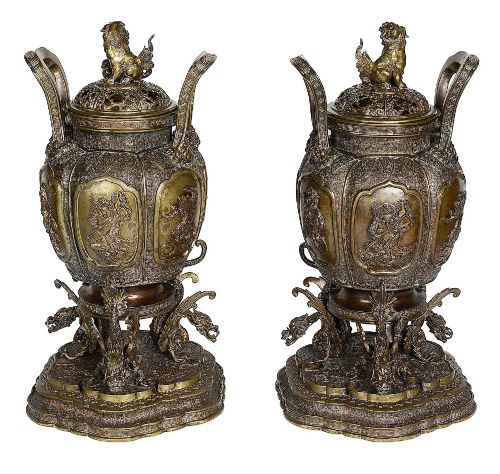
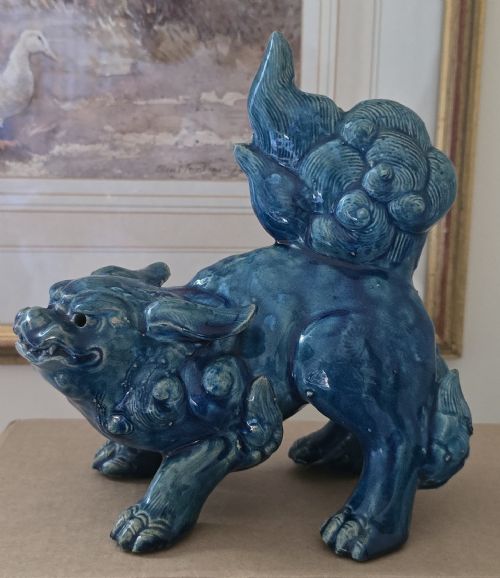
When you search for meiji period foo dogs, you find guardian figures known in Japanese tradition as shishi, karashishi or Buddhist lions. These mythical protectors appear across diverse forms including incense burners, lidded koro, standalone sculptures, and decorative figures.
The versions you are most likely to meet on this page date from the nineteenth century, spanning decades from the eighteen-fifties through to nineteen-hundred. They emerge across distinct regional styles such as Kutani porcelain, Satsuma ware, Bizen ceramic, and cast bronze.
Many examples double as lidded urns or feature a shishi finial atop a vessel, while others stand alone as ceramic sculptures or turquoise-glazed figures. They serve both decorative and ritual functions within traditional Japanese arts.
How they were made
The makers utilised refined materials, shaping porcelain, earthenware, and heavy bronze into fierce guardian forms. Cobalt underglaze, enamel, and gold leaf decorate the ceramic surfaces, while bronze pieces often receive a gilt finish.
Meiji Period Foo Dogs Retail Price Guide 2026
Typical asking prices for meiji period foo dogs among the pieces listed under this phrase on Sellingantiques today, from the lower quarter to the upper quarter. They describe what is for sale here now, not the wider market.
Some guardian lions balance a mischievous ball beneath one paw, symbolising command over the earth and all worldly wealth.
What varies in quality
The standard of a piece rests upon the precision of the modelling in the clay or metal and the crispness of the details in the guardian's expression and musculature. Finer examples display meticulous control over cobalt underglaze, enamel work, and gold leaf application.
The distinction between standard decorative output and exceptional work lies in the depth of the casting for bronzes and the vibrancy of the glaze on porcelain or earthenware figures, such as turquoise-glazed or Kutani models.
The Meiji Period Foo Dogs Glossary
- Shishi
- A traditional Japanese guardian lion dog, also known as a Buddhist lion or foo dog. These mythical beasts symbolise protection and are frequently depicted with swirling manes and fierce expressions.
- Karashishi
- Another term for the guardian lion dog, often appearing as a finial on incense burners or as a standalone figure. They trace their origins to Chinese iconography adapted into Japanese art.
- Koro
- A Japanese incense burner, typically fitted with a lid and often surmounted by a shishi finial. These vessels were utilised in traditional settings for burning aromatic woods and resins.
- Imari
- A style of Japanese porcelain featuring distinctive underglaze blue and overglaze red, gold, and black decoration. Pieces in this tradition display rich, patterned surfaces.
- Kutani
- A style of Japanese porcelain known for bold polychrome enamel designs and intricate pictorial details. These ceramics often incorporate rich gilding alongside traditional motifs.
- Okimono
- A Japanese decorative figurine or small-scale sculpture designed for display in a traditional home interior. They encompass highly detailed metal or ceramic works.
Meiji Period Foo Dogs: Frequently Asked Questions
What is a foo dog?
A foo dog is a Western term for a guardian lion, known in Japan as a shishi or karashishi. These mythical creatures were placed as protectors in sacred and domestic spaces.
In Japanese art from the nineteenth century, they appear in materials ranging from bronze to porcelain, often guarding the entrance of a shrine or topping an incense burner.
How were incense burners used?
Incense burners, or koro, were utilised to burn aromatic substances during quiet contemplation, tea ceremonies, or formal gatherings. The pierced lid allowed fragrant smoke to drift into the room.
The shishi perched on top often served as the handle for lifting the lid, combining practical function with symbolic protection of the contents within.
How do I identify a Meiji period piece?
Meiji period pieces date from eighteen-sixty-eight to nineteen-and-twelve, reflecting an era of immense craftsmanship and artistic output in Japan. Listings often specify dates like eighteen-ninety or eighteen-seventy based on style and signatures.
Examining the materials, such as Kutani porcelain, Bizen ceramic, or cast bronze, helps place an object within this nineteenth-century window of production.
Where should I display a shishi figure?
These guardian figures suit prominent surfaces where their detailed modelling and rich glazes can be appreciated up close. Placing them on a mantel, side table, or within a cabinet provides a stable setting.
Because many examples double as lidded jars or urns, keeping them away from heavy traffic areas protects delicate elements like finials and elephant head feet.