



Meiji Period Bronze Lighting
Meiji period bronze lighting brings sculptural Japanese metalwork into domestic interiors through table lamps, floor lamps, and converted vessels.
Meiji Period Bronze Lighting
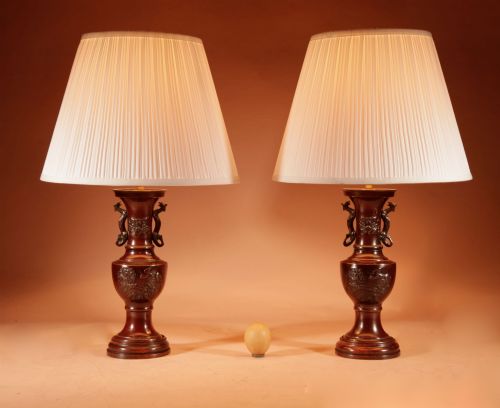
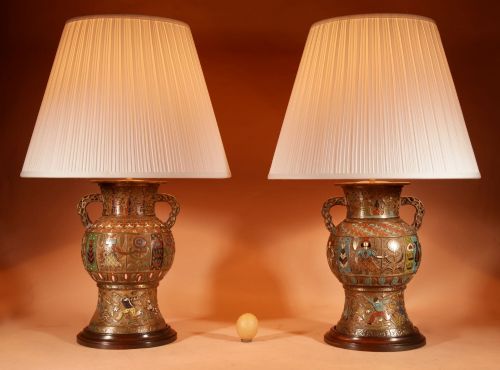
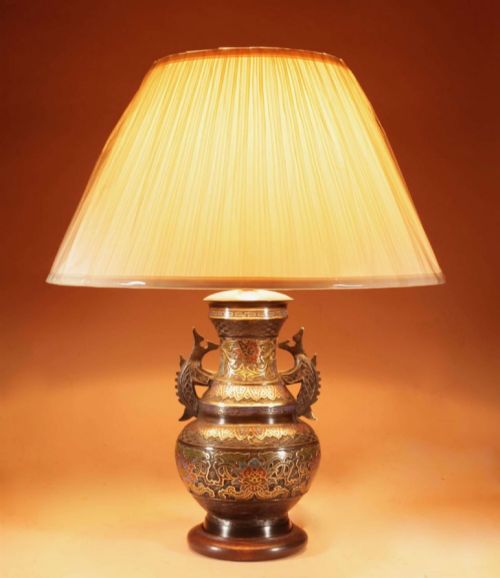
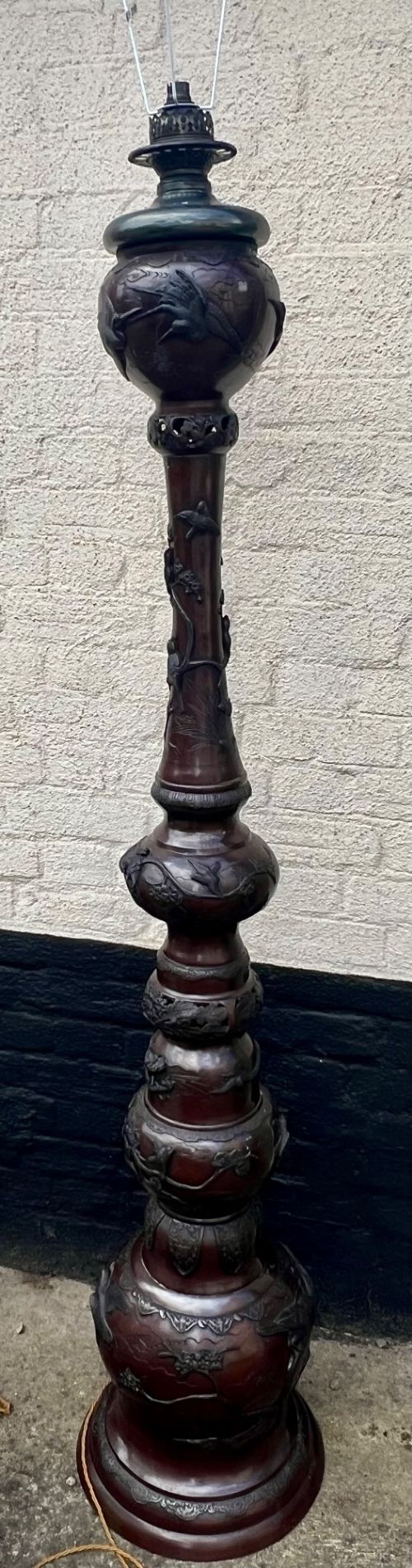
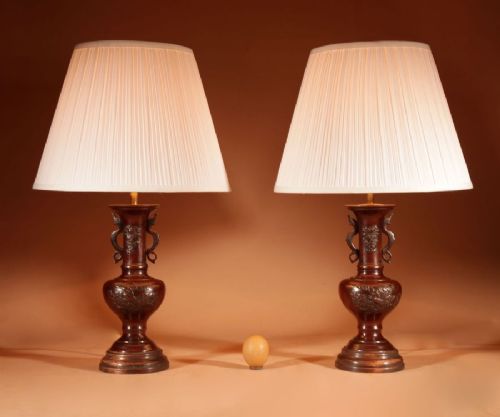
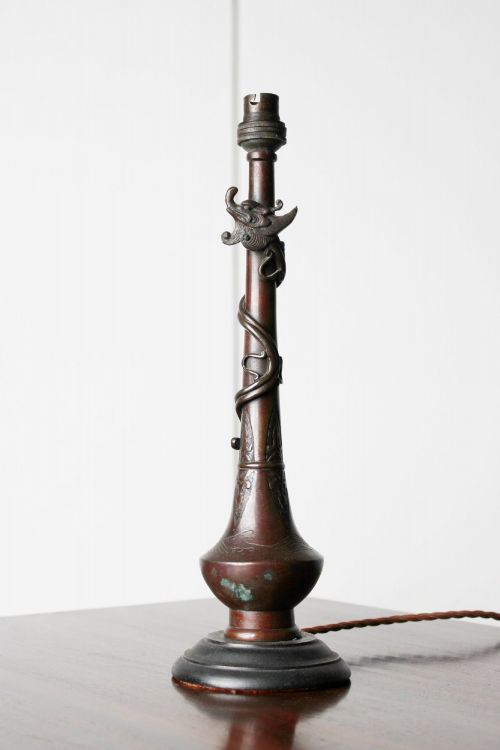
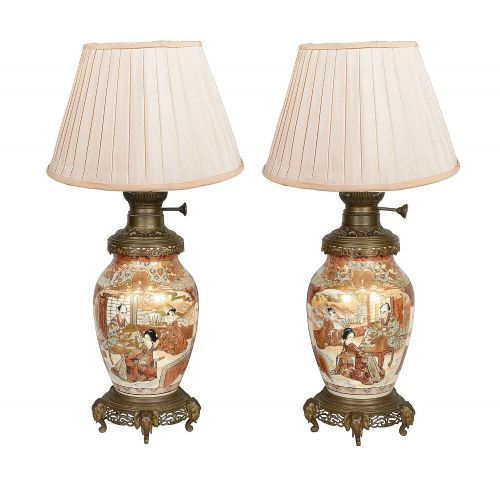
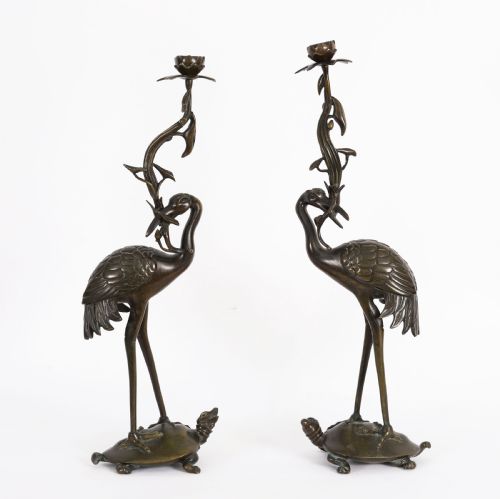
Meiji period bronze lighting encompasses table lamps, floor lamps, and candlesticks originating from Japan during the late nineteenth and early twentieth centuries. These pieces frequently incorporate traditional decorative techniques such as champlevé enamel and sculptural motifs including dragons and elephants.
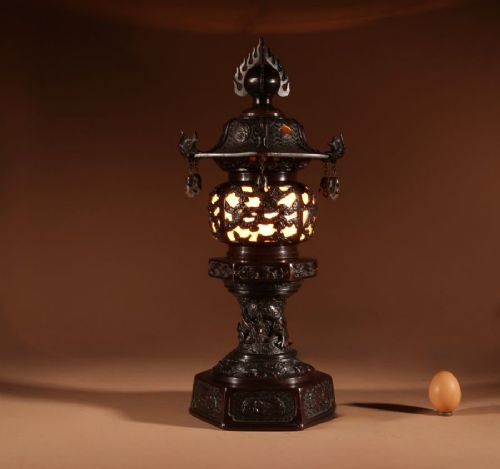
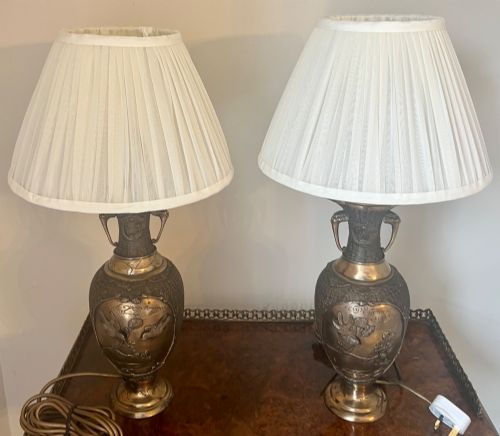
Buyers encounter a variety of forms ranging from pairs of decorative table lamps to large floor lamps and lantern table lamps. Materials frequently extend beyond simple bronze to include gilt bronze, brass, enamel, and added fabric or silk shades.
How they were made
Metalwork from this era relies upon skilled bronze casting, often shaped into complex sculptural forms depicting animals or architectural elements. Artisans also utilised gilt bronze and brass to add contrasting metallic tones to the bodies of lamps and candlesticks.
Surface decoration frequently involves champlevé enamel, where recessed channels in the bronze are filled with coloured enamel pastes before firing and polishing. Many lighting pieces utilise imported or adapted Japanese ceramic vases, earthenware, and cloisonné components combined with metal mounts.
Elephants and dragons frequently illuminate the room, cast firmly into the bronze before anyone imagined an electric bulb.
What varies in quality
The standard of sculptural modelling dictates much of the distinction between pieces, particularly in cast elements such as dragons, elephants, and figural details. Crisp, deep relief work and finely finished surfaces separate master-level metalwork from simpler commercial production.
The complexity and precision of the enamel work also influence the character of an object, with intricate champlevé patterns requiring high technical skill. Furthermore, the original integrity of the bronze body versus later alterations affects how a piece is judged by collectors.
The Meiji Period Bronze Lighting Glossary
- Meiji Period
- The era in Japanese history spanning from eighteen sixty-eight to nineteen twelve, characterised by extensive cultural and artistic exchange with the West. Much of the decorative bronze lighting found today dates from this dynamic period.
- Champlevé
- An enamelling technique where troughs or cells are sunk into the surface of the bronze and filled with enamel. The piece is then fired and polished to create a smooth, patterned surface.
- Pricket Candlestick
- A candleholder featuring a sharp metal spike in the centre that pushes directly into the base of the candle. These traditional forms are frequently converted into wired lamps.
- Gilt Bronze
- Bronze that has been treated with a thin layer of gold or gold-coloured alloy to impart a rich, reflective finish. This material highlights specific details on sculptural lamp bases.
- Chinoiserie
- A European artistic style reflecting Chinese and broader East Asian motifs. Some lamps on this page combine these decorative influences with Japanese bronze forms.
Meiji Period Bronze Lighting: Frequently Asked Questions
How do I identify Meiji bronze lighting?
Look for distinct Japanese decorative motifs, characteristically dark patinated bronze, and traditional techniques such as champlevé enamel work. Dating often aligns with the late nineteenth or early twentieth centuries.
Many pieces also demonstrate the heavy, detailed casting methods typical of Japanese metalworkers during the Meiji era.
Were these lamps originally made for electricity?
Most bronze lighting from this period started as decorative vases, temple candlesticks, or vessel forms rather than electric lamps. Artisans subsequently converted them by adding electrical fittings and wiring for modern domestic use.
This adaptation process is standard for antique metalwork of this age.
How should I clean bronze and enamel?
Dust the bronze gently with a soft, dry cloth to prevent the accumulation of grime without disturbing the patina. Avoid abrasive polishes or harsh chemical cleaners that can damage enamel and patination.
Professional conservation advice is recommended for deeper cleaning.
Can these floor lamps support modern bulbs?
Floor lamps and table lamps require checking by a qualified electrician to ensure the wiring meets current safety standards. Modern low-heat bulbs help protect antique silk or fabric shades from thermal damage.
Professional rewiring preserves the antique metal base while ensuring safe daily use.