




Meiji Lacquer Cabinet
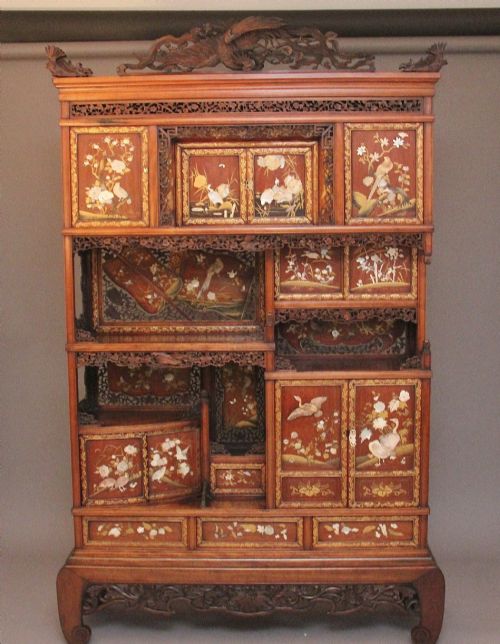
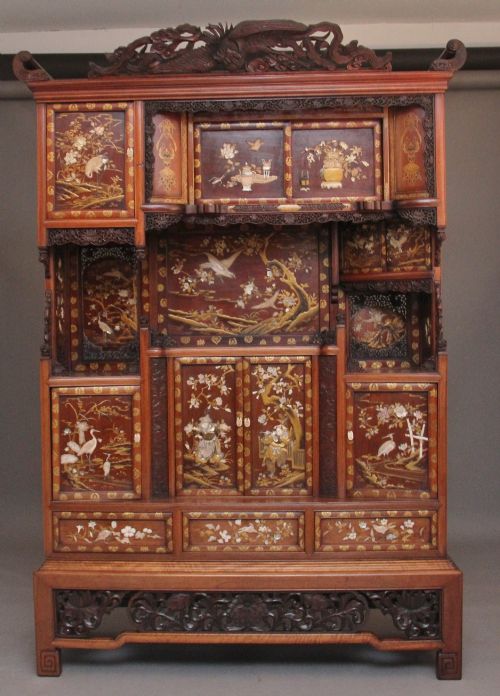
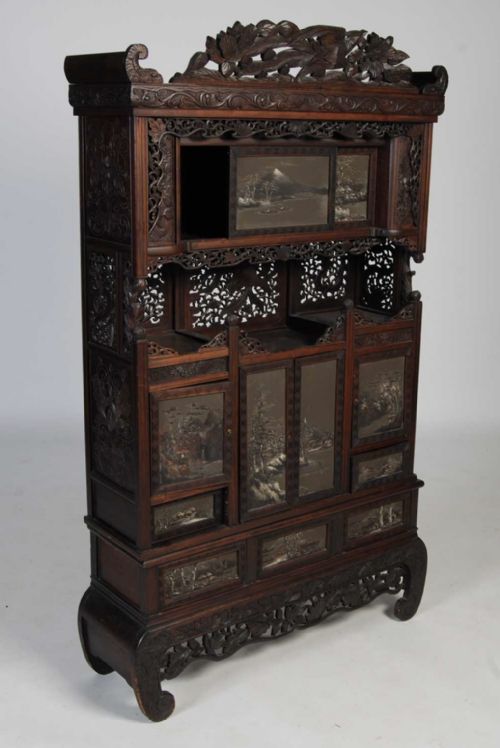
These Japanese meiji lacquer cabinet pieces bring intricate craftsmanship and rich traditional finishes directly into domestic spaces.
Meiji Lacquer Cabinet
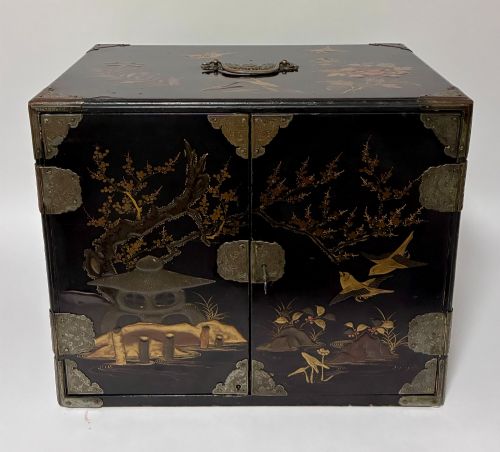
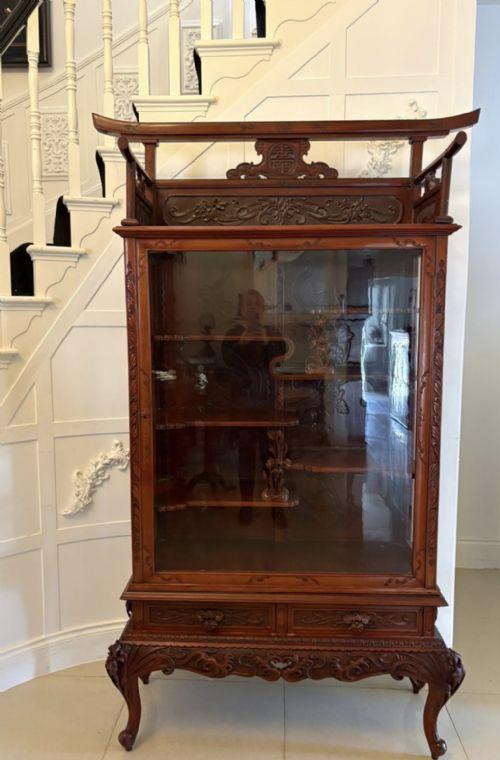
When searching for a meiji lacquer cabinet, buyers encounter a diverse range of forms spanning table cabinets, display cabinets, writing boxes, and larger shodana structures. The pieces on this page originate predominantly from the nineteenth century, including specific dates across the decades, alongside early twentieth-century examples.
The most common formats met here are table cabinets and shodana cabinets, often resting on stands or incorporating chests of drawers. Styles bridge traditional Japanese Meiji period design with occasional Japanese Revival and Chinoiserie interpretations.
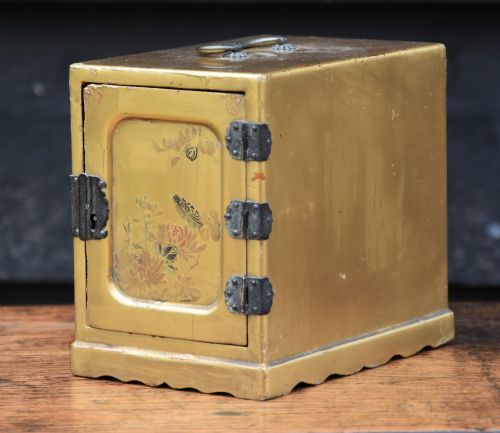
Makers utilised various formats to serve both functional storage and decorative display. The inventory includes smaller jewellery boxes and miniature pagoda cabinets alongside substantial floor-standing chests.
Materials and construction methods
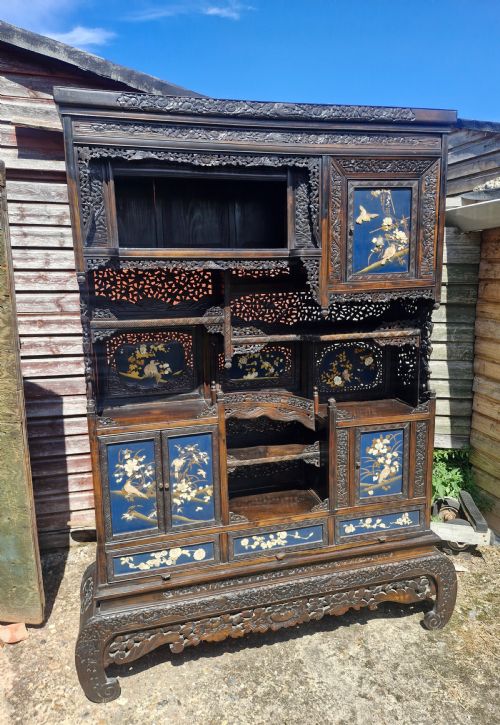
Makers built these pieces primarily using wood and hardwood foundations before applying detailed layers of lacquer. Surfaces frequently incorporate decorative accents of gold leaf, mother of pearl, bone, and carved cinnabar.
Many examples integrate brass hardware for hinges, locks, and corner mounts to reinforce the wooden frames. Shibayama panels and intricate parquetry work appear across the surface decoration, demonstrating multi-layered artisan techniques.
Some miniature pagoda cabinets bring entire architectural fantasies down to tabletop scale, complete with tiny tiered roofs.
Distinctions in craftsmanship and finish
Quality in these pieces rests upon the depth of the lacquer finish and the precision of the inlaid materials. Finer examples display meticulous integration of mother of pearl, bone, and carved detailing within the panels.
Structural complexity also separates standard items from exceptional ones, particularly in multi-tiered shodana cabinets with balanced proportions and integrated stands. The crispness of floral carvings and the preservation of gold leaf layers indicate the level of initial workshop skill.
The Meiji Lacquer Cabinet Glossary
- Shodana
- A Japanese display cabinet featuring multiple shelves, cupboards, and sliding doors arranged in an asymmetric layout. These cabinets were designed to showcase small art objects and curios.
- Kodansu
- A small Japanese portable chest or cabinet fitted with internal drawers. They were traditionally utilised for storing writing implements, documents, or personal valuables.
- Shibayama
- A decorative inlay technique utilising materials such as mother of pearl, ivory, bone, and tortoiseshell set into a lacquer background. This method creates raised pictorial scenes of flora and fauna.
- Cinnabar
- A carved red lacquer technique built up in numerous layers before being deeply incised with motifs. The material derives its distinctive colour from mercuric sulphide pigments.
- Tansu
- A traditional Japanese mobile chest built from wood with metal mounts. They served functional storage purposes in domestic interiors before becoming collectible decorative objects.
- Parquetry
- A geometric mosaic of wood pieces arranged in repeating patterns across surfaces. This technique adds texture and visual contrast to cabinet doors and drawer fronts.
Meiji Lacquer Cabinet: Frequently Asked Questions
What is a shodana cabinet?
A shodana is a traditional Japanese display cabinet designed with multiple asymmetric shelves, compartments, and sliding doors.
These pieces were intended for displaying fine ceramics, incense burners, and other treasured household objects.
How do I care for antique lacquer?
Antique lacquer surfaces require gentle dusting with a soft, dry microfibre cloth to prevent scratching. Keep pieces away from direct sunlight and excessive humidity to protect the wood and finish.
Avoid using chemical polishes, water, or modern cleaning agents on the delicate lacquer layers.
What is the difference between a table cabinet and a shodana?
Table cabinets are compact storage units designed to sit on top of desks, tables, or sideboards. Shodana cabinets are typically larger structures, sometimes freestanding or set on stands, featuring more complex display spaces.
Both forms utilise lacquer and intricate joinery, but serve different spatial scales within a room.
What materials are used in Shibayama panels?
Shibayama panels incorporate inlaid materials such as mother of pearl, bone, and carved elements to form raised pictorial motifs. These elements are set securely into a lacquered wooden ground.
The resulting panels depict natural scenes, birds, and flowers with high relief and tactile detail.