



Meiji Incense Burner
A meiji incense burner brings Japanese metalwork and ceramics from the late nineteenth and early twentieth centuries directly into domestic display.
Meiji Incense Burner
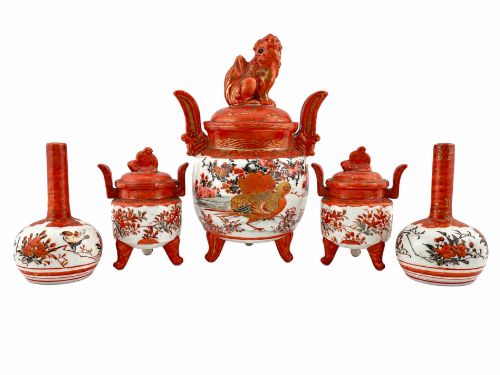
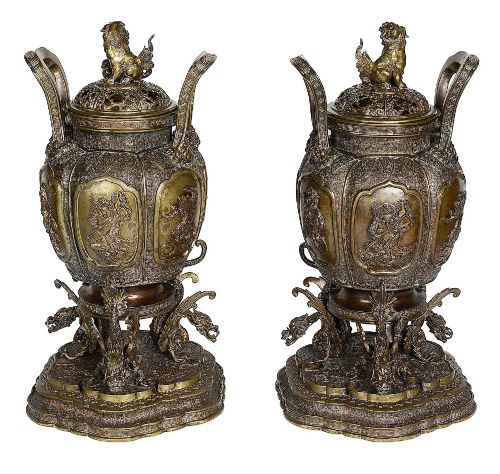
A meiji incense burner encompasses covered vessels known as koro alongside censer bowls produced during the Meiji period and adjacent late nineteenth and early twentieth century dates. These containers vary widely in scale, spanning compact miniature vessels up to large lidded urns designed for prominent placement.
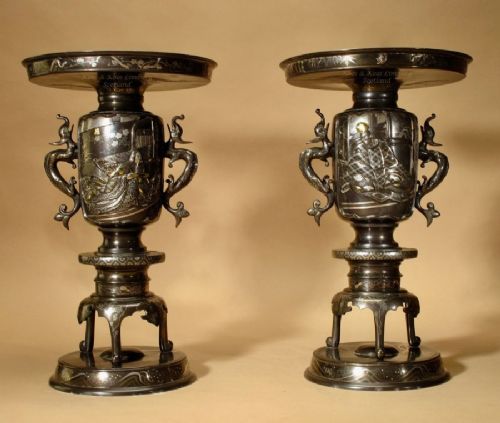
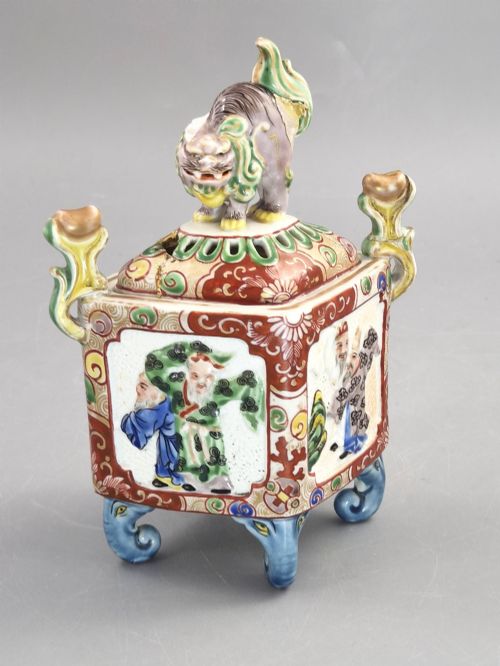
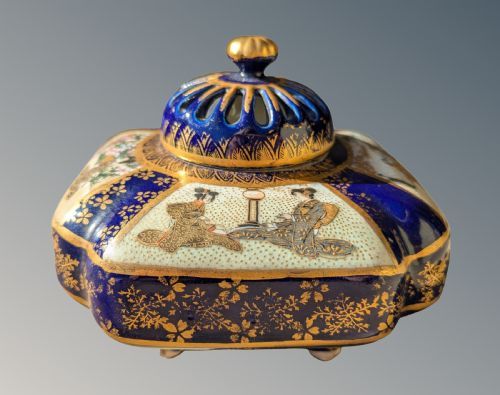
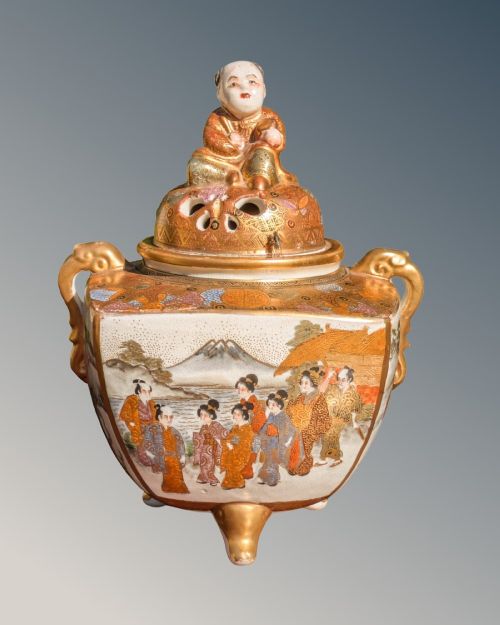
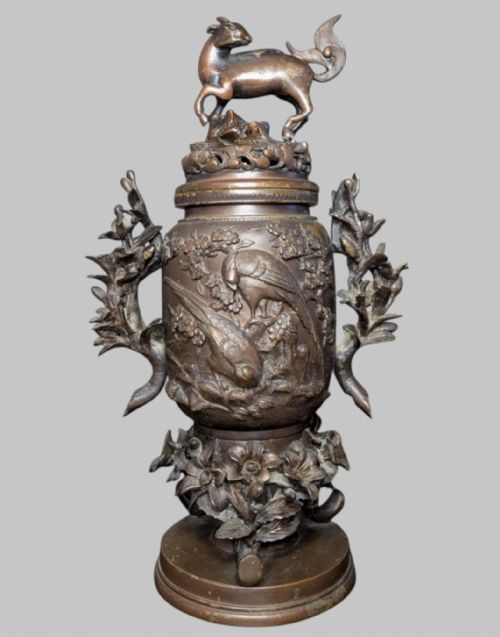
The versions most commonly met on this page include Satsuma earthenware tripods bearing intricate enamel decoration and bronze models decorated with inlaid metals or sculpted animal finials. Porcelain examples from Kutani, Hirado, and Imari also appear frequently, often featuring traditional motifs like the shi-shi lion or dragons.
Makers working in Kyoto and other major crafting centres produced these items for export as well as domestic use, blending traditional forms with styles that appealed to Western collectors of the era.
How they were made
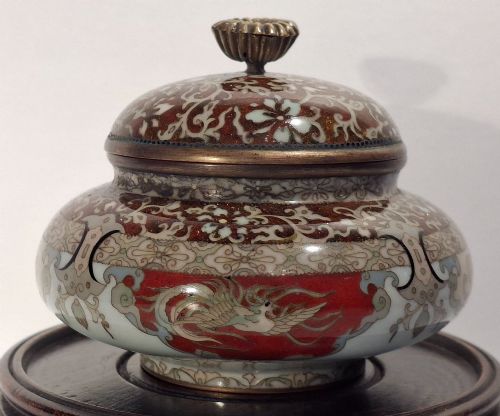
Bronze forms are cast and frequently enriched with gold inlay, silver details, or cloisonné enamel sections applied directly to the metal body. These techniques demand precise control over temperature and metal composition to achieve durable, ornamental finishes.
Ceramic pieces such as Satsuma and Kutani rely on earthenware or porcelain bodies painted with enamels and finished with gilt highlights or gold leaf. Artisans sculpted detailed elements like elephant head feet, dragons, and guardian lions by hand before firing and glazing.
Meiji Incense Burner Retail Price Guide 2026
Typical asking prices for meiji incense burner among the pieces listed under this phrase on Sellingantiques today, from the lower quarter to the upper quarter. They describe what is for sale here now, not the wider market.
The object forms include standard incense burners alongside porcelain garnitures, hanging boat shapes, and treasure ship designs.
What varies in quality
Quality rests in the precision of the modelling and the clarity of the enamel work across the body and lid. Finer pieces display crisp casting in bronze or sharply defined painted details on earthenware, whereas simpler versions exhibit softer lines and flatter decoration.
Signed works associated with known workshops or specific makers generally command greater attention due to the higher level of artistic execution evident in the finishing touches and decorative motifs.
Tsukamoto Hikokichi·Kinkozan·Kizan·Kotobuki do·Shizan
The Meiji Incense Burner Glossary
- Koro
- A traditional Japanese incense burner, typically fitted with a pierced cover to let fragrance escape. These vessels stand on three or more feet.
- Satsuma
- A style of Japanese earthenware characterised by a pale, ivory-coloured cracked glaze decorated with polychrome enamels and gilt. It originated in Satsuma Province and expanded to Kyoto.
- Cloisonne
- A decorative metalwork technique where thin wire partitions create cells filled with enamel paste before firing. This method produces intricate coloured patterns across the surface.
- Shi-shi
- A mythical guardian lion or dog often depicted sculpted on lids or flanking the sides of incense burners. It serves a protective function in traditional iconography.
- Kutani
- A style of Japanese porcelain known for bold colours and intricate painted designs, frequently incorporating birds, figures, and floral scenes.
Meiji Incense Burner: Frequently Asked Questions
What is a koro?
A koro is a traditional Japanese incense burner designed with a removable pierced lid that allows smoke to filter through.
These vessels were produced in various materials including bronze, porcelain, and earthenware during the Meiji period.
How do I identify Satsuma ware?
Satsuma ware is recognised by its distinctive cream-coloured earthenware body covered in a fine network of crackled glaze.
Painters decorated these surfaces with detailed enamel patterns and heavy gilt highlights, often including figures, flowers, or crests.
Where were these burners made?
These pieces originated in Japan during the late nineteenth and early twentieth centuries, spanning the Meiji period and Edwardian eras.
Workshops in regions like Kyoto and Kutani produced them for both domestic ritual use and the international export market.
How can I display a meiji incense burner?
These lidded vessels work well displayed on stable surfaces where their detailed metalwork or painted ceramic finishes can be examined closely.
Larger urns and jardinières suit floor placement or sturdy tables, while smaller tripod koro fit easily on shelves or cabinets.