





Mechanical Reclining Armchair
These mechanical reclining armchairs are ingenious nineteenth-century seats designed for reading, convalescing and absolute ease.
Mechanical Reclining Armchair
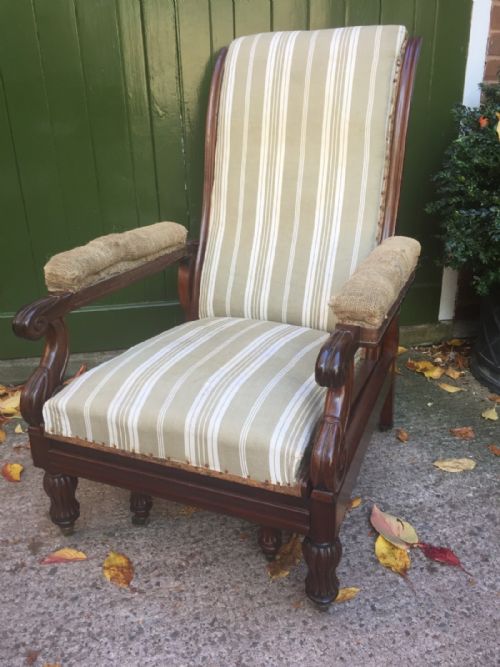
A mechanical reclining armchair offers adjustable comfort through clever internal mechanisms hidden within timber frames. You will most frequently encounter nineteenth-century library and reading chairs made in mahogany, oak or ebonised timber.
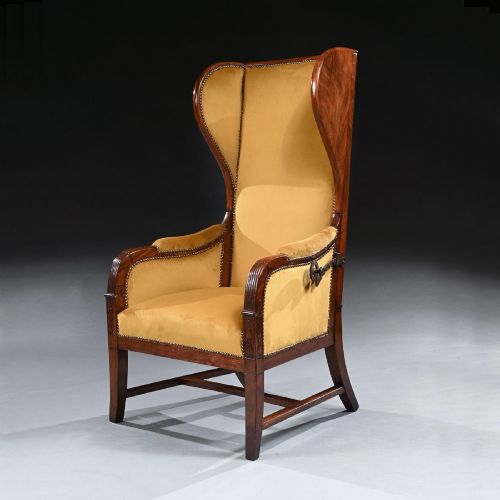
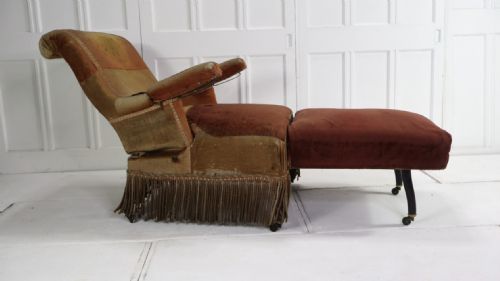
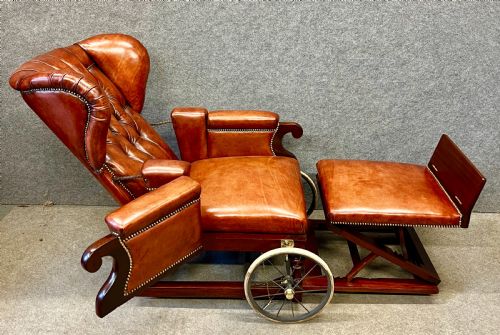
The selection ranges from George III and Regency library models to Victorian metamorphic designs and French Empire wing backs. Many incorporate reading attachments, footstools or wheel mechanisms for convalescents.
Makers such as Minter, John Ward and Foot and Son patented various systems to alter the angle of the back and seat. These pieces bridge the gap between heavy library furniture and specialised invalid seating.
How they were made
Frames rely upon dense hardwoods including mahogany, oak and elm to support the heavy internal brass and iron mechanisms. Timber components are often turned, carved or polished to a high sheen.
Upholstery traditionally employs supple brown or tan leather, alongside velvet and woven fabric. Brass ratchets, rack-and-pinion gears and iron levers enable the smooth transformation from upright armchair to reclining chaise.
What varies in quality
Quality rests upon the sophistication and original ambition of the mechanical patent. Finer examples integrate complex brass ratchets and metamorphic footrests that operate with precision.
The selection of timber grain, the depth of the mahogany or oak, and the caliber of the leather upholstery distinguish standard pieces from superior library models.
Minter·J Foot & Son·John Ward
The Mechanical Reclining Armchair Glossary
- Metamorphic chair
- A seat designed to transform into another form of furniture, such as a chaise longue or daybed. These items utilise hidden hinges and folding extensions.
- Ratchet mechanism
- A notched wheel and catch that locks the reclining backrest into various fixed positions. This brass or iron hardware is typically concealed within the upholstery lining.
- Library chair
- A heavy, sturdy armchair intended for reading rooms and studies, often fitted with adjustable reading desks or extensible footrests. These pieces prioritise sustained physical comfort.
- Convalescing chair
- An invalid seat designed for recovery from illness, frequently mounted on wheels or fitted with specialised reclining angles. John Ward and similar makers specialised in this typology.
Mechanical Reclining Armchair: Frequently Asked Questions
How do mechanical reclining armchairs work?
These chairs use internal brass and iron mechanisms, such as ratchets or rack-and-pinion gears, operated by levers or body weight. They allow the user to adjust the angle of the backrest and often extend a footrest simultaneously.
The mechanics are usually concealed within the wooden frame and upholstery, requiring a gentle pull or shift in weight to lock into different reclining positions.
Were these chairs used for medical reasons?
Many nineteenth-century reclining chairs served convalescing invalids as well as readers in libraries. Makers like John Ward produced specialised invalid wheel chairs and convalescing seats for home recovery.
The adjustable angles and integrated footstools provided necessary physical support for people who spent extended hours seated or resting indoors.
How can I tell the period of a recliner?
Dating relies on the stylistic clues of the timber frame, such as George III mahogany curves, Regency proportions, or Victorian upholstery styles. Patent mechanisms and maker stamps also point to specific decades in the nineteenth century.
Looking at the joinery, the type of brass hardware utilised, and the specific timber species helps narrow down whether a piece dates to the Georgian era or the late Victorian period.
Are the mechanical parts delicate?
The brass and iron hardware built into these frames is generally robust and engineered for daily adjustment. Nineteenth-century makers designed these systems to withstand regular movement between upright and reclined positions.
Gentle handling ensures the internal ratchets and levers continue to engage properly without straining the surrounding timber framework.
What woods were used for the frames?
Cabinetmakers primarily selected dense, durable hardwoods to support the weight of the upholstery and internal metalwork. Mahogany, oak, elm and ebonised timber appear frequently across the available inventory.
These woods were chosen both for their structural strength and for their ability to take a fine polish in high-status libraries and drawing rooms.