


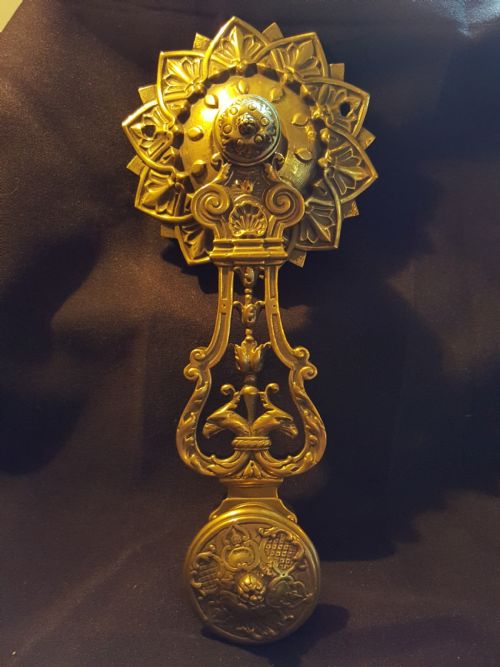


Mechanical Door Pull
A mechanical door pull brings tactile character to an entrance, operating with the solid feedback of brass and horn.
Mechanical Door Pull
A mechanical door pull is architectural hardware designed to summon visitors before the era of wired electricity. These pieces combine function with period ornament, serving as both handles and internal bell ringers.
The versions most commonly met on this page span the Georgian and Victorian eras, alongside pieces from the eighteen hundreds. They appear in forms described as door hardware, bell ringers, and architectural hardware.
Makers shaped these items for practical front-door use, relying on direct mechanical linkage. Each piece reflects the aesthetic priorities of its specific period, from restrained early designs to more elaborate revivals.
How they were made
Construction relies primarily on cast brass, often shaped into ornate patterns that define the style of the hardware. Metal components provide the structural strength needed for daily operation at an entrance.
Selected examples incorporate horn alongside brass, introducing a contrasting natural material to the handle assembly. Gilded metal also appears, adding surface finish to specific decorative elements.
Horn inserts ensure that even a brisk winter summons feels somewhat warmer to the touch than bare metal.
What varies in quality
Quality shows in the crispness of the casting and the depth of the ornament across the brass surface. Finer examples display sharp detail in French Rococo revival motifs or classical Georgian lines.
The choice of materials also marks the tier of a piece, particularly where horn is integrated into the metalwork. Higher quality manifests in the harmonious integration of mixed materials and robust mechanical action.
The Mechanical Door Pull Glossary
- Bell ringer
- A form of architectural hardware designed to actuate an internal bell through a mechanical pull. These devices sit on the exterior entrance wall.
- Cast brass
- Molten alloy poured into a mould to form the body of the pull. This technique allows for repeatable ornamental detail.
- French Rococo revival
- A decorative style featuring asymmetric scrollwork and organic curves. It appears on ornate examples from the nineteenth century.
- Architectural hardware
- Functional metal fixtures built for buildings. This category covers everything from hinges to door pulls.
Mechanical Door Pull: Frequently Asked Questions
How do mechanical door pulls work?
These devices operate through a physical linkage connected to an internal bell mechanism. Pulling the handle moves a lever or wire inside the wall to sound the alert.
They represent an entirely mechanical precursor to modern electrical doorbells.
What periods do these pieces come from?
The examples on this page date primarily from the Georgian and Victorian eras, with pieces from eighteen hundred also represented.
Design details and materials shift noticeably between these chronological periods.
Where were they originally installed?
They were mounted beside main entrance doors on houses and public buildings. Visitors used them to announce their arrival to household staff.
Their placement required sturdy fixing to withstand repeated daily pulling.
What materials are used in their construction?
Brass and cast brass form the primary structural and decorative body of these pieces. Some variants incorporate horn or gilded metal for added visual texture.
These materials ensure durability while offering decorative versatility.