



Matched Bedside Tables
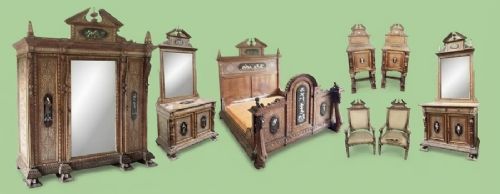
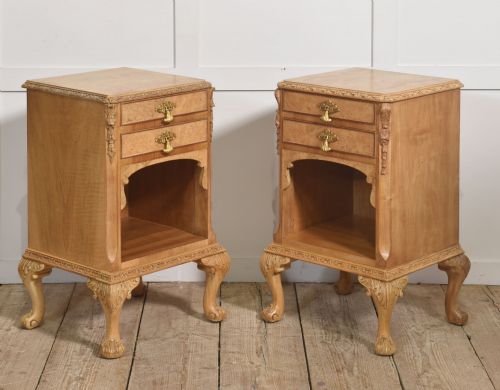
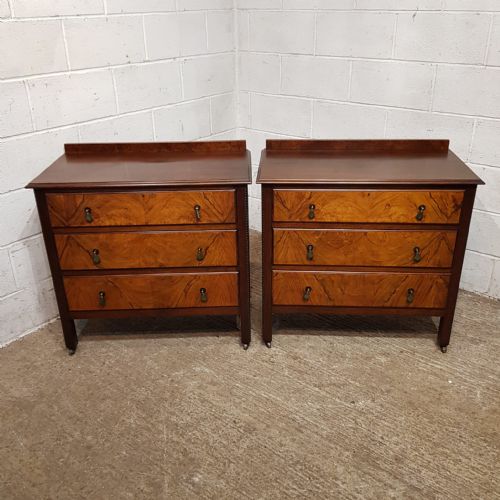
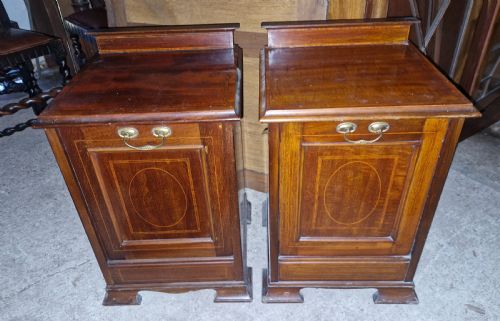
Matched bedside tables bring paired symmetry to a bedroom through cabinetwork spanning Georgian mahogany to Art Deco burr walnut.
Matched Bedside Tables
Matched bedside tables solve the practical problem of placing storage and lighting on both sides of a bed using pieces that correspond in timber, period or scale. When you search for matched bedside tables, you encounter pairs that were created together as part of bedroom suites or paired later by dealers from similar stock.
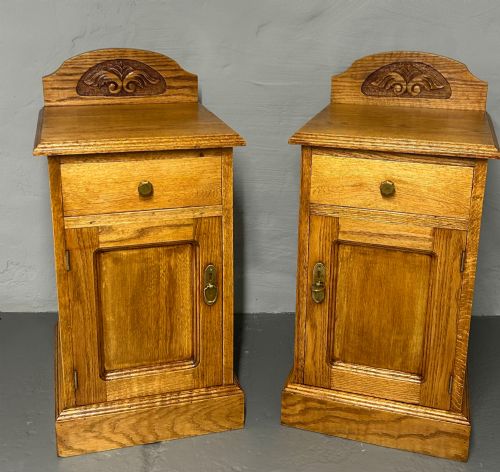
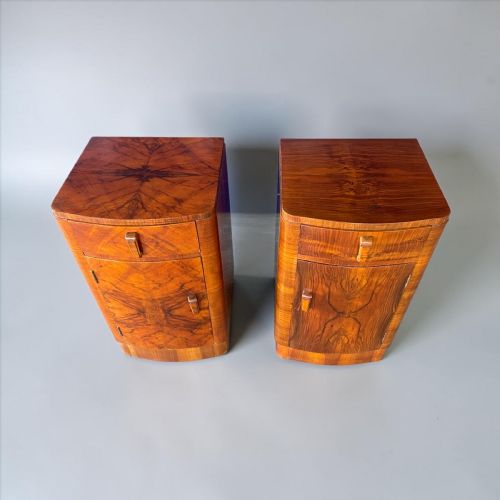
The most common examples on this page date from the Art Deco period, rendered in walnut, burr walnut, blonde maple and elm, often taking drum shapes or cabinet forms. Alongside these, Victorian cylindrical mahogany cabinets and Edwardian inlaid mahogany pieces appear regularly.
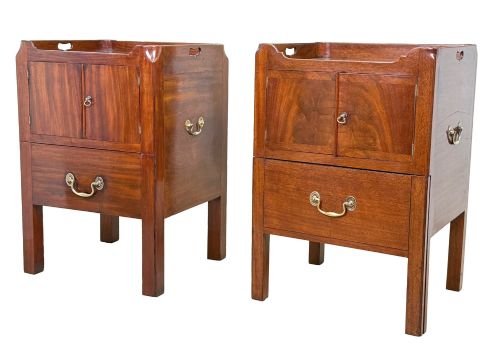
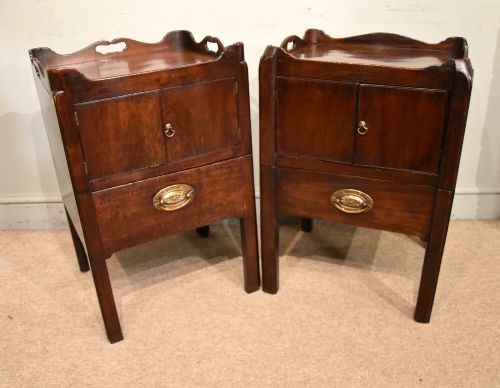
Early examples stretch back to the eighteenth century in solid mahogany, while French influences introduce oak, kingwood and elaborate carved walnut associated with larger bed and suite arrangements.
Materials and construction methods
Cabinetmakers utilised dense timbers including mahogany, walnut and oak as solid foundations or as structural carcases for decorative veneers. Burr walnut, burr elm and birdseye maple veneers provide the striking grain patterns seen on Art Deco and Edwardian designs, applied skilfully to curved and flat surfaces alike.
Inlaid stringing, brass handles and marble tops add functional and decorative detail to many pieces, particularly Edwardian and French styles. Construction ranges from traditional tenon and mortise joinery in eighteenth and nineteenth-century cabinets to curved plywood cores and flush veneering in later Art Deco interpretations.
Matched Bedside Tables Retail Price Guide 2026
Typical asking prices for matched bedside tables among the pieces listed under this phrase on Sellingantiques today, from the lower quarter to the upper quarter. They describe what is for sale here now, not the wider market.
Listings feature bedside tables spanning from the eighteenth century to the nineteen fifties, encompassing Walnut, Mahogany, Burr Walnut, Marble and Satinwood.
Judging the quality of a pair
The degree of match between the two pieces dictates the success of a pair, separating items made together from those assembled later by eye. Uniformity in timber grain, drawer depth, height and hardware determines whether the pair reads as a unified whole beside the bed.
The quality of the timber selection and veneer matching reveals the maker's hand, particularly where burr walnut or bird's-eye maple wraps continuously around a curved drum or cabinet door. Superior execution shows in crisp carving, tight drawer joints and the preservation of original marble tops and brass fittings.
Waring and Gillows
The Matched Bedside Tables Glossary
- Bedside cabinet
- A small enclosed cupboard with a door, designed to stand beside a bed for night storage. These often feature an internal shelf and a drawer above the main compartment.
- Veneer
- A thin slice of figured wood applied over a secondary timber carcase to display decorative grain patterns. Burr walnut and birdseye maple veneers are typical of this application.
- Drum shaped
- Circular in plan, creating a cylindrical cabinet body without corners. This form is particularly prevalent among Art Deco walnut examples.
- Inlaid
- Decorated by inserting contrasting strips of wood or metal into flush recesses on the surface. Sheraton and Edwardian pieces frequently employ this technique.
- Washstand
- A nineteenth-century piece adapted from its original washing function to serve as a bedside table. These often display classical architectural form or marble surfaces.
Matched Bedside Tables: Frequently Asked Questions
Are matched pairs always from the exact same set?
Many pairs originate from larger bedroom suites or were manufactured as matching sets by cabinetmakers. Others are assembled by dealers who match timber, age and dimensions from separate sources.
Closely matched pairs show minor variations in grain or hardware, whereas factory pairs share identical construction and materials.
How do I use a bedside cabinet in a modern bedroom?
These cabinets provide enclosed storage for books and bedside essentials while supporting table lamps on top. Their compact footprints suit most bedroom layouts without dominating the floor space.
Different periods, from Georgian mahogany to Art Deco maple, allow you to contrast modern interiors with traditional wood tones.
How can I tell an Art Deco table from a Victorian one?
Art Deco tables usually date from the nineteen thirties and feature blonde veneers, burr elm, bird's-eye maple, or cylindrical drum shapes with minimal ornamentation. Their lines are clean and geometric.
Victorian pieces, dating from the mid to late nineteenth century, typically use dark mahogany or walnut with panelled doors, turned legs, and traditional plinth bases.