





Matched Bedside Cabinets
Matched bedside cabinets bring symmetry to a bedroom, pairing practical storage with period character.
Matched Bedside Cabinets
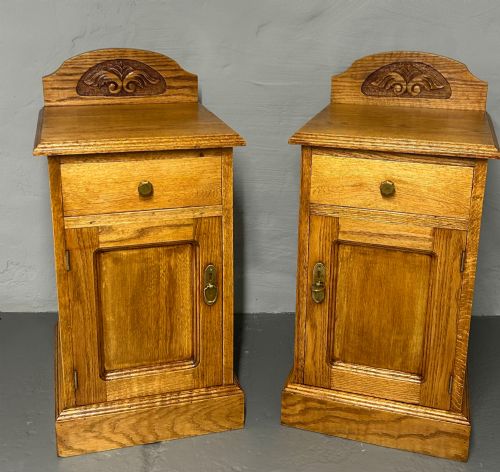
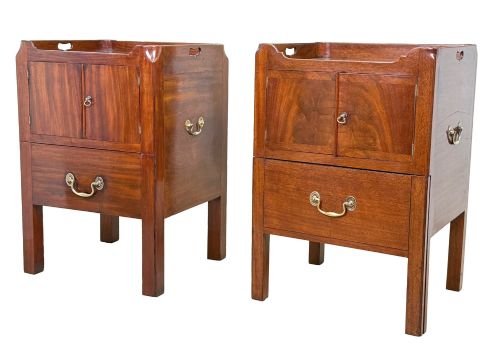
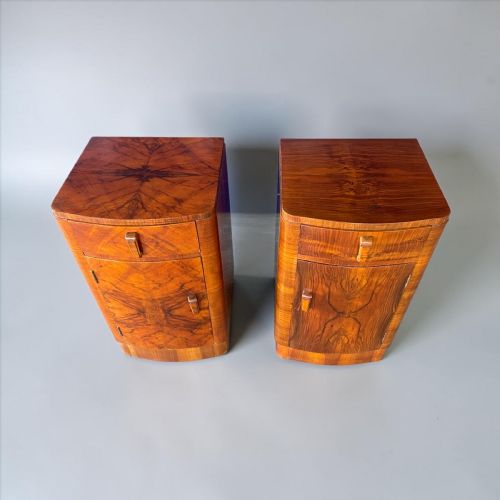
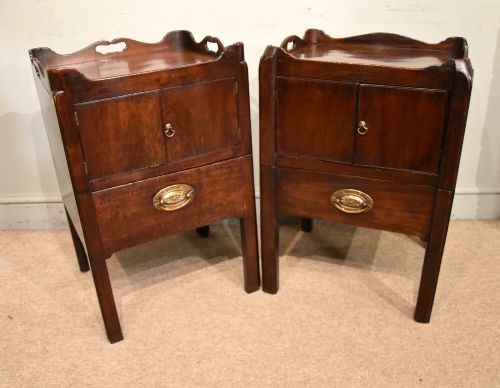
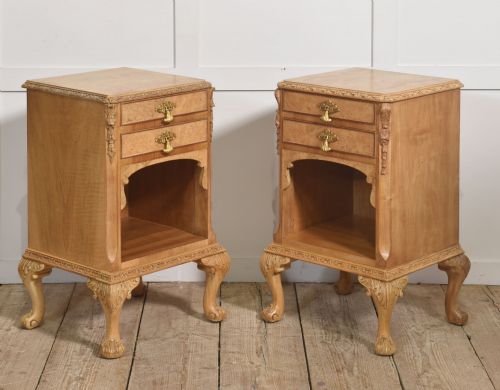
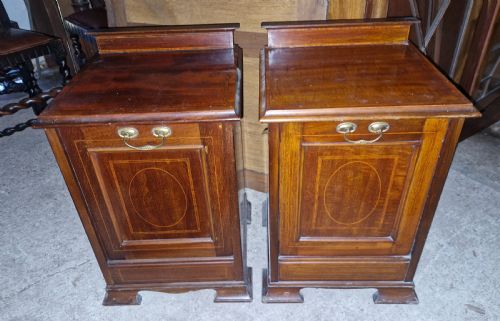
Matched bedside cabinets provide dual bedside storage in pairs, fulfilling the practical demand for symmetry and surface space beside a bed. When searching for matched bedside cabinets, buyers encounter forms ranging from compact Victorian cylindrical cupboards to geometric Art Deco designs and 18th century mahogany night tables.
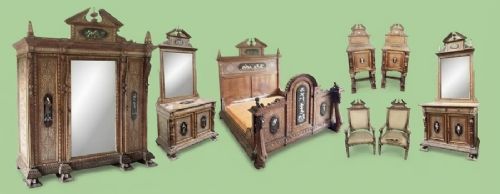
The pieces on this page lean heavily towards the 1930s Art Deco period and the 19th century, often appearing alongside larger bedroom suites or French beds. Oak, walnut, and mahogany dominate the offerings, spanning styles from Georgian simplicity to French Chateau ornamentation.
How they were made
Cabinet makers utilised dense hardwoods such as mahogany, oak, and walnut, frequently applying burr walnut or maple veneers to create striking grain patterns on door fronts. Brass fittings, marble tops, and subtle inlay work provide functional and decorative contrast to the timber carcasses.
Construction techniques combine traditional joinery with period styling, from the clean lines of 1930s Art Deco drum shapes to the classical architectural forms seen in earlier mahogany pieces.
Matched Bedside Cabinets Retail Price Guide 2026
Typical asking prices for matched bedside cabinets among the pieces listed under this phrase on Sellingantiques today, from the lower quarter to the upper quarter. They describe what is for sale here now, not the wider market.
Some Art Deco cabinets are shaped like miniature drums, ready to beat a retreat from dull bedroom storage.
What varies in quality
Quality rests in the precision of the timber matching, particularly where figured veneers like burr walnut or blonde maple wrap symmetrically across paired doors. Finer examples display harmonious grain continuity, refined inlay work, and robust structural joinery that withstands daily bedside use.
The distinction between standard utility and superior craftsmanship also shows in the integration of materials, such as fitted marble surfaces and quality brass hardware that complement rather than overwhelm the timber design.
Waring and Gillows
The Matched Bedside Cabinets Glossary
- Burr walnut
- A prized timber cut from the gnarled growths of walnut trees, displaying intricate, swirling grain patterns. It adds distinct visual texture to cabinet doors.
- Art Deco
- A design style dominant in the 1930s characterised by sleek geometric shapes, streamlined forms, and blonde maple or walnut veneers.
- Cylindrical
- A rounded, circular cabinet form popular in Victorian mahogany pieces. This shape softens bedroom angles while offering enclosed bedside storage.
- Inlay
- A decorative technique where contrasting woods or materials are inserted into the primary timber surface. Edwardian and Georgian pieces often utilise this for linear borders.
Matched Bedside Cabinets: Frequently Asked Questions
How do I style matched bedside cabinets?
Pair the cabinets with balanced lighting, such as matching table lamps, to maintain the symmetry they introduce to the room. Allow the period timber grain or veneer to remain the visual focal point by keeping surface accessories minimal.
Consider the height of the cabinet relative to the mattress top to ensure comfortable reach. A balanced pairing anchors the bed frame and unifies the bedroom decor.
Are these cabinets part of larger suites?
Many bedside cabinets originate as part of larger bedroom suites, often accompanying matching wardrobes, chests, or bedsteads. These pieces were designed to create a cohesive aesthetic across all bedroom furniture.
Pairs occasionally emerge from dismantled larger suites or were originally commissioned together with a central bed. Checking the timber and style helps confirm their matching origin.
How do I tell Art Deco from Victorian cabinets?
Art Deco cabinets from the 1930s typically feature streamlined geometric forms, drum shapes, and lighter woods like blonde maple or burr elm. They rely on clean lines and bold veneer patterns rather than applied ornamentation.
Victorian pieces from the 19th century favour deeper mahogany or walnut tones, often incorporating architectural details, cylindrical bodies, or subtle inlaid borders. The joinery and silhouette immediately reveal the period.
Can I use night tables with different beds?
Matched pairs function independently of the bed frame, allowing them to complement various styles provided the scale and timber tone harmonize. They offer flexibility to introduce period character into modern or mixed bedroom settings.
Matching the wood finish or era to other bedroom case pieces maintains visual balance. Their primary role is providing enclosed bedside storage while enhancing the room's symmetry.