



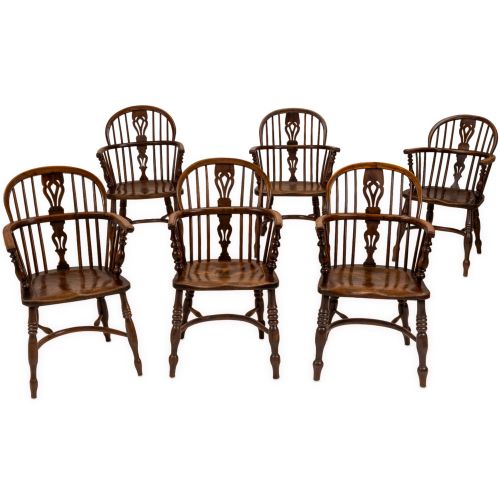


Matched Armchairs
Matched armchairs bring together paired seating from periods spanning Georgian country designs to Edwardian drawing rooms, offering both symmetry and character to a room.
Matched Armchairs
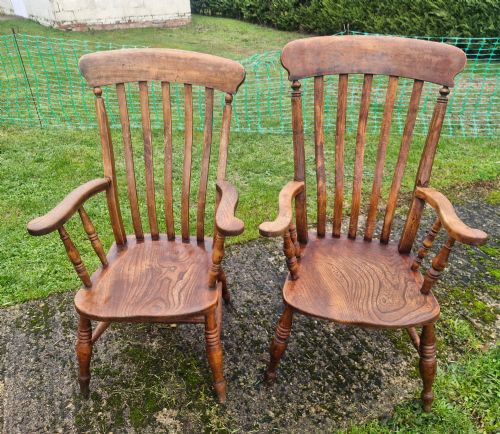
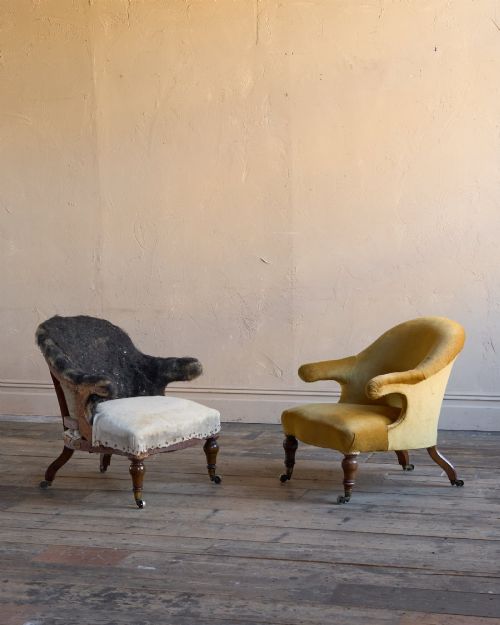
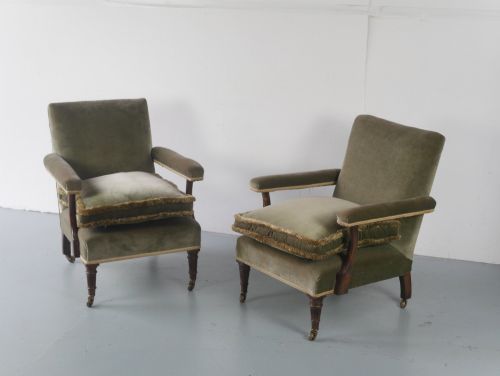
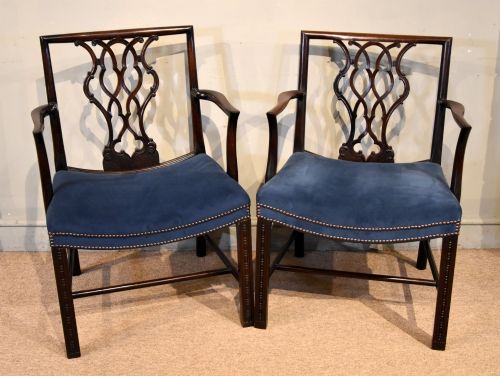
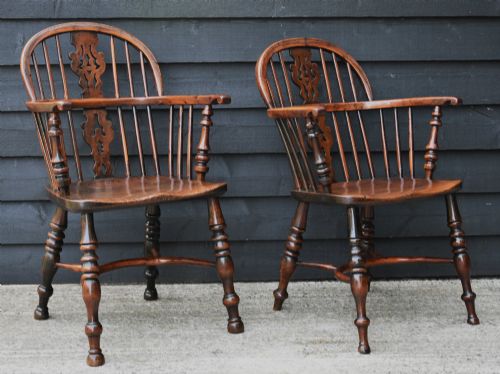
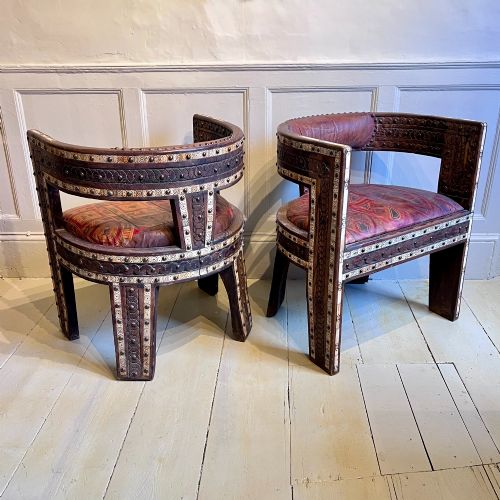
Matched armchairs encompass pairs, sets, and suites of seating linked by style, material, or period, frequently encountered as Windsor chairs in yew and elm, or upholstered library and salon seating. The pieces listed under matched armchairs combine formal styles like Georgian Chippendale and Louis XVI with vernacular English country designs and colonial campaign pieces.
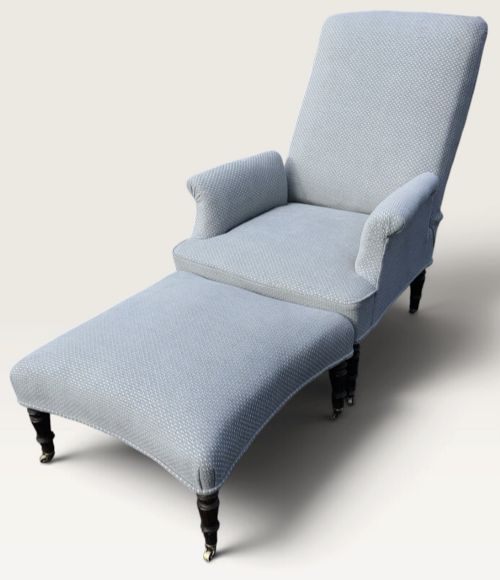
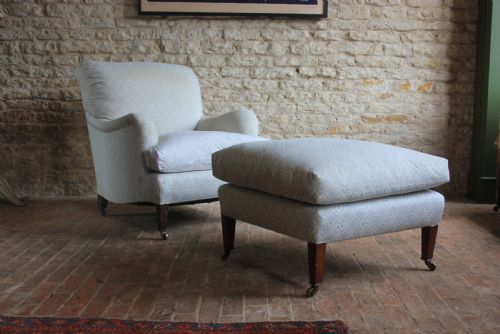
Buyers seeking matched armchairs will discover formations ranging from pairs of occasional chairs to larger sets of six dining chairs and multi-piece salon suites. These groupings often include supplementary items such as matching footstools, settees, or single chairs that extend the coordinated scheme.
What varies in quality
Quality rests upon the integrity of the timber selection and the precision of the carving, particularly visible in the execution of stylistic details such as crinoline stretchers on Windsor chairs or intricate inlay on Edwardian occasional frames. The cohesion between the matched items indicates whether a set was conceived together or assembled later from related pieces.
The standard of upholstery and the preservation of original or sympathetic textile coverings also influence the distinction between standard examples and superior suites. Finer execution in structural joinery ensures that paired seating maintains visual balance and functional longevity.
Matched Armchairs Retail Price Guide 2026
Typical asking prices for matched armchairs among the pieces listed under this phrase on Sellingantiques today, from the lower quarter to the upper quarter. They describe what is for sale here now, not the wider market.
Materials span native hardwoods like yew and elm alongside luxury textiles including silk damask, velvet, and leather.
Howard & sons·James Shoolbread
The Matched Armchairs Glossary
- Windsor armchair
- A wooden armchair characterised by a steam-bent bow back, spindle uprights, and a solid sculpted seat fitted with legs plugged directly into the underside.
- Giltwood
- Timber coated with a thin layer of gold leaf or gold paint, frequently utilised on decorative frames from Louis XVI and nineteenth-century French styles.
- Crinoline stretcher
- A curved hoop-shaped stretcher connecting the legs of a chair to provide structural rigidity, commonly found on English Windsor chairs from the eighteenth and nineteenth centuries.
- Duchesse brisee
- A multi-piece chaise longue comprising an armchair accompanied by a matching foot stool or secondary chair unit to form a continuous resting place.
- Inlay
- A decorative technique where contrasting pieces of wood or other materials are inserted into depressions within a solid timber surface to create patterns.
Matched Armchairs: Frequently Asked Questions
What defines a matched set?
A matched set consists of individual pieces that share identical stylistic traits, materials, and periods, though they may have been gathered together rather than created as a single unit.
Buyers often find pairs or sets of six sharing specific details like timber types or upholstery designs.
Are Windsor armchairs comfortable?
Windsor armchairs feature ergonomically sculpted solid wooden seats and bowed backrests designed to support the body during extended periods of sitting.
Their robust construction relies on traditional spindle-back arrangements rather than padded upholstery.
How do I care for antique upholstery?
Historic fabrics and leather require gentle cleaning methods and protection from direct sunlight to prevent textile degradation and colour fading.
Preserving original coverings maintains the historical integrity of pieces upholstered in silk damask or velvet.
Can I mix different wood types?
Mixing woods such as mahogany, yew, elm, and hardwood depends on the room's overall decorative balance and the specific period style of the seating.
Many country and campaign pieces naturally incorporate contrasting timbers within their structural design.