
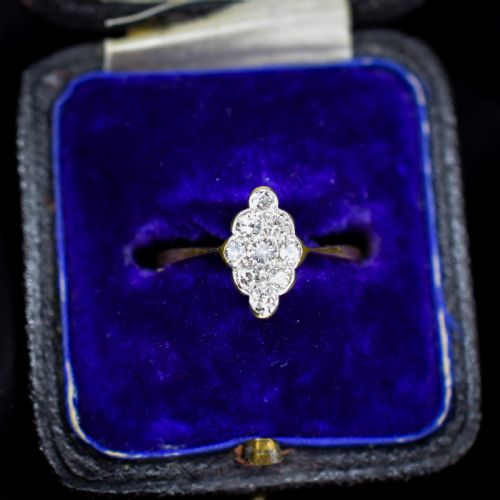
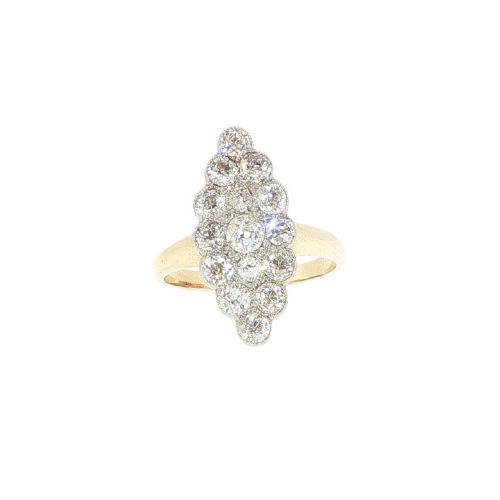


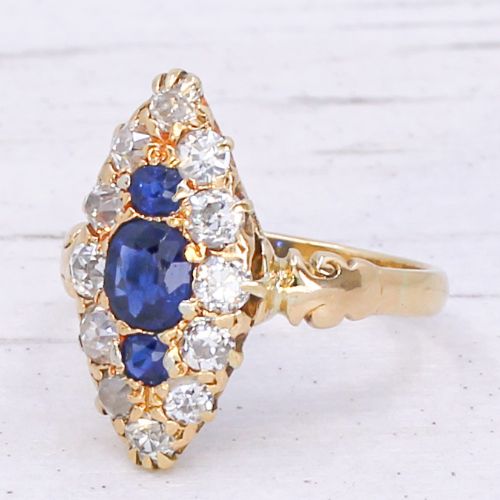


Marquise Shape Cluster Ring
A marquise shape cluster ring offers a dramatic, elongated silhouette on the finger that commands attention through sheer geometry.
Marquise Shape Cluster Ring
A marquise shape cluster ring presents a pointed, boat-shaped face composed of multiple stones set closely together. When you search for this phrase, you find notable examples stretching from the Victorian and Edwardian eras into the Art Deco period.
The pieces on this page span several decades, featuring diamond and sapphire compositions mounted in platinum, yellow gold, and 18ct gold. You are most likely to meet diamond-centric navette designs alongside sapphire and ruby variants set in traditional cluster arrangements.
How they were made
Goldsmiths utilised combinations of 18ct gold and platinum to secure old cut diamonds and coloured gems. Platinum claw and rubover settings allowed artisans to minimise metal visibility and maximise stone brilliance in early twentieth-century examples.
Victorian workshops frequently mounted stones upon yellow gold shanks with boat-shaped or navette platforms. This construction provided structural strength for intricate multi-stone cluster faces without adding excessive weight to the hand.
What varies in quality
Quality rests upon the harmony of the central stone cluster and the precision of the metalwork shaping the elongated outline. Superior examples maintain balanced proportions where the outer gems follow the tapering points without awkward gaps.
The integrity of the original settings and the matching of old cut diamonds or natural sapphires determine the distinction between average production and finer workshop output. Finer pieces display crisp gallery work and secure stone alignment that withstands daily wear.
The Marquise Shape Cluster Ring Glossary
- Navette
- A boat-shaped gemstone arrangement resembling a small hull that tapers to sharp points at either end. This French term is frequently used interchangeably with marquise.
- Cluster ring
- A ring design featuring a central stone surrounded by a border of smaller gemstones. The arrangement increases visual presence on the hand.
- Old cut diamond
- A hand-faceted diamond cut before the standardisation of modern brilliants, typically characterised by a smaller table and higher crown.
- Rubover setting
- A mounting style where a thin rim of metal folds over the edge of the gemstone to hold it securely in place. It offers a smooth profile without protruding claws.
- Cocktail ring
- A large, bold ring worn primarily for evening wear, often incorporating substantial central diamonds or sapphires surrounded by smaller stones.
Marquise Shape Cluster Ring: Frequently Asked Questions
How do I wear a marquise ring daily?
Pair your marquise shape cluster ring with simple bands to let the elongated silhouette remain the focal point of your hand.
Ensure you remove the ring during heavy manual tasks to protect the pointed ends of the central stones from knocks.
Are these rings comfortable to wear?
The boat-shaped face sits flat across the finger, though very long designs require careful sizing so they do not pivot.
Most historic examples feature tapered shanks that rest smoothly between adjacent fingers for comfortable everyday use.
How can I tell Victorian from Art Deco?
Victorian versions often combine yellow gold shanks with natural rubies, sapphires, or old cut diamonds in warmer settings.
Art Deco pieces favour platinum mountings, geometric precision, and bright white diamonds arranged in sharp, streamlined profiles.
What is a navette design?
A navette design describes an elongated, boat-like shape that stretches vertically along the finger for maximum visual impact.
This specific geometry distinguishes these pieces from round or square cluster configurations found in other periods.