




Marquise Sapphire Ring
A marquise sapphire ring brings together elongated elegance and deep blue stones, offering a distinctive finger profile that collectors prize.
Marquise Sapphire Ring
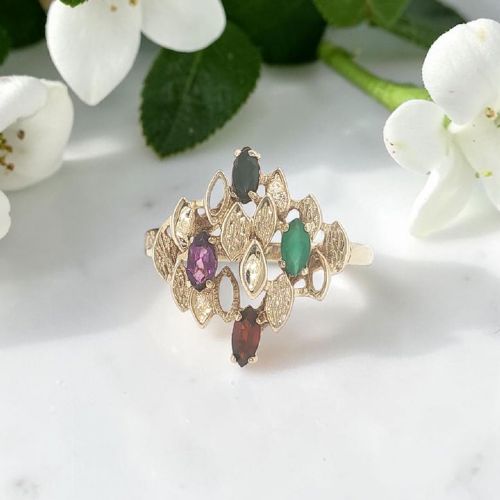
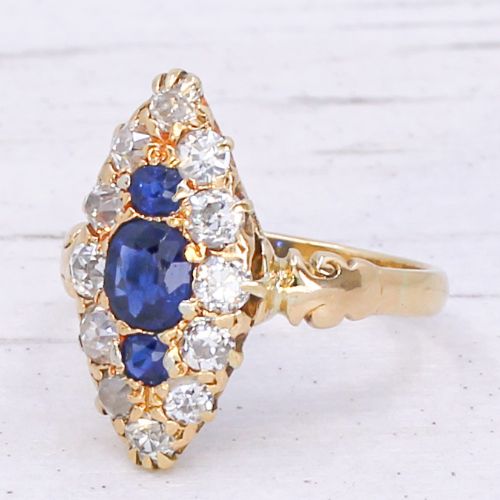
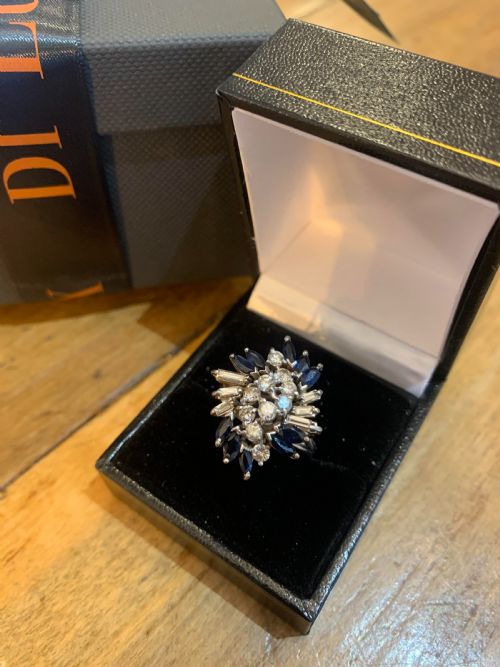
A marquise sapphire ring presents a distinctive boat-shaped or pointed-oval silhouette that sets it apart from standard round or square clusters. The design stretches along the finger, making it a striking choice for those who appreciate historical jewellery with presence.
Examples on this page span from Victorian and Edwardian periods through Art Deco, Retro, and Mid-Century eras. Buyers encounter various interpretations, from delicate Edwardian gold settings to geometric Art Deco platinum designs.
Materials and Techniques
Craftsmen built these pieces using platinum and various gold alloys, notably 18ct yellow gold, 18ct white gold, and 9ct gold. Platinum provided the secure, strong setting required for intricate Edwardian and Art Deco openwork.
Stones are typically secured alongside diamonds using claw settings, cluster arrangements, or flush mounts. Master jewellers balanced the fragile pointed tips of the marquise cut with robust metalwork to protect the gems.
Some sapphire rings secretly invite you to count a hidden constellation of tiny supporting diamonds tucked into the shoulders.
Quality Variations
The distinction between ordinary and exceptional pieces lies in the harmony of the proportions and the depth of the sapphire colour. Superior examples display symmetrical points on the marquise cut and well-matched diamond accents that enhance rather than overpower the central stone.
Workmanship in the metal settings defines the upper tier of these rings, particularly in period pieces where hand-carved detailing or millegrain edges remain crisp and intact. The integration of the stones into the overall geometric design reveals the skill of the original workshop.
The Marquise Sapphire Ring Glossary
- Marquise
- A pointed oval gemstone cut with curved sides and sharp ends. This shape maximises the apparent size of the stone and elongates the finger.
- Platinum
- A dense, strong white metal favoured for fine Edwardian and Art Deco mountings. Its durability allows for delicate wirework and secure claw settings.
- Cluster ring
- A design featuring a central stone surrounded by a border of smaller gems. This configuration maximises overall brilliance and colour impact.
- Old cut diamond
- A hand-faceted diamond cut before modern machine standards were established. These stones typically feature smaller tables and higher crowns.
Marquise Sapphire Ring: Frequently Asked Questions
How do I care for my ring?
Clean your piece gently using warm soapy water and a soft brush, avoiding harsh chemical dips that might damage softer gems. Regular checks by a jeweller ensure the claws holding the pointed marquise stones remain secure.
Store the ring in a separate fabric-lined compartment to prevent scratches from harder jewellery items. Taking the piece off during heavy manual work preserves the delicate metalwork of the setting.
Can these rings be resized?
Most gold and platinum bands can be adjusted by a skilled bench jeweller, though the process depends on the specific shank design. Antique pieces with intricate shoulders or gallery work require careful handling to avoid disturbing the side stones.
Consult a specialist who understands period jewellery before attempting any alterations. Excessive resizing can weaken the structural integrity of older metal bands.
How do I identify the period?
Look to the overall design language, such as the geometric symmetry of Art Deco or the flowing scrollwork of Edwardian pieces. Hallmarks stamped inside the band often provide vital clues to the assay office and year of manufacture.
Gemstone cuts and mounting techniques also help narrow down the era of production. Combining stylistic analysis with physical assay marks yields the most accurate dating.
Are these suitable for daily wear?
Sapphire is a durable gemstone that withstands regular use, making these rings practical for everyday enjoyment. However, antique and vintage pieces require a mindful approach to protect their aged metal settings and delicate prongs.
Removing the jewellery during gardening, sports, or heavy lifting prevents unnecessary wear on the prongs. Routine professional inspections keep the stones firmly anchored in their historical mountings.