




Estate Gemstone Jewellery
Estate gemstone jewellery brings together precious metals and colourful stones from past decades, offering distinctive character and enduring craftsmanship for daily wear.
Estate Gemstone Jewellery
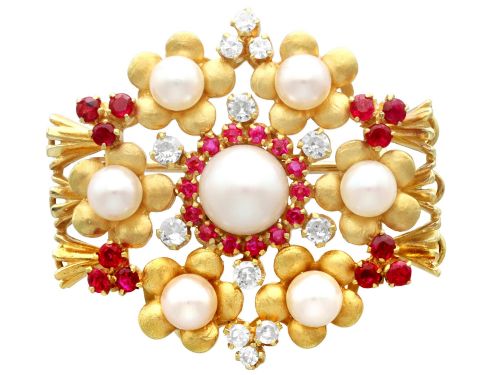
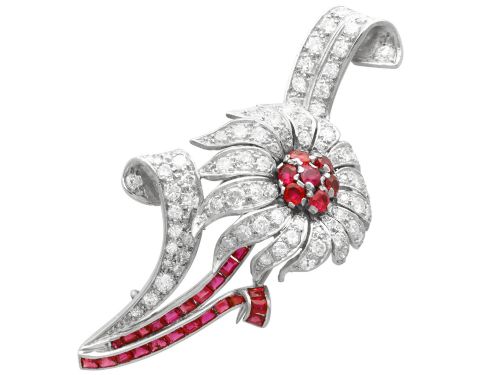
Estate gemstone jewellery encompasses pre-owned decorative pieces set with precious and semi-precious stones, spanning the nineteenth century through to the late twentieth century. Buyers seeking estate gemstone jewellery will discover an array of rings, necklaces, earrings, pendants, and comprehensive jewellery suites.
The selections available here showcase distinct historical periods including the Art Deco era, the 1940s and 1950s Retro movements, and mid-century designs. Common forms include cluster rings, drop stud earrings, and elaborate gem-set pendants that reflect the aesthetic priorities of their respective decades.
How they were made
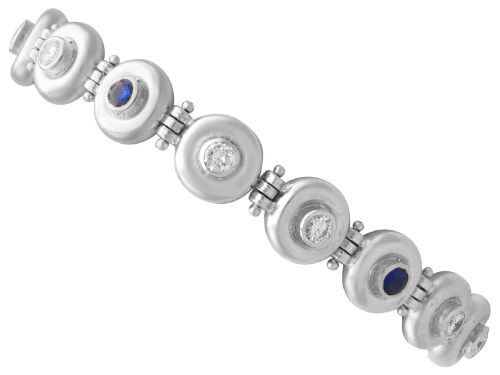
The construction of these pieces relies on traditional metalsmithing techniques paired with precious materials such as platinum, 18ct white gold, 14ct gold, 9ct gold, and standard gold. Artisans set diamonds alongside prominent coloured gemstones like sapphires, rubies, aquamarines, emeralds, amethysts, zircons, opals, and tourmalines into these durable metal frameworks.
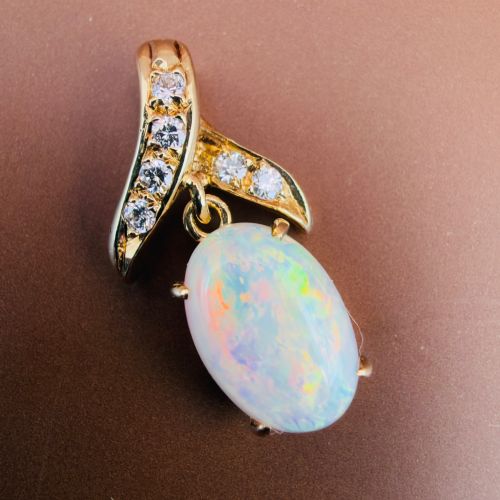
Workmanship involves meticulous stone cutting, including cabochon methods and faceted arrangements, supported by secure prong and cluster settings. Gemstones are frequently paired with pearls to create textured contrasts within platinum and gold mountings.
The listings feature pieces from the 19th Century, 1930, 1940, 1950, and 1960.
What varies in quality
Quality in these items is determined by the natural grade and saturation of the central gemstones, such as the depth of colour in rubies, sapphires, and aquamarines. The clarity and cut of accompanying diamonds also dictate the overall standard of a piece.
The structural integrity of the metalwork, whether executed in platinum, 18ct white gold, or various grades of yellow gold, contributes to the longevity and refinement of the mounting. Precision in stone setting and the complexity of the design further distinguish finer examples.
Chaumet
The Estate Gemstone Jewellery Glossary
- Cabochon
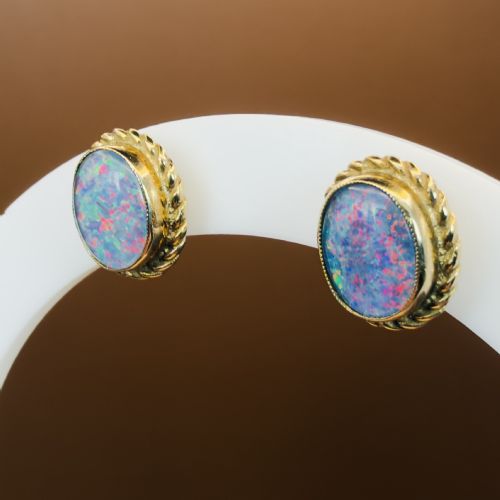
- A gemstone shaped and polished with a smooth, convex surface rather than faceted. This style highlights the natural optical qualities of stones like opals.
- Cluster ring
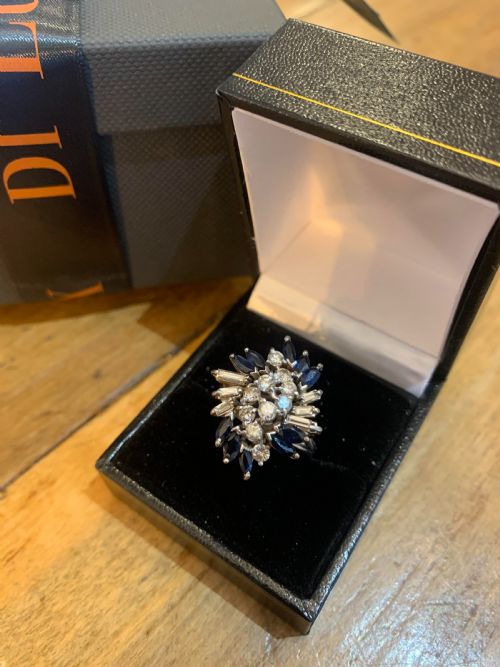
- A ring featuring a central gemstone surrounded by a cluster of smaller stones, typically diamonds. This arrangement maximises visual impact and brilliance.
- Platinum
- A dense, durable, and naturally white precious metal frequently utilised in fine jewellery fabrication. It provides secure settings for substantial gemstone arrangements.
- Zircon
- A natural mineral often used as a gemstone in vintage designs, known for its high refractive index and dispersion. It offers considerable brilliance.
- Tourmaline
- A crystalline silicate mineral displaying a diverse range of colours, utilised in carved or faceted forms within decorative pieces.
Estate Gemstone Jewellery: Frequently Asked Questions
What defines estate gemstone jewellery?
Estate gemstone jewellery refers to pre-owned pieces that have belonged to a previous owner, encompassing items from the nineteenth century onward. These items feature a variety of precious stones set in gold, white gold, or platinum.
Such pieces reflect the design styles of periods like Art Deco and mid-century modernism, offering distinct historical character.
How do I care for antique gemstone pieces?
Care depends on the specific stones and metals used in the construction of the jewellery. Softer gems like opals and pearls require gentle handling and protection from harsh chemicals.
Regular inspection of the metal settings helps ensure that stones remain secure in their mountings over time.
Can I wear these items daily?
Many estate pieces are robust enough for everyday wear, particularly those set in platinum or higher-carat golds with durable gemstones like diamonds and sapphires.
Items featuring more delicate materials, such as pearls or softer mineral stones, benefit from occasional wear and careful storage.
How are different periods identified?
Stylistic markers, such as the geometric lines typical of Art Deco or the bolder volumes of 1940s Retro design, help indicate a piece's era. Material choices and manufacturing techniques also provide clues to historical origin.
Examination of the metal composition and gemstone cuts further assists in determining the approximate period of manufacture.