

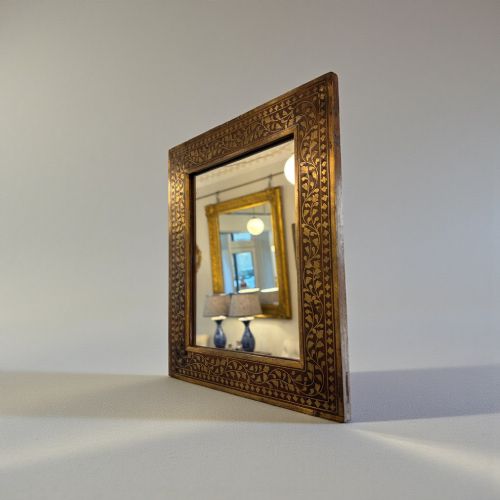
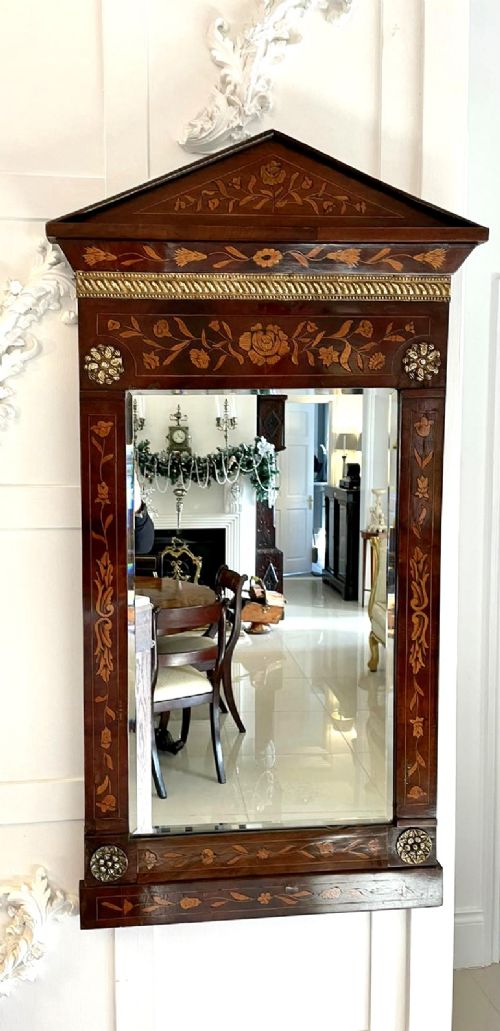
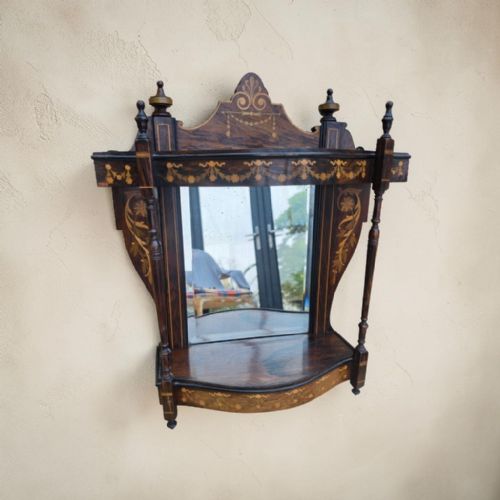
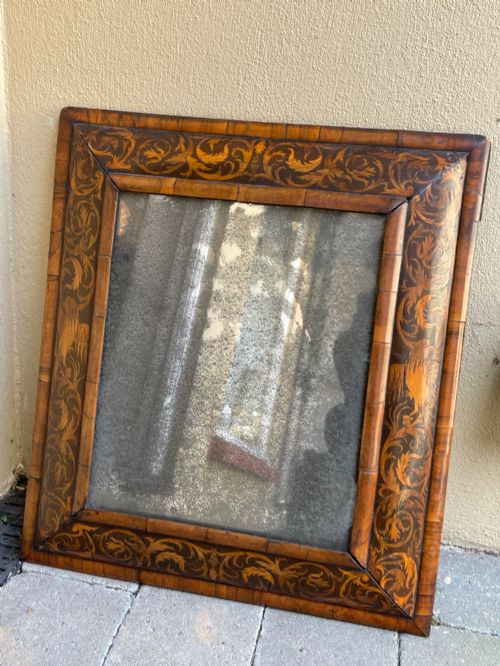




Marquetry Wood Wall Mirror
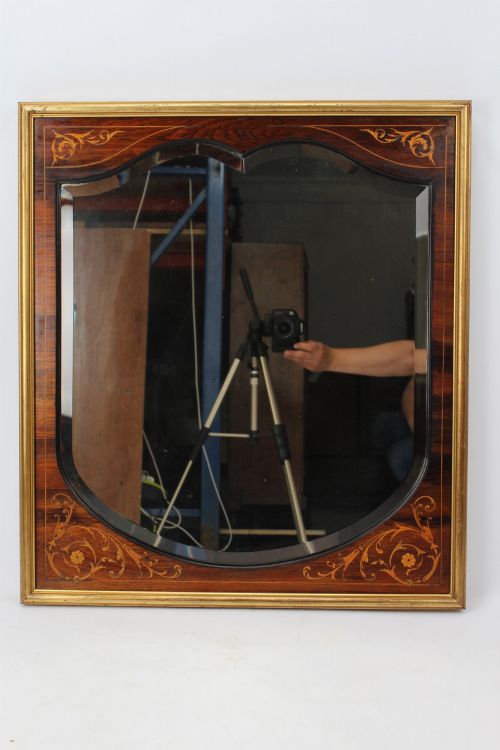
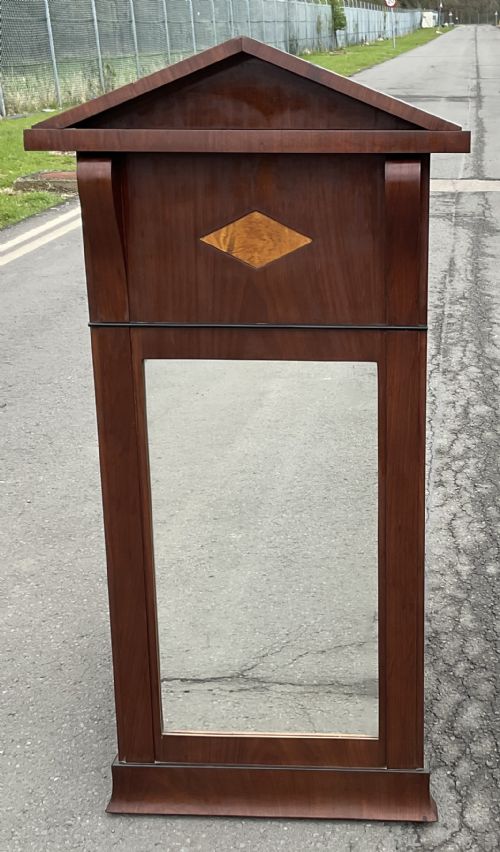
These marquetry wood wall mirror examples combine figured timbers with intricate inlaid botanical and pictorial decoration, bringing warmth and historical depth to any room.
Marquetry Wood Wall Mirror
A marquetry wood wall mirror combines functional reflective glass with decorative timber veneers applied in pictorial or geometric patterns. When you search for a marquetry wood wall mirror, you encounter pieces ranging from compact Edwardian hall versions to grand Victorian overmantels.
The surviving examples span multiple periods, including William and Mary, George III, and the Edwardian era. You frequently meet walnut, mahogany, and rosewood frames enhanced by contrasting fruitwood and boxwood details.
Forms include rectangular hanging plates, oval shapes, and designs incorporating small wooden shelves or gilt accents. Each piece reflects the decorative priorities of its period, from Dutch floral arrangements to Sheraton Revival symmetry.
How they were made
Cabinetmakers constructed these frames using solid secondary timbers as carcases, onto which they applied finely sliced veneers of mahogany, walnut, or rosewood. They cut intricate patterns from various contrasting woods like boxwood, fruitwood, and satinwood to create detailed pictorial panels.
The artisans assembled these individual veneer pieces by hand, often scorching them with hot sand to achieve subtle shading and depth before gluing them to the substrate. Traditional animal glues and hand-applied finishes such as shellac or polish protected the delicate woodwork and enhanced the grain.
Marquetry Wood Wall Mirror Retail Price Guide 2026
Typical asking prices for marquetry wood wall mirror among the pieces listed under this phrase on Sellingantiques today, from the lower quarter to the upper quarter. They describe what is for sale here now, not the wider market.
Listings span from the seventeenth century to the Edwardian era, featuring walnut, mahogany, rosewood, and oak frames.
What varies in quality
Quality rests primarily on the precision of the veneer cutting and the complexity of the botanical or geometric composition. Superior examples display tight, seamless joints within the inlay work and balanced proportions that harmonize with the frame profile.
The choice of primary timber and the condition of the original surface finish also dictate the tier of a piece. Finer items retain crisp detailing in the contrasting woods and well-preserved glass plates that reflect age without excessive distortion.
Rowley Gallery
The Marquetry Wood Wall Mirror Glossary
- Marquetry
- The decorative technique of applying fine pieces of veneer to a structural carcase to form pictorial or geometric designs. This differs from plain inlay by covering the entire surface with assembled patterns.
- Veneer
- A thin slice of figured timber applied to a more stable underlying wood. Cabinetmakers utilise this method to display rich grain patterns without risking the warping associated with solid exotic boards.
- Overmantel mirror
- A large horizontal looking glass designed specifically to hang above a fireplace mantelpiece. These pieces often feature integrated shelving or architectural mouldings suited to reception rooms.
- Cushion mirror
- A frame style with a rounded, convex profile that swells outwards towards the central glass plate. This form gained popularity during the late seventeenth century and highlights intricate floral marquetry.
- Boxwood
- A dense, pale yellow hardwood frequently used for fine contrasting lines and floral details in marquetry compositions. Its neutral colour provides sharp definition against darker background timbers like walnut and mahogany.
Marquetry Wood Wall Mirror: Frequently Asked Questions
How do I date a marquetry wood wall mirror?
Dating relies on observing the timber species, construction methods, and stylistic cues present in the frame. Earlier pieces from the seventeenth and eighteenth centuries often feature distinct joinery and walnut or marquetry patterns characteristic of William and Mary or Georgian periods.
Later Edwardian and Victorian revivals utilise machine-prepared veneers and specific framing proportions typical of the nineteenth and early twentieth centuries. Comparing the bevelling and silvering of the glass plate also helps narrow down the production era.
Where should I hang an overmantel mirror?
An overmantel mirror looks best mounted directly above a fireplace mantelpiece, where it serves as the visual focal point of the room. Its generous width helps reflect natural light and creates a sense of greater space within reception rooms.
Ensure the wall fixings match the weight of the timber frame and secure the mirror firmly to wall studs. Keeping it at a balanced height above the mantel shelf preserves the intended architectural proportions.
What is Dutch marquetry?
Dutch marquetry describes an ornate style of wood inlay featuring elaborate urn, bird, and floral motifs executed across walnut or mahogany surfaces. This aesthetic draws inspiration from seventeenth and eighteenth-century continental designs.
Pieces bearing this style often showcase vibrant contrast between light fruitwoods and dark background timbers. The overall composition prioritises lush, naturalistic scenes that cover the entire visible wooden frame.