




Marquetry Wood Tilt Table
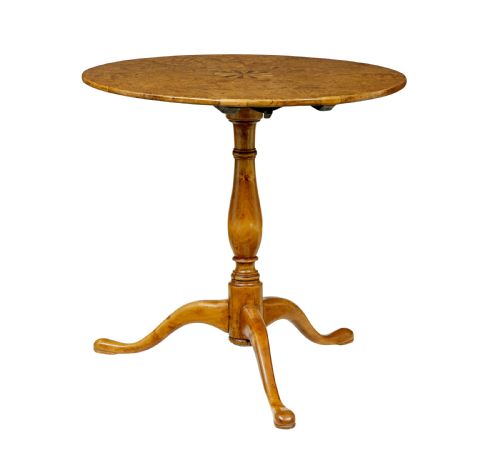
A marquetry wood tilt table combines a hinged top with intricate inlaid designs, offering a surface that tilts flat for storage when not in daily use.
Marquetry Wood Tilt Table
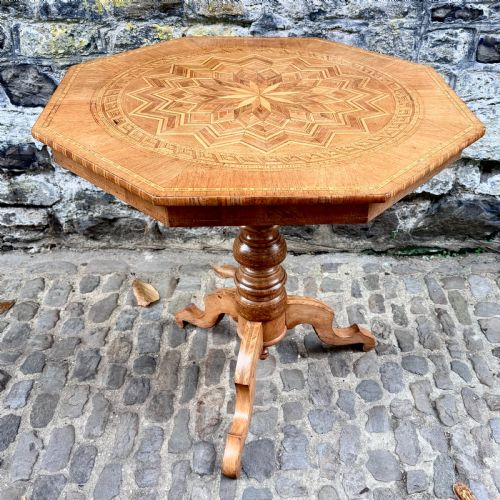
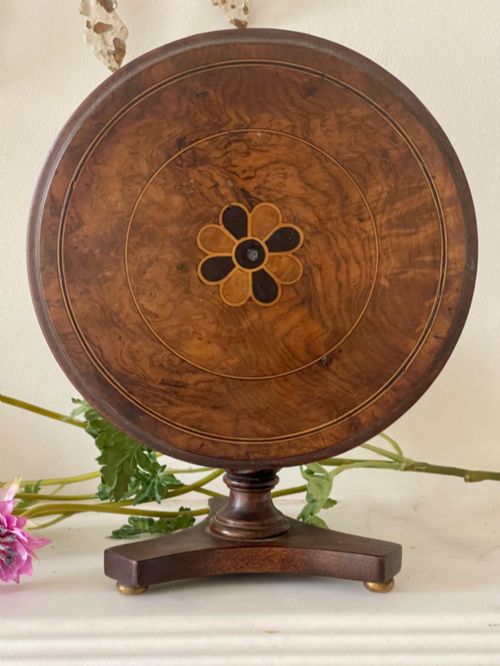
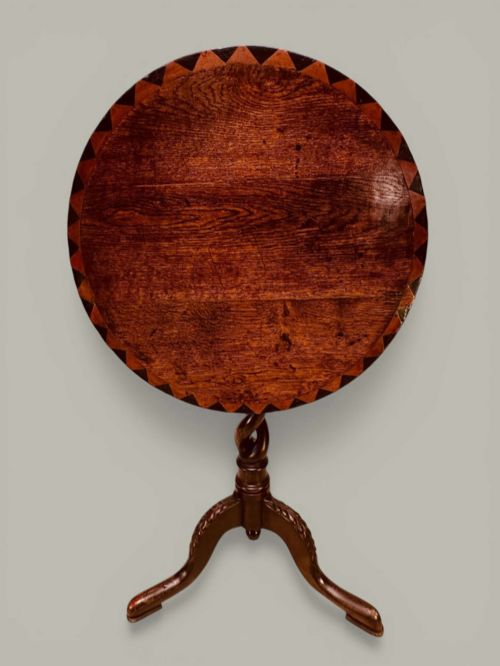
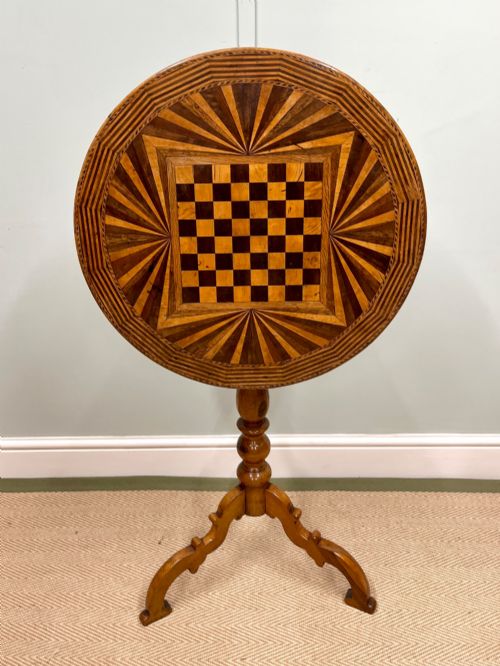
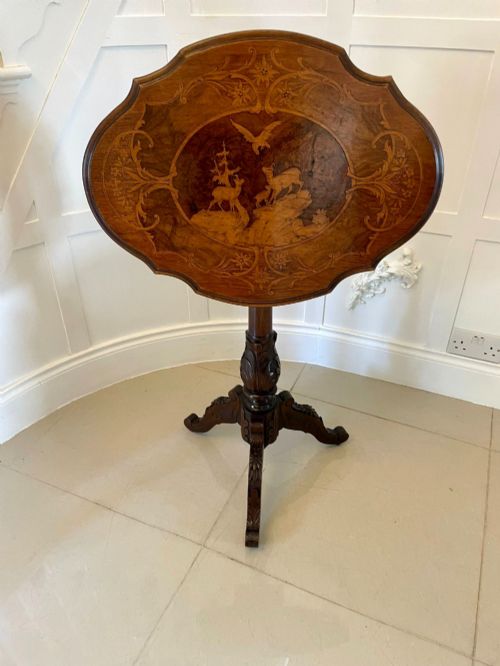
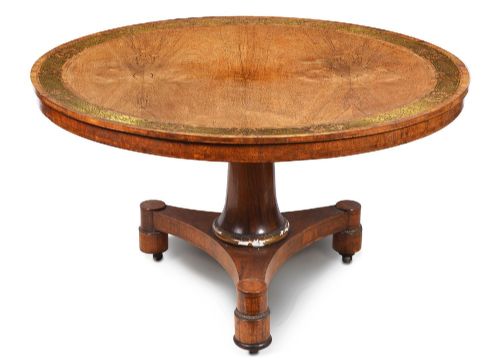
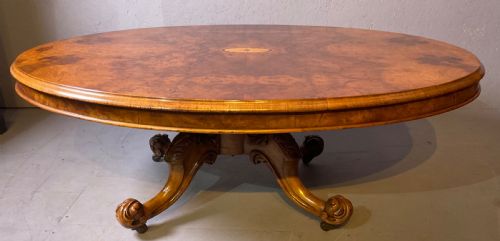
A marquetry wood tilt table typically appears in walnut, mahogany, or rosewood, often dating from the Victorian and Georgian periods. These pieces combine a pedestal base with a hinged top that rotates and tips vertically.
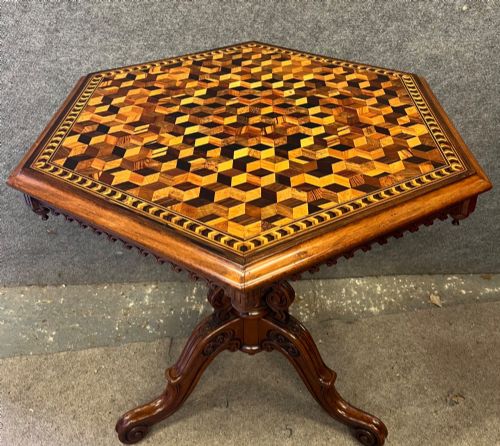
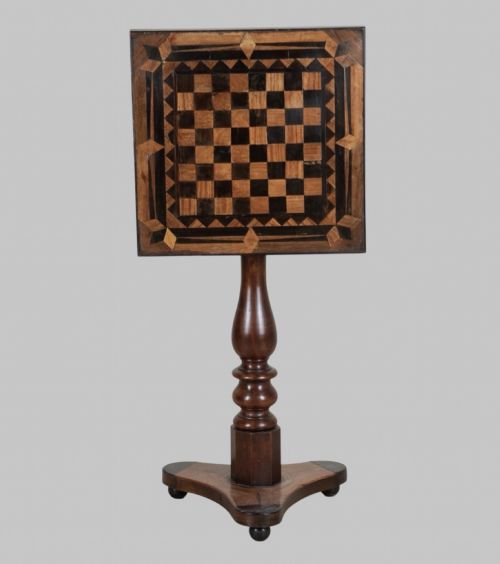
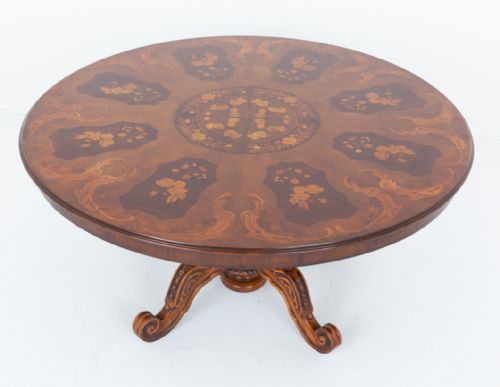
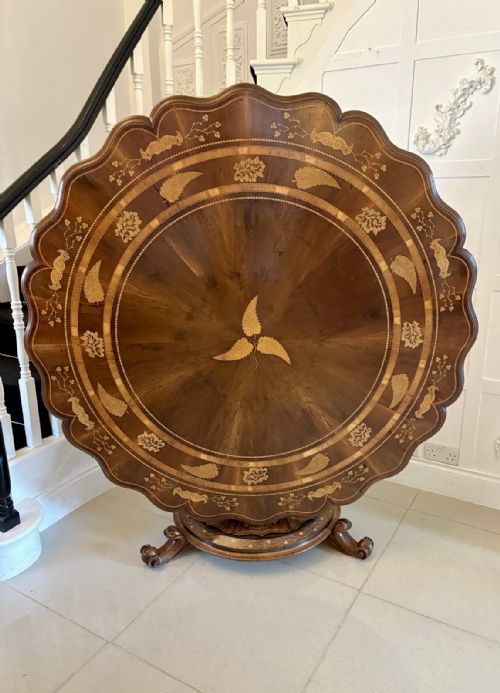
The surface patterns range from geometric borders to elaborate floral and pictorial inlays utilising contrasting timbers. Buyers encounter circular, oval, and occasional formats designed for parlours and drawing rooms.
Materials and construction methods
Craftsmen built these tables using solid timber frames overlaid with fine veneers, cutting delicate floral or geometric motifs from boxwood, fruitwood, and other contrasting timbers. The inlaid pieces fit precisely into hand-cut recesses on the surface.
The tilting mechanism relies on a sturdy block and catch fixed beneath the tabletop, allowing the surface to pivot on a central pedestal supported by three or four legs. Brass fittings often secure the mechanism and reinforce the pivot points.
Marquetry Wood Tilt Table Retail Price Guide 2026
Typical asking prices for marquetry wood tilt table among the pieces listed under this phrase on Sellingantiques today, from the lower quarter to the upper quarter. They describe what is for sale here now, not the wider market.
Several tables hail from Sorrento, where artisans perfected the art of turning ordinary tabletops into elaborate floral panoramas.
Judging quality in marquetry wood tilt tables
Quality rests in the precision of the inlay and the selection of timbers, where tight, seamless joints between contrasting woods separate superior examples from simpler work. Rich grain patterns in the base walnut or rosewood add depth to the overall composition.
The mechanical action of the tilt top demonstrates the maker's skill through smooth operation without wobble when locked flat. A well-balanced pedestal and stable base ensure the table functions securely in daily use.
Egan Workshop·Almerico Gargiulo
The Marquetry Wood Tilt Table Glossary
- Marquetry
- Decorative veneer work forming pictures or patterns by applying thin slices of wood to a structural surface. This technique allows artisans to create detailed floral and architectural scenes using natural timber colours.
- Tilt top
- A hinged tabletop mechanism that pivots vertically to allow compact storage against a wall. It relies on a wooden catch or brass latch to lock the surface securely in position.
- Specimen wood
- Furniture surfaces constructed from multiple distinct timber varieties, often displaying regional or exotic origins. Makers arranged these woods to highlight natural colour variations.
- Tripod base
- A three-legged support structure commonly found beneath small pedestal tables. This configuration ensures stability on uneven floors.
- Veneer
- A thin layer of choice timber applied over a secondary wood base to provide a decorative exterior. It permits the use of figured grains while maintaining structural stability.
Marquetry Wood Tilt Table: Frequently Asked Questions
How do I tilt the table safely?
Release the under-table catch or wooden wedge while supporting the top with one hand to guide its movement. Ensure any items on the surface are removed before operating the mechanism.
Lock the top firmly back into its horizontal position using the safety catch before resting weight on the edges. Regular checks of the pivot hinge maintain smooth movement.
Where should I place a tilt table?
Position the table away from direct sunlight and heat sources to prevent the wood veneers from drying and lifting. Placing it in a drawing room or hallway allows the inlaid top to remain visible.
When tilted vertically, the piece fits neatly against a wall to save floor space in smaller rooms. Ensure the tripod base rests evenly on stable flooring.
How do I clean the marquetry surface?
Dust the tabletop regularly with a soft, dry cloth to prevent dirt from settling into the fine veneer joints. Avoid using abrasive cleaners or excessive moisture on the inlaid sections.
Apply a quality beeswax polish occasionally to nourish the timber and maintain a soft sheen. Buff gently along the grain of the wood.
What is the difference between a tilt top and a snap top?
A tilt top uses a manual hinge mechanism that requires releasing a catch to move the surface between vertical and horizontal positions. This design provides steady support for regular use.
A snap top incorporates a spring-loaded catch that automatically locks the table flat when lowered into position. Both styles served similar practical functions in period interiors.