

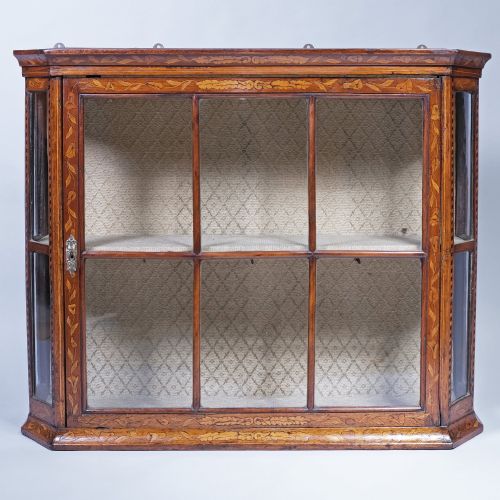
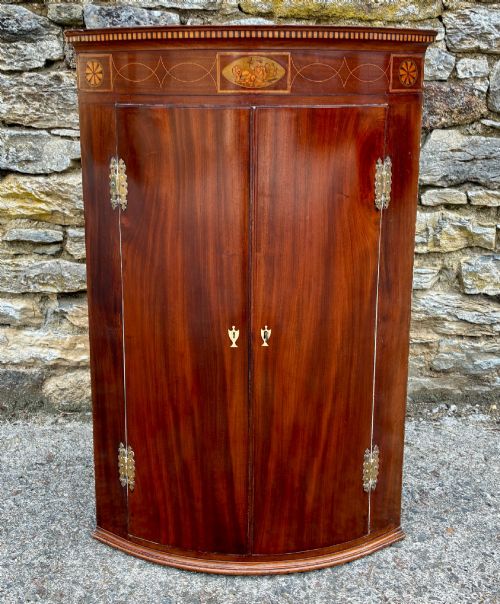
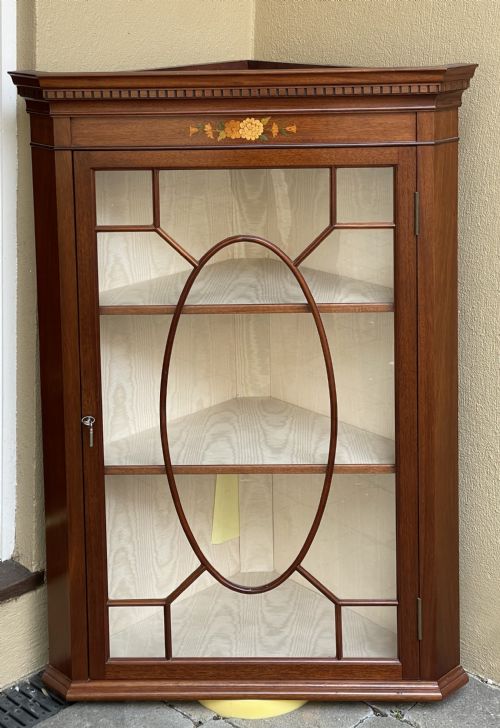
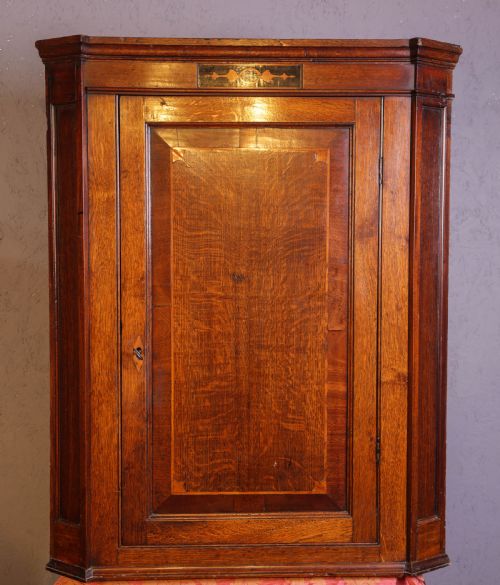


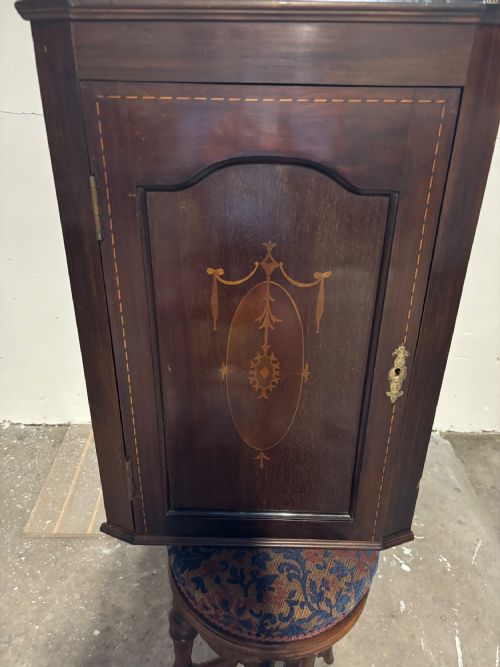


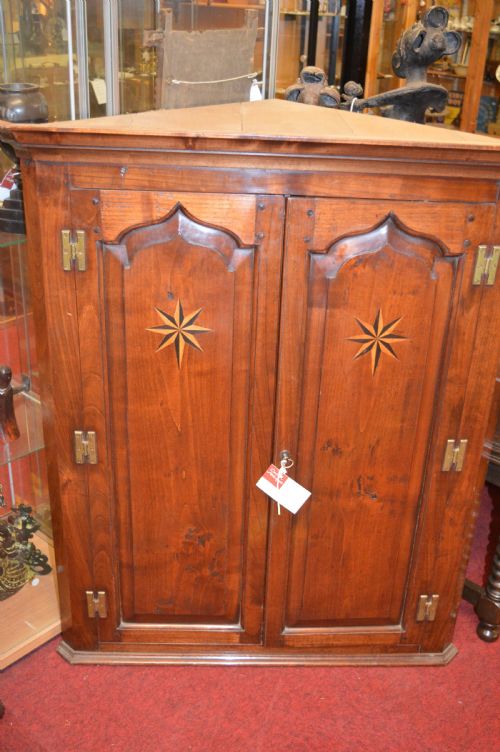

Marquetry Wall Cupboard
These marquetry wall cupboard examples bring rich timber and inlaid detail into smaller rooms.
Marquetry Wall Cupboard
A marquetry wall cupboard is a hanging cabinet designed to utilise corner or flat wall space while displaying inlaid timber decoration on its door and frame. Buyers seeking this phrase find formats ranging from bow-fronted corner cupboards to flat wall-mounted display units.
The material record on this page spans the eighteenth, nineteenth, and twentieth centuries, encompassing periods from Georgian and Victorian eras through to Edwardian and Arts and Crafts examples. Oak, mahogany, walnut, and rosewood form the primary bodies, often embellished with marquetry inlay and brass hardware.
Corner cabinets and wall cabinets predominate among the listed forms, reflecting domestic storage needs across several centuries. Pieces bridge formal styles including Dutch Baroque, Sheraton Revival, and Georgian Revival alongside simpler vernacular pieces.
How they were made
Cabinet makers constructed these cupboards using solid timbers like oak and mahogany alongside softer secondary woods, shaping corner units to fit domestic architecture precisely. Door panels frequently incorporate intricate marquetry inlay, contrasting different wood veneers to form floral or geometric patterns.
Hardware such as brass hinges and escutcheons secured doors and added functional detail to the timber facades. Glass panes appear in glazed wall cabinet variants, allowing visibility for internal shelves and displayed items.
Marquetry Wall Cupboard Retail Price Guide 2026
Typical asking prices for marquetry wall cupboard among the pieces listed under this phrase on Sellingantiques today, from the lower quarter to the upper quarter. They describe what is for sale here now, not the wider market.
Several cupboards feature inner door decoration, proving that eighteenth-century makers knew that secrets deserved as much polish as public faces.
What varies in quality
The sophistication of the marquetry inlay and the choice of primary timber separate simpler vernacular pieces from finer cabinet work. Richer hardwoods like rosewood and figured walnut indicate a higher grade of commission.
Proportion and architectural detailing, such as bow-fronted doors and refined cornice mouldings, distinguish the superior examples on the page. The crispness of the joinery and the preservation of original brass fittings further define the tier of each piece.
The Marquetry Wall Cupboard Glossary
- Marquetry inlay
- Decorative veneer work forming pictures or patterns by fitting together contrasting pieces of wood. This technique appears across eighteenth-century Dutch pieces and later revival styles.
- Bow front
- A convex, curved front profile found on several of the listed corner cupboards. This shape softens the hard angles of a room.
- Corner cabinet
- A specialised storage unit built to fit directly into the ninety-degree angle of a room. These pieces maximise floor space while offering eye-level storage.
- Sheraton Revival
- A late nineteenth and early twentieth-century style drawing inspiration from the lighter designs of the eighteenth-century designer Thomas Sheraton. Cabinets in this style utilise refined mahogany and delicate inlay.
Marquetry Wall Cupboard: Frequently Asked Questions
What is a marquetry wall cupboard?
A marquetry wall cupboard is a hanging storage cabinet featuring decorative wood veneer patterns on the exterior surfaces. These pieces mount directly to walls or fit into room corners to hold small household items.
Cabinets of this type combine utility with decorative timber work, serving as functional furniture and visual focal points within domestic interiors.
Where should I hang a corner cupboard?
Corner cupboards hang securely in the junction of two walls to utilise neglected spatial angles. They anchor well above side tables or in dining areas where floor space remains at a premium.
Proper installation requires locating wall studs or utilising heavy-duty fixings capable of supporting the combined weight of the timber cabinet and its contents.
How do I identify a Georgian cupboard?
Georgian cupboards typically feature solid mahogany or oak construction, often displaying classical proportions and understated brass hardware. Pieces from this era rely on architectural mouldings rather than heavy surface ornamentation.
Revival pieces from later centuries adopt similar stylistic cues, meaning timber patination and internal construction methods help clarify the actual age of the cabinet.
How do I care for inlaid wood?
Inlaid wood surfaces require stable indoor humidity levels and protection from direct sunlight to prevent veneer lifting or fading. Regular dusting with a soft, dry cloth preserves the polished timber finish without moisture damage.
Avoid placing these cabinets near direct heat sources or damp exterior walls, as temperature fluctuations stress both the solid carcase and the delicate marquetry.