

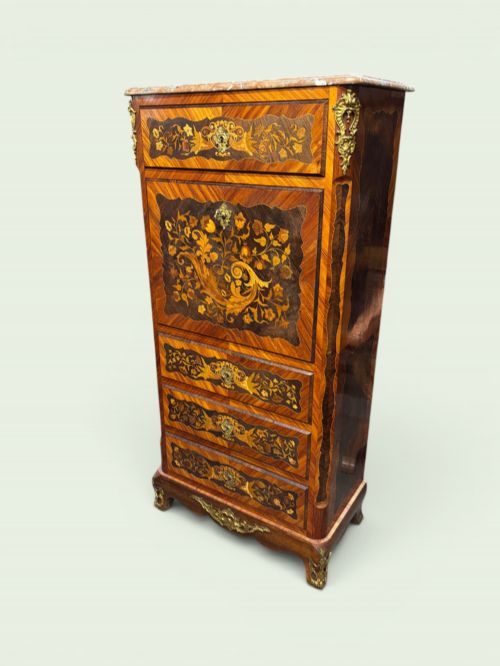


Marquetry Secretaire Cabinet
A marquetry secretaire cabinet combines fitted writing drawers with decorative veneered panels, offering a practical writing surface and display space for the home.
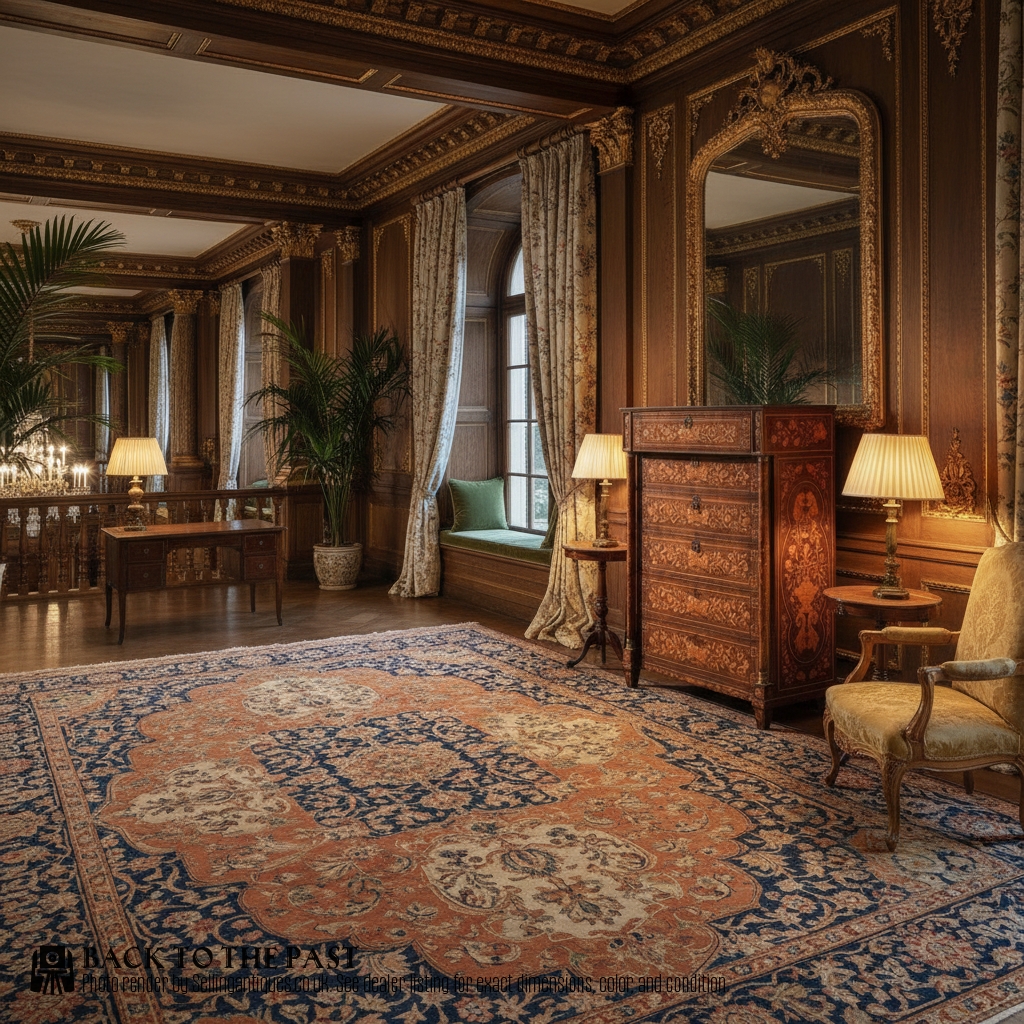
Marquetry Secretaire Cabinet
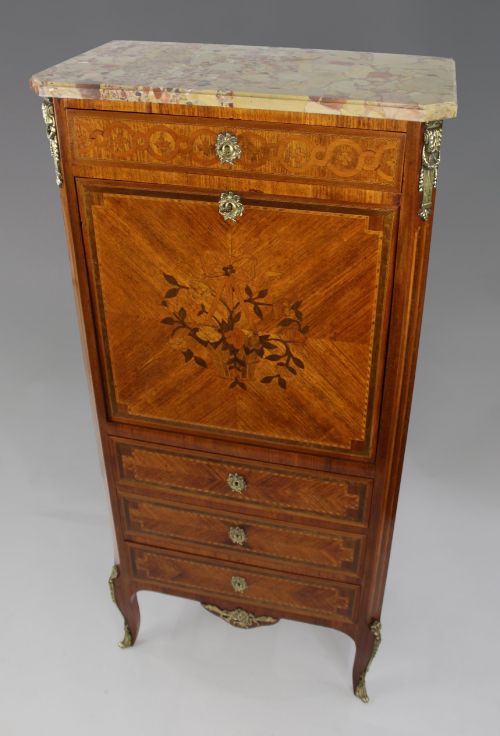
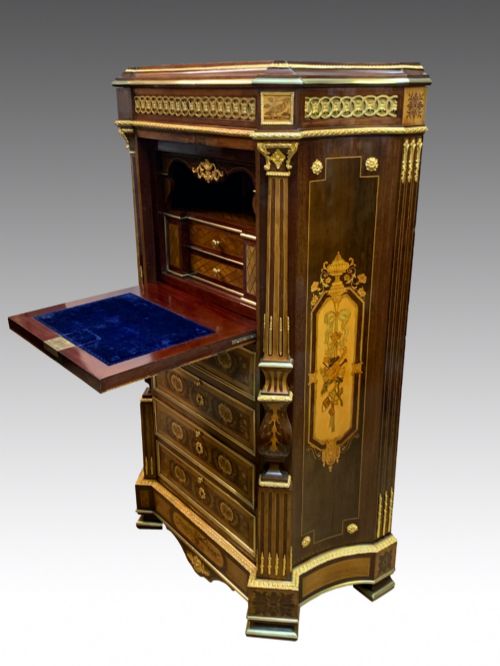
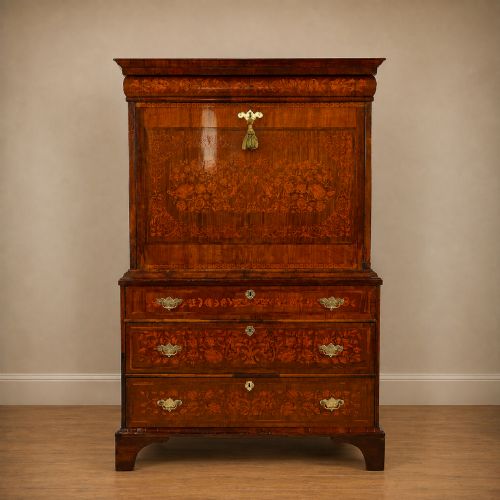
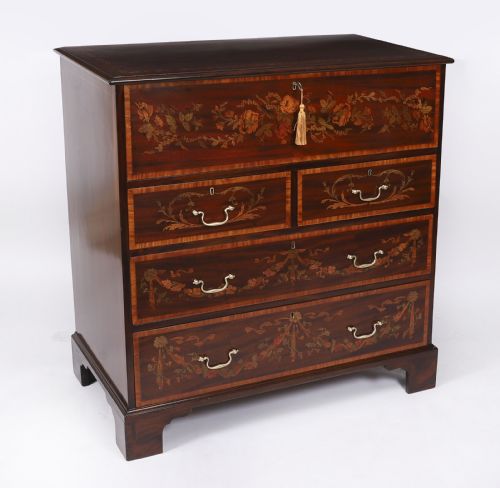
A marquetry secretaire cabinet is a sophisticated form of antique furniture that brings together a concealed writing desk and fine decorative woodwork. When searching for a marquetry secretaire cabinet, buyers encounter diverse forms ranging from French writing desks with drop fronts to Georgian bureau bookcases and Dutch floral examples.
The pieces appearing on this page span several distinct periods, including 18th-century Georgian and Dutch designs alongside 19th-century French revivals. Most commonly, buyers meet 19th-century French styles such as the Louis XV Revival and Louis XVI style, frequently featuring marble tops and gilt bronze mounts alongside intricate wood veneers.
Beyond the classic fall-front cabinet, the selection encompasses escritoires, bureau bookcases, and compact writing cabinets. These variations reflect the changing domestic needs of past centuries, where secure compartments for correspondence were integrated into elegant drawing room and study furniture.
Materials and construction methods
Cabinet makers utilised a rich palette of imported and native timbers to create complex surface patterns. Walnut, kingwood, rosewood, mahogany, and satinwood serve as the primary foundational and veneering woods, often enhanced by intricate floral or geometric marquetry and parquetry.
Metalwork played a structural and decorative role, with brass, ormolu, and gilt bronze mounts framing the woodwork and protecting vulnerable corners. Original marble tops, seen frequently on French examples, added substantial weight and a refined tactile surface to the upper sections of the cabinets.
Materials recorded across the inventory include ormolu, kingwood, marble, walnut, rosewood, mahogany, and glass.
Distinguishing quality in craftsmanship
The division between standard and superior pieces rests entirely on the execution of the veneer work and the integration of internal fittings. Master workshops achieved crisp, precise botanical or pictorial marquetry where individual wood grains create natural shading without excessive reliance on scorching.
Hardware quality and interior engineering further separate ordinary items from exhibition pieces. Superior cabinets feature finely cast ormolu mounts, smooth drawer actions within the hidden writing compartment, and balanced proportions that maintain structural harmony despite heavy decorative schemes.
Maison Krieger·Adriano Brambilla·Edwards and Roberts
The Marquetry Secretaire Cabinet Glossary
- Marquetry
- Decorative veneer work assembled in pictorial or patterned designs using thin slices of various coloured woods. It differs from parquetry through its organic and figurative motifs rather than strict geometric repeats.
- Secrétaire à abattant
- A tall cabinet featuring a hinged fall-front writing panel that drops down to reveal a fitted interior of small drawers and pigeonholes. This French form conceals active workspace behind a unified vertical facade.
- Ormolu
- Gilt bronze mounts applied to furniture edges, feet, and friezes for decorative accent. The technique involves coating cast bronze in a fine layer of gold amalgam.
- Parquetry
- Geometric wood inlay forming repeating patterns such as cubes, chequers, or stripes. It provides a structured contrast to floral marquetry panels.
- Escritoire
- A traditional term for a writing desk or cabinet equipped with drawers and a slanted or drop-down writing surface. These pieces often stand on slender cabriole or tapered legs.
Marquetry Secretaire Cabinet: Frequently Asked Questions
How do I identify French revival styles?
French revival pieces from the nineteenth century display characteristic Louis XV or Louis XVI elements such as curved cabriole legs, ormolu mounts, and elaborate floral marquetry.
Makers of this era frequently combined kingwood or walnut veneers with imported marble tops to emulate eighteenth-century court furniture.
Were these cabinets used for writing?
Yes, the drop-down or pull-out writing surfaces were specifically engineered for handling correspondence and keeping personal documents secure.
The internal drawers and pigeonholes provided organised storage for inkwells, stationery, and letters before the advent of modern postal systems.
How do I care for antique marquetry?
Antique marquetry requires stable indoor humidity and protection from direct sunlight to prevent the fine wood veneers from drying out or lifting.
Applying microcrystalline wax periodically helps nourish the timber surfaces without building up heavy chemical residues.