
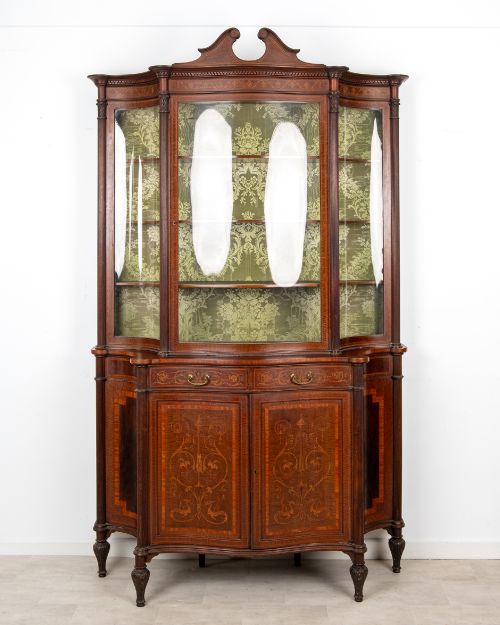
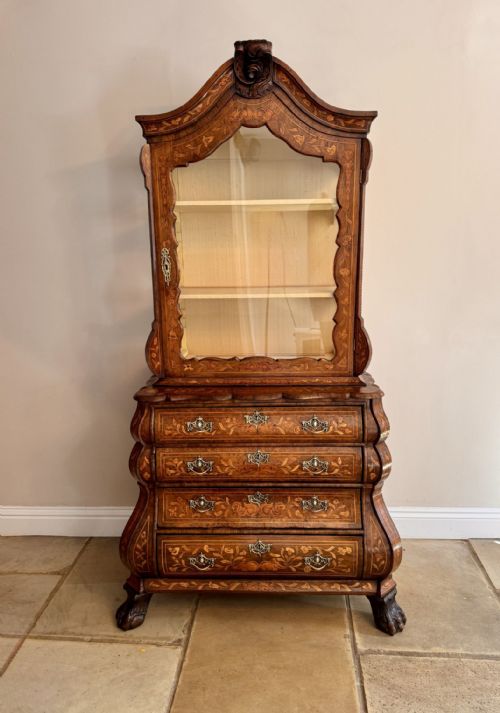
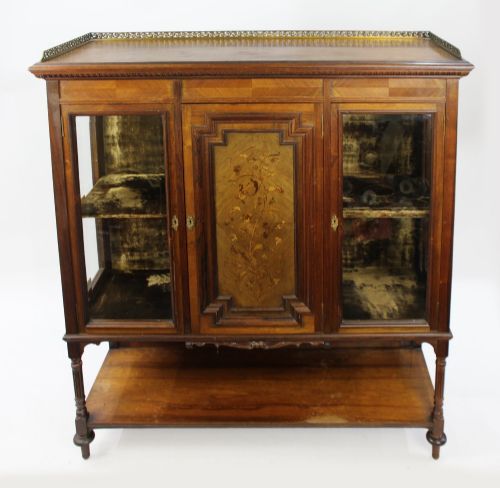
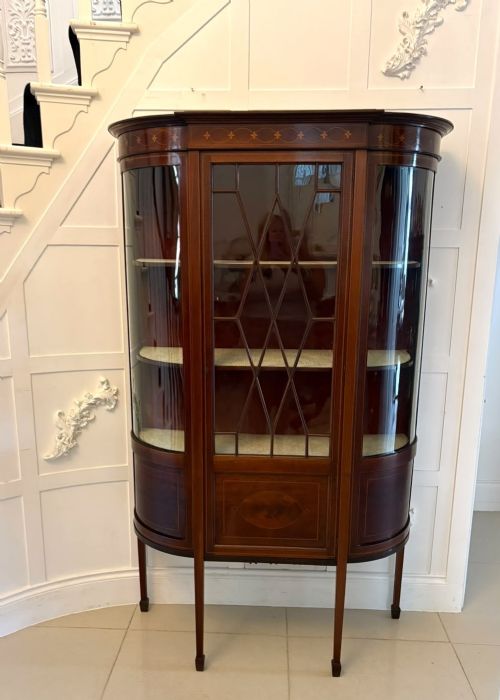
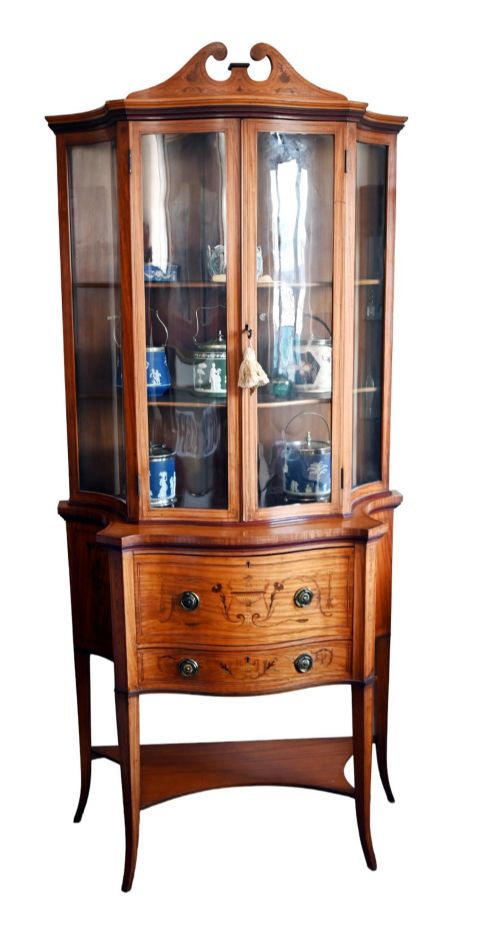
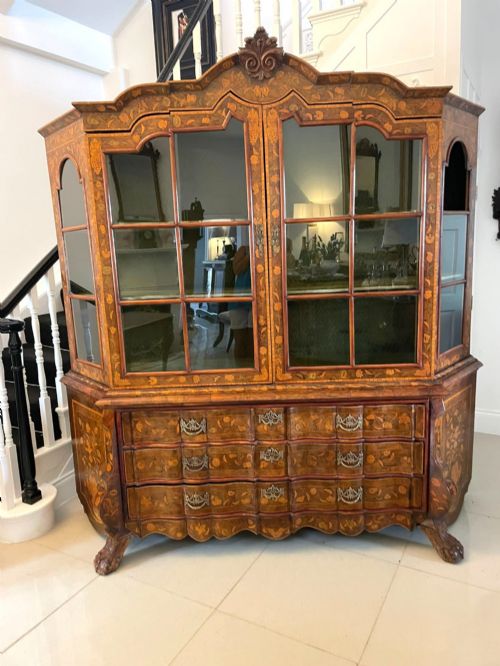
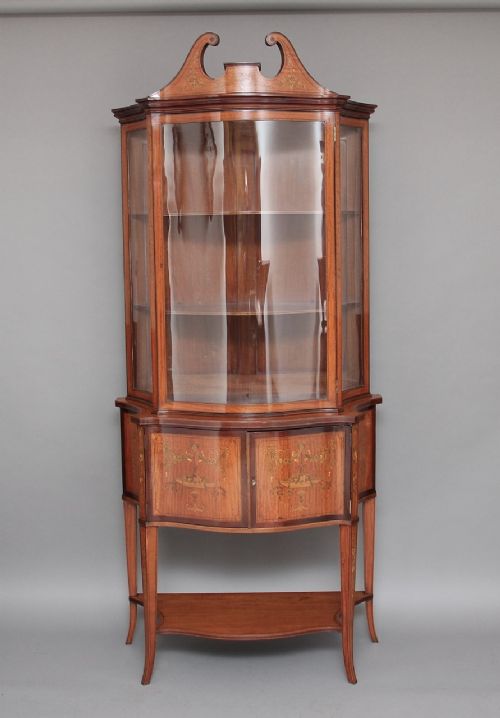
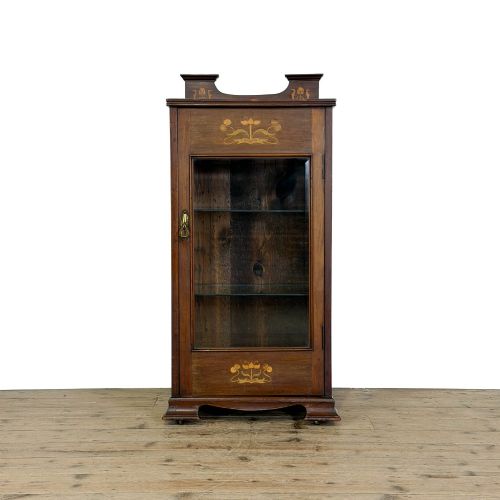
Marquetry Inlaid China Cabinet
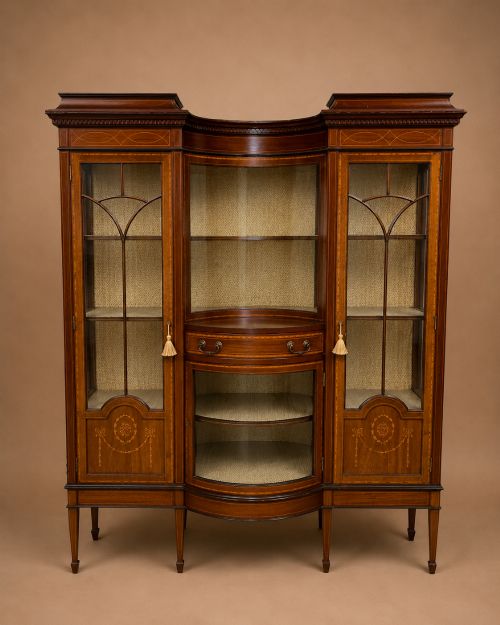
A marquetry inlaid china cabinet brings together precise floral or pictorial wood veneers and fine glass display to hold treasured porcelain.
Marquetry Inlaid China Cabinet
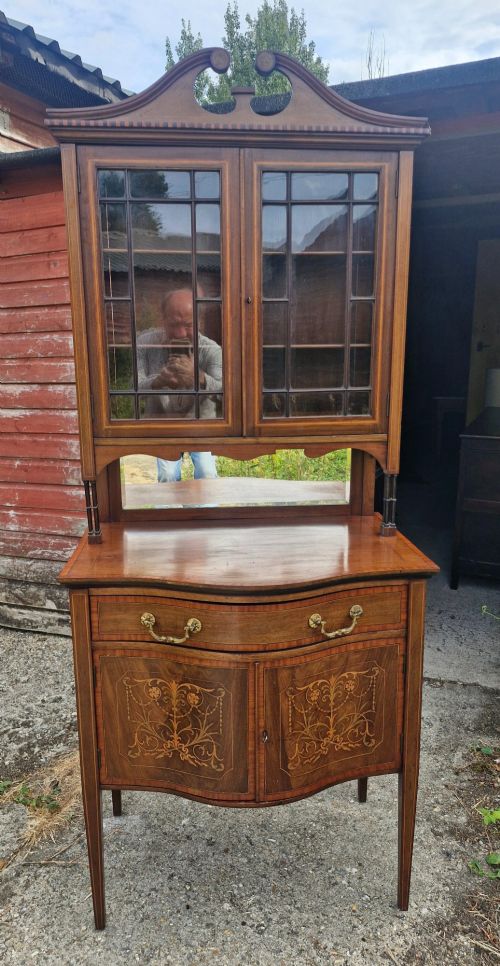
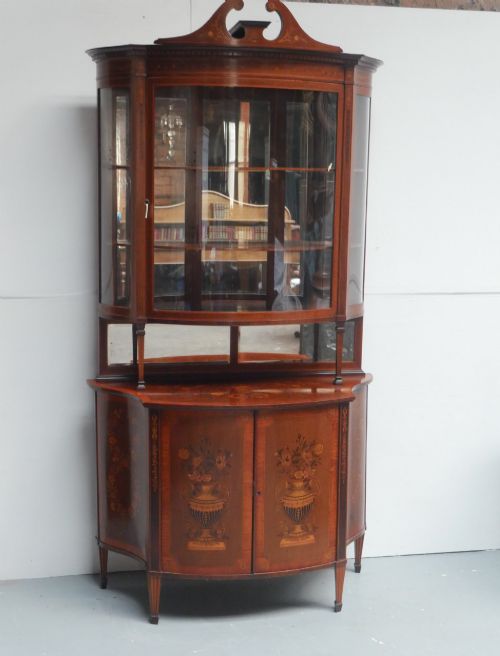
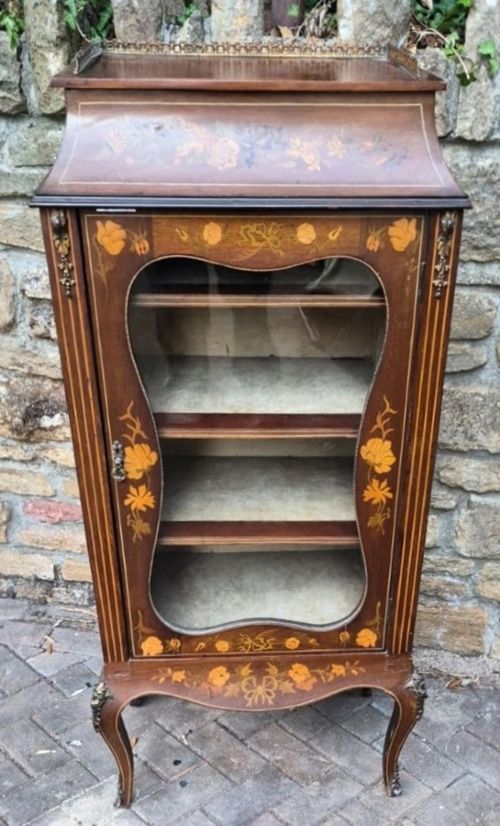
The inventory on this page spans several distinct object types, including freestanding display cabinets, corner cabinets, pier cabinets, and larger two-part bookcase combinations. Many pieces incorporate glazed doors with astragal bars alongside lower cupboards or open shelving.
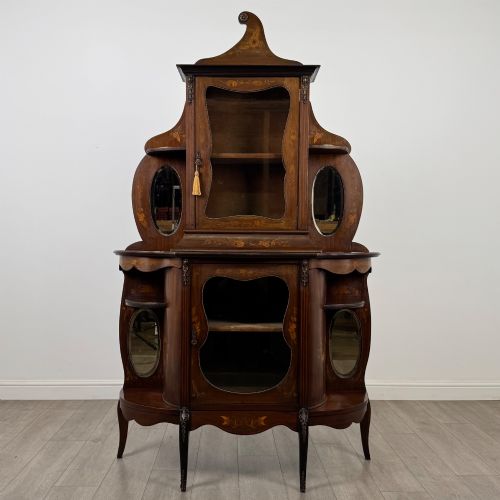
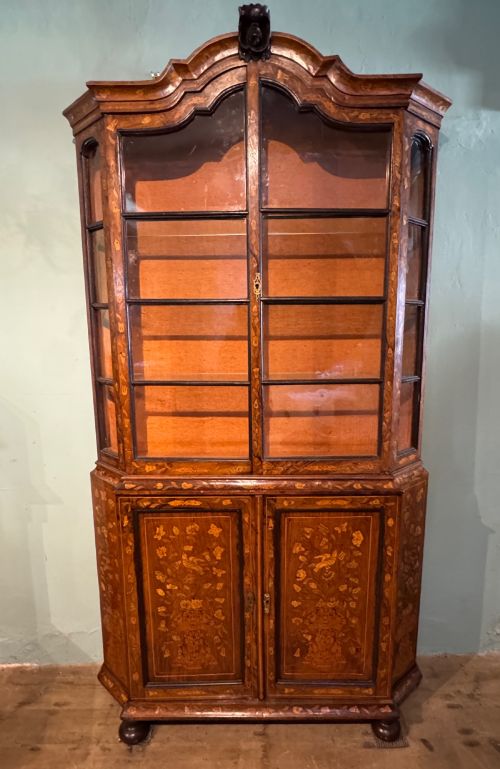
Origins stretch from English Sheraton Revival workshops to continental centres such as Vienna and the Netherlands, featuring Dutch marquetry and Art Nouveau styling. These cabinets range from compact corner units to substantial double-door formats designed for substantial collections of china.
Materials and construction methods
Cabinet makers utilised a solid timber frame of mahogany, walnut, or rosewood as the structural foundation, often applying smooth veneers to large flat surfaces. Satinwood inlay and contrasting timber veneers were then meticulously cut and fitted to create intricate floral, scroll, or pictorial marquetry panels.
Glazing required lead or timber astragal bars to hold individual panes of glass securely within the display doors. Brass hardware such as hinges, locks, and keyhole escutcheons completed the construction, accompanied by mirrored glass back panels in selected cabinets.
Object forms span corner cabinets, pier cabinets, and two-part display bookcases originating from English, Dutch, and Austrian workshops.
Distinguishing quality across the range
The refinement of the marquetry design heavily influences the distinction between standard and superior pieces, with crisp, finely shaded wood veneers representing greater artisan skill. The choice of primary timber also dictates quality, where richly figured mahogany, walnut, or satinwood command closer attention.
Structural integrity and the fidelity of period details, such as hand-cut glazing bars and original brass mounts, separate master workshop production from more basic manufacturing. Retaining maker signatures or attribution to notable cabinet makers elevates the standing of an individual cabinet.
Collinson & Lock·Edwards & Roberts·August Ungethüm·Maple & Co.
The Marquetry Inlaid China Cabinet Glossary
- Marquetry
- The decorative technique of applying fine wood veneers to a structural carcase to form pictorial or geometric patterns. This differs from simpler inlay by covering the entire surface with interlocking pieces of tinted and shaded wood.
- Astragal glazing
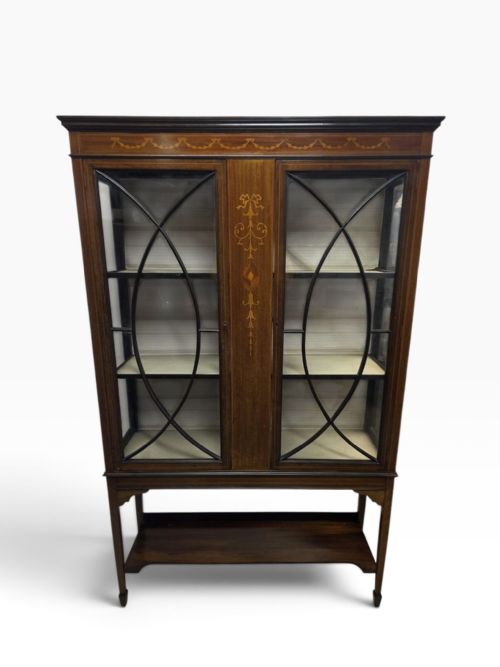
- A method of dividing a glass door into smaller panes using slender wooden or metal bars. These mouldings provide structural support while creating an elegant framework for viewing china.
- Vitrine
- A glass-fronted cabinet specifically designed for the display of curiosities, porcelain, or silver. The term often describes freestanding or table-top display pieces with extensive glazing.
- Pier cabinet
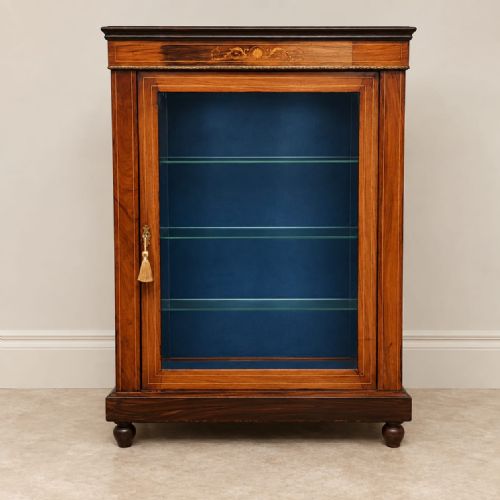
- A slender cabinet designed to fit into the wall space or pier between two windows. These Victorian pieces typically feature a single glazed door and shallow depth.
- Sheraton Revival
- A late nineteenth and early twentieth century design style inspired by the neoclassical furniture of George Sheraton. It relies on symmetrical forms, delicate inlay, and polished mahogany or satinwood surfaces.
Marquetry Inlaid China Cabinet: Frequently Asked Questions
What is a marquetry inlaid china cabinet used for?
These cabinets were originally designed to protect and display delicate porcelain, tea sets, and decorative ceramics away from household dust. The glass doors and mirrored backs allowed collectors to showcase their best tableware from multiple angles during formal gatherings.
Today, they serve the exact same purpose in living rooms and dining spaces. They offer a secure, dust-free enclosure for modern collections or inherited china while adding significant period character to a room.
How do I distinguish Edwardian from Victorian cabinets?
Victorian cabinets tend to be heavier in proportion, frequently utilising dark rosewood or walnut, with dense carving and formal architectural lines. They often reflect revivals of earlier styles like Dutch Baroque or heavy Victorian classical motifs.
Edwardian pieces, particularly those from the Sheraton Revival movement, are generally lighter in appearance. They favour bright mahogany and satinwood surfaces, delicate floral marquetry, and airier glazed compartments without heavy carving.
Can corner cabinets hold full china sets?
Corner cabinets make efficient use of room angles, but their triangular footprint limits the depth of the interior shelves. While they easily accommodate smaller cups, saucers, and decorative plates, larger teapots or bulky serving dishes may not fit through the angled doors.
Larger two-part cabinets or standard rectangular display cases are better suited for storing substantial dinner services. Corner units are best reserved for display highlights rather than heavy storage.
How should I care for antique wood veneer?
Antique marquetry and delicate veneers require stable indoor humidity and protection from direct sunlight, which can fade coloured wood inlays. Dusting should be done regularly with a dry, soft cloth rather than modern silicone polishes.
Applying a traditional beeswax sparingly helps nourish the timber and maintain a soft sheen without building up a heavy residue. Avoid placing cabinets near direct heat sources to prevent the glue beneath the veneers from drying out.