

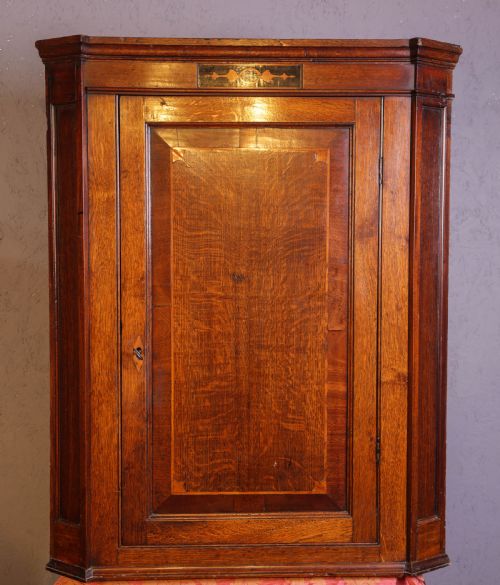


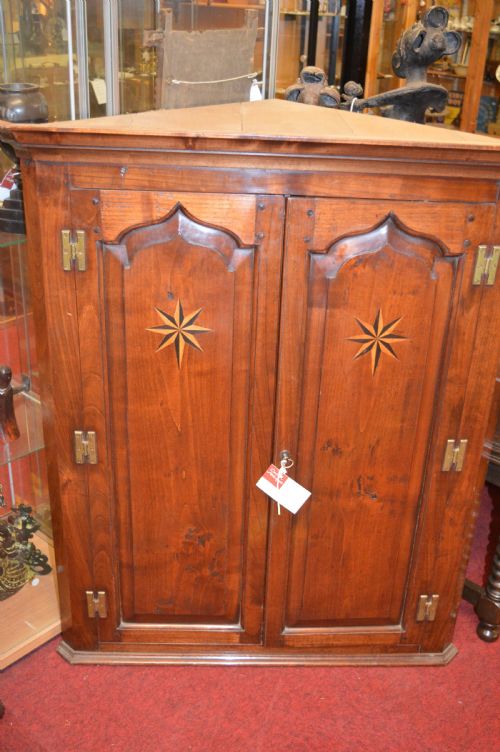


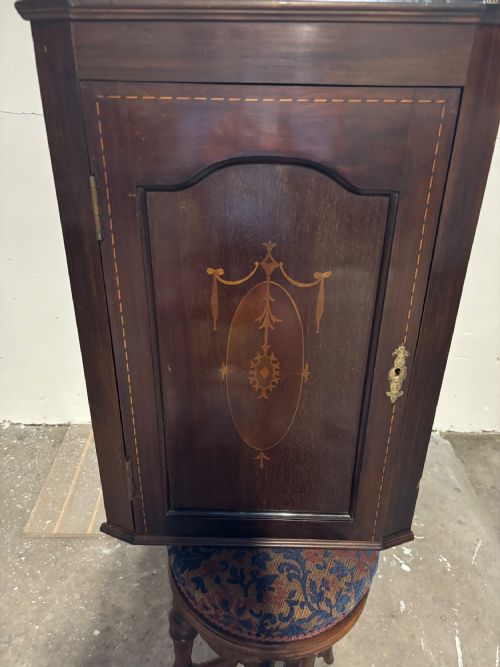
Marquetry Hanging Cabinet
A marquetry hanging cabinet brings rich floral and geometric wood inlay to wall-mounted display, offering warmth and storage without consuming floor space.
Marquetry Hanging Cabinet
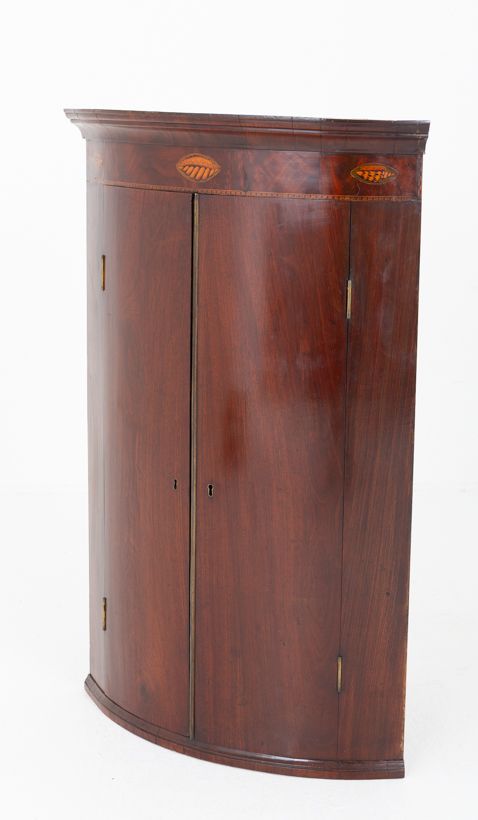
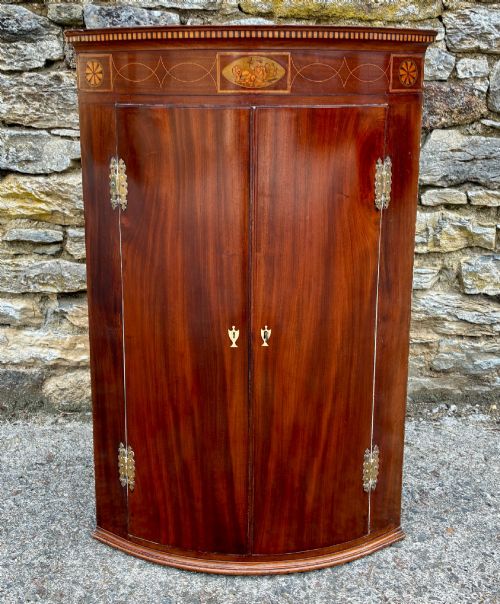
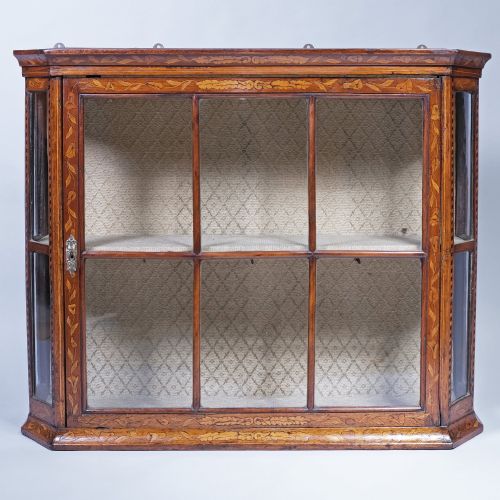
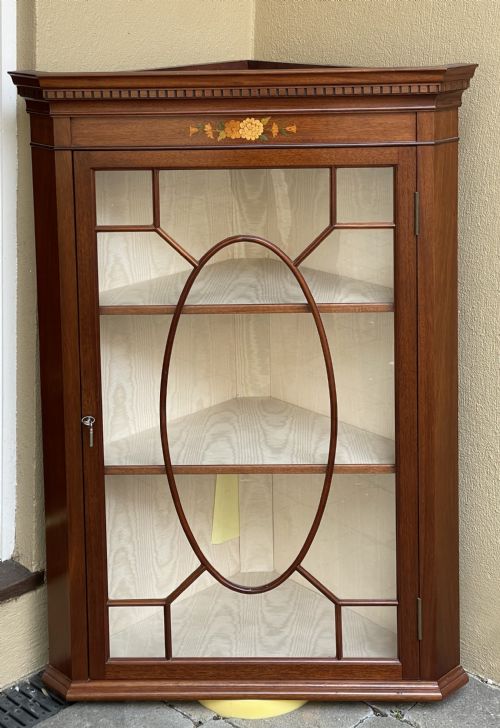
A marquetry hanging cabinet combines intricate wood inlay with wall-mounted storage forms such as corner cupboards and flat wall cabinets. Buyers searching this phrase often encounter Georgian and Victorian interpretations alongside Dutch Baroque and Edwardian revivals.
The material palette spans oak, mahogany, walnut, and rosewood, frequently enhanced by contrasting wood inlays and brass hardware. Most examples function as compact display spaces or corner units designed to utilise vertical room efficiently.
Materials and construction
Cabinet makers utilised structural timbers like oak, mahogany, and walnut to build the primary carcass, applying fine wood veneers for the decorative surfaces. Marquetry inlay required slicing contrasting timber veneers and fitting them precisely into patterns before gluing them to the substrate.
Glazed doors, brass hinges, and fabric-lined interiors appear across many pieces, showing how makers balanced display functionality with secure storage. Joinery methods relied on traditional cabinet-making practices suited to hanging weights.
Marquetry Hanging Cabinet Retail Price Guide 2026
Typical asking prices for marquetry hanging cabinet among the pieces listed under this phrase on Sellingantiques today, from the lower quarter to the upper quarter. They describe what is for sale here now, not the wider market.
Some nineteenth-century oak versions served as humble kitchen knife hanging boxes before finding new life displaying curiosities.
Assessing quality and execution
Quality rests in the precision of the marquetry cutting and the stability of the timber foundations. Finer examples display tight, seamless wood inlay where contrasting tones meet without visible gaps.
The articulation of architectural details, such as bow fronts and decorative door framing, separates standard utility cupboards from ambitious cabinet-making. Superior pieces maintain crisp proportions and intact original hardware.
The Marquetry Hanging Cabinet Glossary
- Marquetry inlay
- The technique of applying fitted pieces of wood veneer to a structure to create decorative pictorial or geometric patterns. This surface decoration defines the visual character of the cabinet.
- Bow front
- A convex curved cabinet front that projects outward from the corners. This shape softens the profile and increases internal volume.
- Corner cupboard
- A specialised cabinet built with angled sides designed to fit neatly into a room intersection. These pieces maximise unused architectural space.
- Sheraton Revival
- A late nineteenth-century style drawing inspiration from the lighter designs of the eighteenth-century maker George Sheraton. It emphasises refined proportions and delicate inlay.
Marquetry Hanging Cabinet: Frequently Asked Questions
How do I hang a heavy antique cabinet safely?
Ensure the wall fixings engage directly with structural studs or masonry rather than just plasterboard. The weight of solid oak or mahogany requires robust brackets suited to the load.
Distribute internal weight evenly across the shelves once the cabinet is secured to the wall.
Where should I place a corner cabinet?
Corner cupboards suit rooms where wall space is limited or where an empty angle needs visual weight. They fit naturally into dining rooms, hallways, or living spaces.
Position the unit away from direct sunlight to protect delicate wood veneers and fabric linings from fading.
How do I clean marquetry surfaces?
Dust the exterior gently with a dry, soft cloth to prevent grit from scratching the polished wood veneer. Avoid using modern aerosol polishes that leave chemical buildups.
Feed the timber periodically with appropriate wax to maintain the moisture and sheen of the inlay.
How do I distinguish Georgian from Edwardian examples?
Georgian pieces generally display heavier timber construction with simpler joinery and deeper patination acquired over centuries. They reflect the structural priorities of the eighteenth century.
Edwardian revivals often incorporate lighter mahogany frames and machine-assisted inlay techniques while copying earlier Sheraton or Dutch styles.