
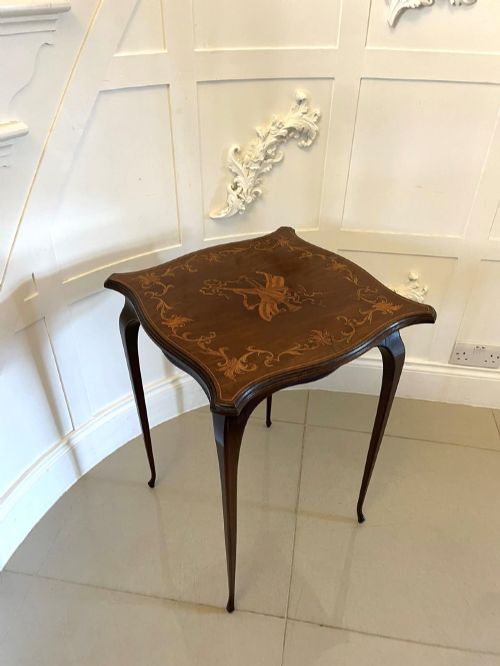
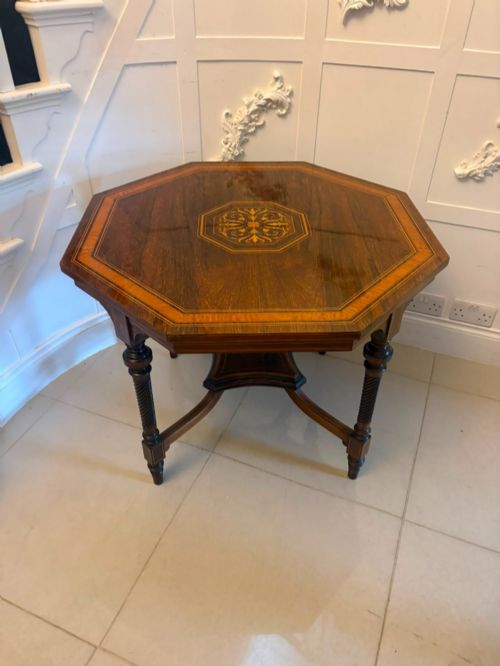
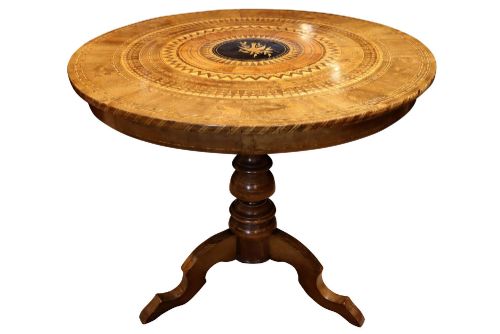
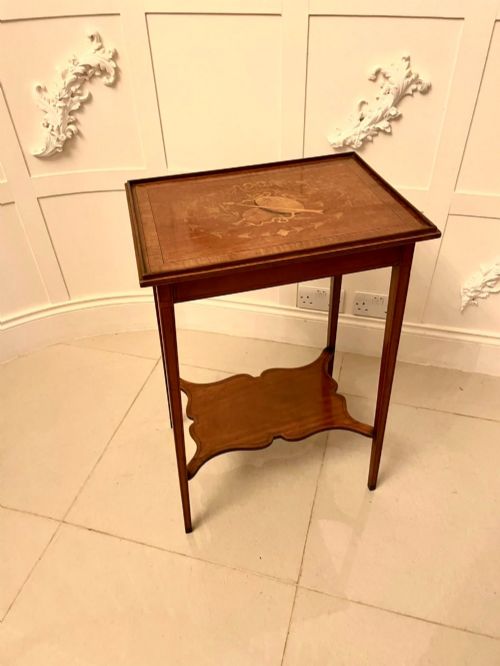
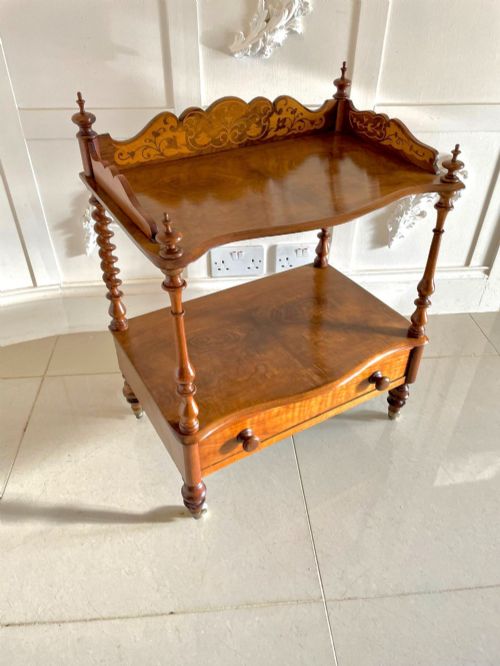
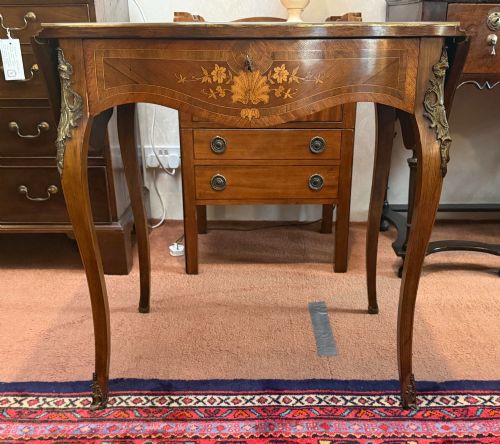
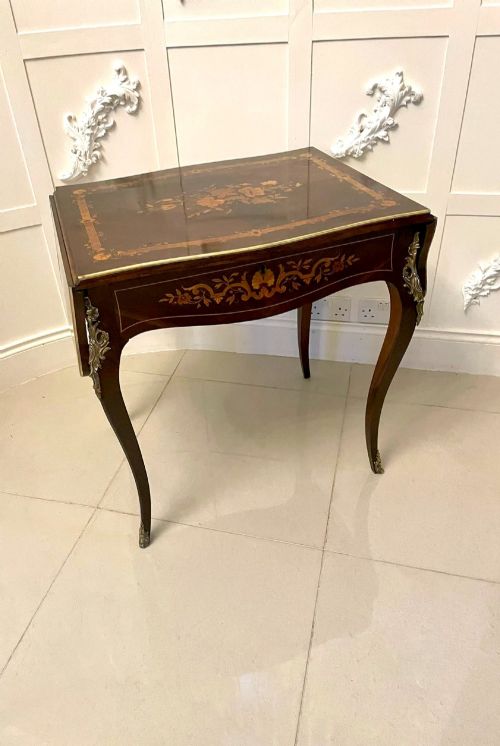
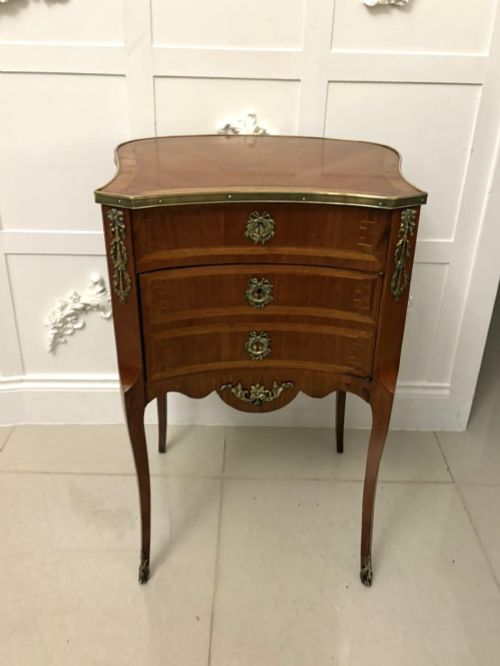
Marquetry Accent Side Table
A marquetry accent side table brings intricate botanical and geometric patterns into a room, offering a surface for lamps and small objects.
Marquetry Accent Side Table
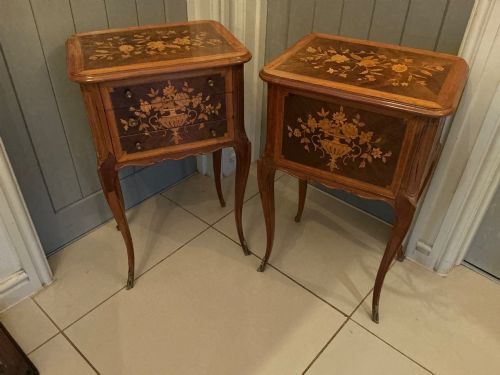
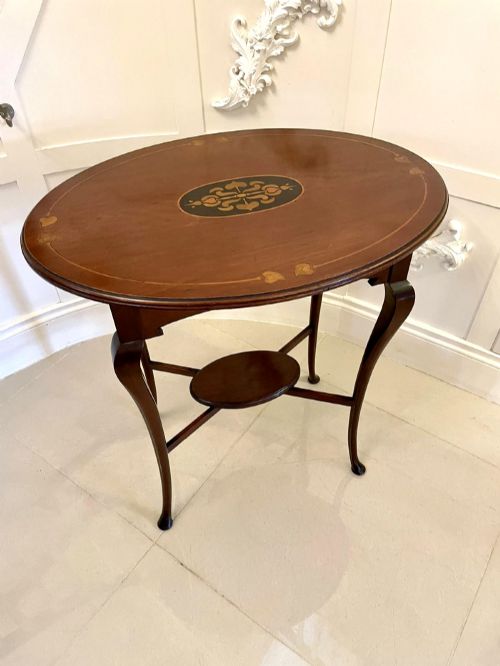
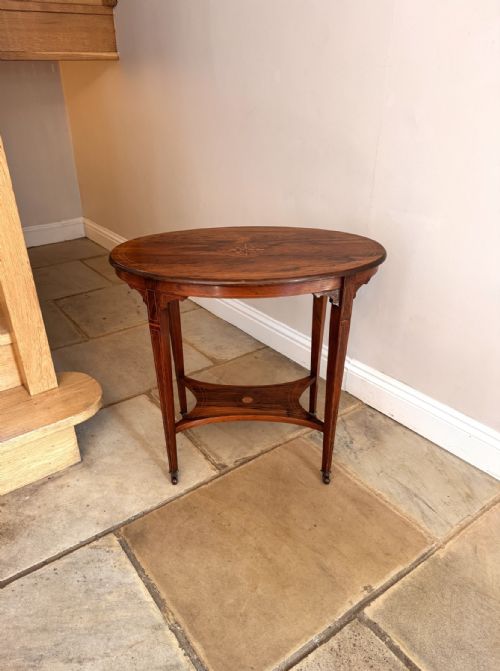
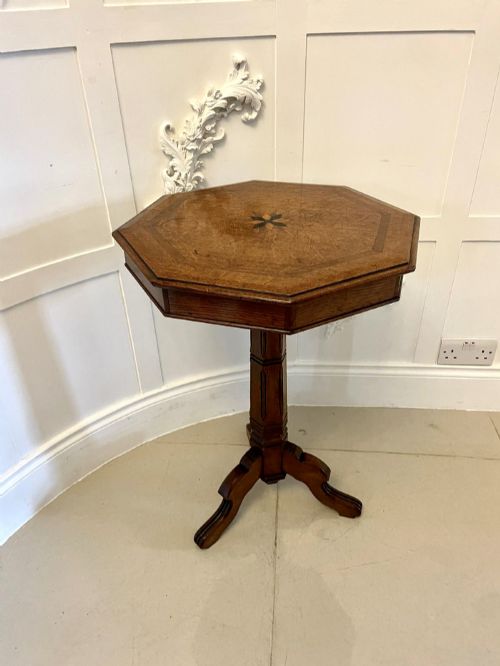
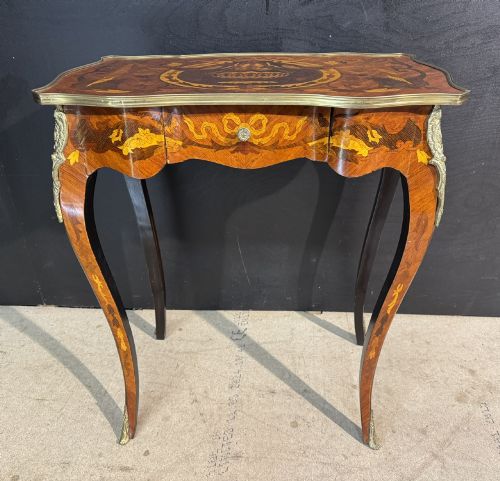
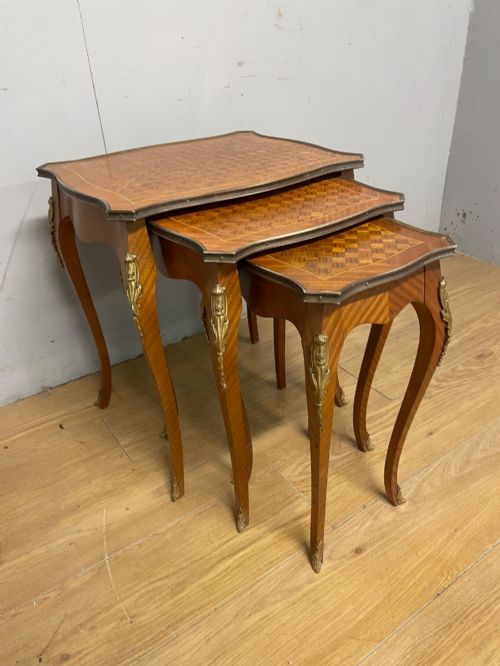
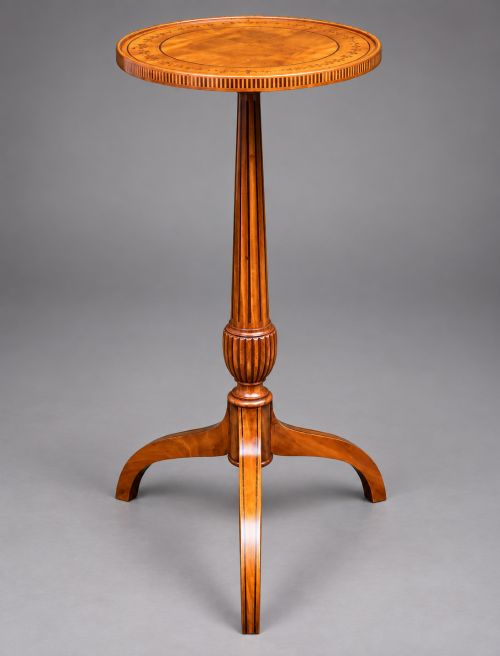
A marquetry accent side table combines decorative veneering with a functional surface, appearing in forms such as lamp tables, occasional tables, Pembroke tables, and small commodes. You will frequently encounter Victorian and Edwardian examples alongside French Louis XV style pieces dating from the nineteenth century.
The materials span walnut, mahogany, satinwood, and kingwood, often enhanced with contrasting wood inlay and brass or ormolu mounts. These pieces function as versatile furniture items that introduce pattern and texture beside seating or in corners.
How they were made
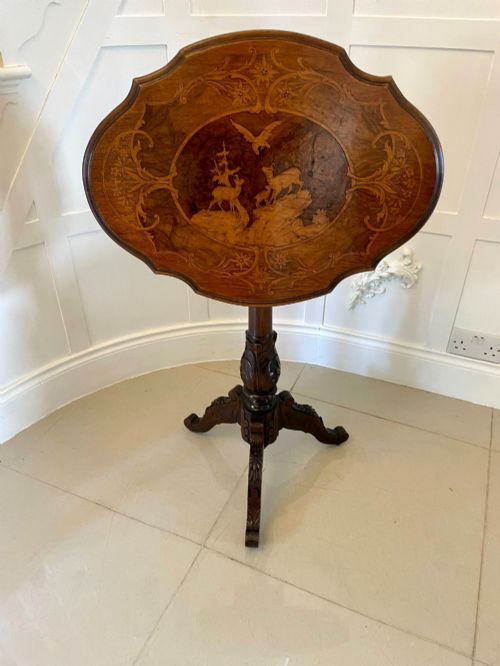
Cabinetmakers constructed these tables using solid timber frames for stability, applied with finely sliced veneers of walnut, mahogany, rosewood, or kingwood. Cut pieces of contrasting woods formed complex pictorial or geometric marquetry patterns set flush into the surface.
Mounts in brass, gilt bronze, or ormolu were cast and chased to frame drawers, edges, and cabriole legs, while French polish finished the timber to a high gloss.
Listings feature walnut, mahogany, satinwood, and kingwood timbers alongside brass and ormolu mounts across the nineteenth and early twentieth centuries.
What varies in quality
The precision and complexity of the wood inlay distinguish finer examples, where multiple exotic timbers create nuanced shading and crisp botanical details. Simpler tables rely on repeating geometric banding rather than pictorial marquetry.
The quality of the foundational timber and secondary mounts also matters, with heavy cast ormolu and substantial walnut or mahogany framing marking out works by accomplished makers.
Joseph-Emmanuel Zwiener·Gillows·Liberty & Co.·Anton Seuffert·Émile Gallé·Millet
The Marquetry Accent Side Table Glossary
- Marquetry
- A technique where small pieces of coloured veneer are assembled into decorative patterns or pictures and glued to a wooden base. This differs from simpler inlay by covering the entire surface with a mosaic of wood.
- Ormolu
- Gilded bronze mounts applied to furniture edges, feet, and corners for decoration and protection. These mounts are cast and hand-chased for sharpness.
- Kingwood
- A dense, heavily figured timber with dark brown and violet stripes used extensively in high-end French and English cabinetmaking. It provides a striking contrast when paired with lighter satinwood or marquetry.
- Pembroke table
- A drop-leaf table with hinged flaps on two opposing sides, often fitted with a single drawer. It was designed for versatility and easy movement around a room.
- Étagère
- A set of open shelves or tiered occasional tables used for displaying small objects. They are frequently mounted on slender legs with brass or ormolu details.
Marquetry Accent Side Table: Frequently Asked Questions
Where should I place a marquetry accent side table?
These tables suit placement beside sofas, armchairs, or in hallways where their decorative tops can be seen from above. They function well as lamp tables or surfaces for small decorative objects.
Because direct sunlight can fade delicate rosewood, kingwood, and satinwood veneers over time, positioning them away from south-facing windows preserves their colour.
How do I care for the veneered surface?
Dust the surface regularly with a soft, dry cloth and avoid using modern spray polishes that contain silicone. Wax polish applied sparingly once or twice a year helps nourish the antique timber.
Keep these tables away from radiators and direct heat sources, as dry atmospheric conditions cause wood veneers to shrink and lift from their backing.
How do I distinguish French styles from English ones?
French tables from the nineteenth century often display flowing Louis XV curves, extensive ormolu mounts, and pictorial floral marquetry in kingwood or rosewood. English equivalents, such as Pembroke or lamp tables, tend to feature more restrained geometry, satinwood banding, and mahogany frames.
Regional differences also appear in the underlying carcass woods, with oak and pine commonly found beneath English veneers, while walnut and softwoods frequently support French work.
What is the difference between marquetry and inlay?
Inlay involves cutting a recess into a solid piece of wood and fitting a contrasting material into that groove, leaving the surrounding timber visible. Marquetry covers the entire surface with a veneer mosaic composed of many different wood types assembled beforehand.
Marquetry allows for intricate pictorial scenes and complex shading, whereas traditional inlay creates simpler geometric lines and borders.