


Maritime Shadow Box Diorama
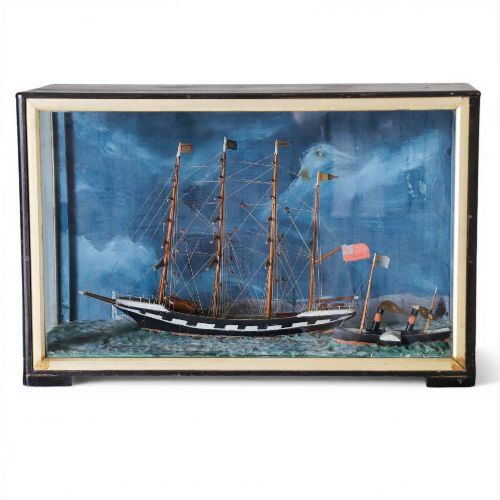
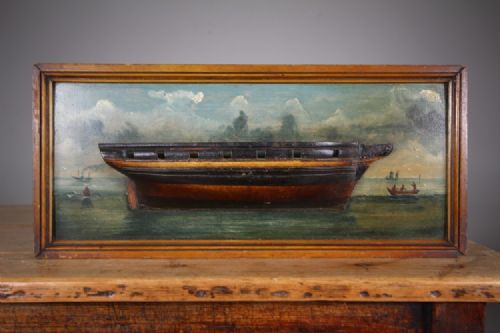
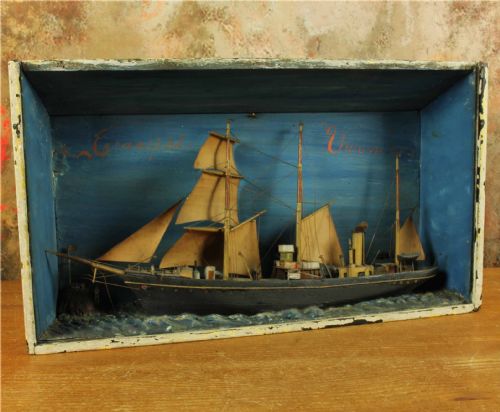
These maritime shadow box diorama examples capture sailing vessels and seascapes framed in shallow wooden cases behind glass.
Maritime Shadow Box Diorama
A maritime shadow box diorama presents a dimensional model of a ship enclosed within a glazed wooden frame. The listings here largely comprise nineteenth century and Victorian folk art pieces, featuring sailing vessels and racing ships.
Most examples depict specific nautical scenes using painted backgrounds and built-up models. Makers from periods spanning the Victorian era to the early twentieth century constructed these objects to record particular vessels or dramatic seascapes.
How they were made
Craftsmen built these dioramas using wood for the outer shadow box frames and glass to protect the interior. The ship models themselves often incorporate canvas, fabric, paper, and carved elements.
Makers applied oil paint and plaster to create textured backdrops depicting waves and skies. Specialised techniques include scratch-built model construction and straw work applied to the ship surfaces.
Makers occasionally integrated actual straw and tiny seashells into these boxes, proving that nineteenth century sailors possessed boundless patience and glue.
What varies in quality
Quality separates simple folk art constructions from finely detailed miniature ship models. The complexity of the rigging and the execution of the painted background dictate the sophistication of the piece.
The materials used for the internal construction, such as detailed straw work or intricate shell embellishments, distinguish finer examples from standard framing.
The Maritime Shadow Box Diorama Glossary
- Shadow box
- A deep, glass-fronted frame designed to display objects in three dimensions. It protects fragile miniature models from dust and handling.
- Diorama
- A three-dimensional scene featuring models set against a painted background. In maritime examples, this typically depicts a ship at sea.
- Folk art
- Art produced by self-taught or indigenous craftsmen, often utilising traditional local materials. These pieces rely on practical skill rather than academic training.
- Scratch-built
- A model constructed entirely from raw materials rather than from a commercial kit. Makers fabricate every individual component by hand.
- Straw work
- A decorative technique utilising flattened cereal straw applied to surfaces to create geometric patterns or shimmering textures. It appears on specific nineteenth century ship models.
Maritime Shadow Box Diorama: Frequently Asked Questions
What is a maritime shadow box diorama?
A maritime shadow box diorama is a framed, glass-fronted display containing a three-dimensional model of a ship set against a painted background. These pieces preserve naval history and folk art traditions within a compact wall-hanging format.
Craftsmen built them using wood, canvas, paper, and paint to simulate movement on the water. They range from simple folk art depictions to detailed scratch-built models of specific vessels.
How were these dioramas used?
These dioramas served primarily as decorative wall art for homes and maritime offices. Sailors and coastal communities commissioned or built them to commemorate specific ships or dramatic sea voyages.
The enclosed glass case protected the delicate paper and fabric rigging from sea air and dust in domestic interiors. They functioned as tangible records of maritime heritage.
How do you date a diorama?
Dating relies on the construction methods, materials, and stylistic cues present in the framing and the ship design. Nineteenth century examples often display specific rigging styles and folk art painting techniques distinct from later periods.
Inscriptions on the frames or models, such as named vessels or specific dates, provide direct evidence of their origin. The type of glass and wood used in the shadow box also aids in determining the age.
How do you display them safely?
These pieces require hanging on sturdy interior walls away from direct sunlight and damp conditions. Fluctuating temperatures can damage the delicate wooden frames and painted canvas backgrounds.
Cleaning should be limited to dusting the exterior glass and frame gently. The sealed interior protects the fragile ship models and straw work from physical contact.