



Maritime Seascape Wall Decor
These maritime seascape wall decor pieces bring centuries of coastal grit and sailing vessels straight into your room.
Maritime Seascape Wall Decor
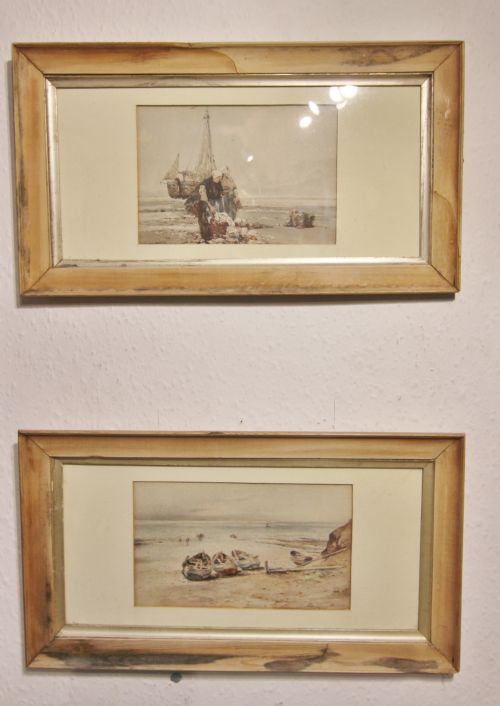
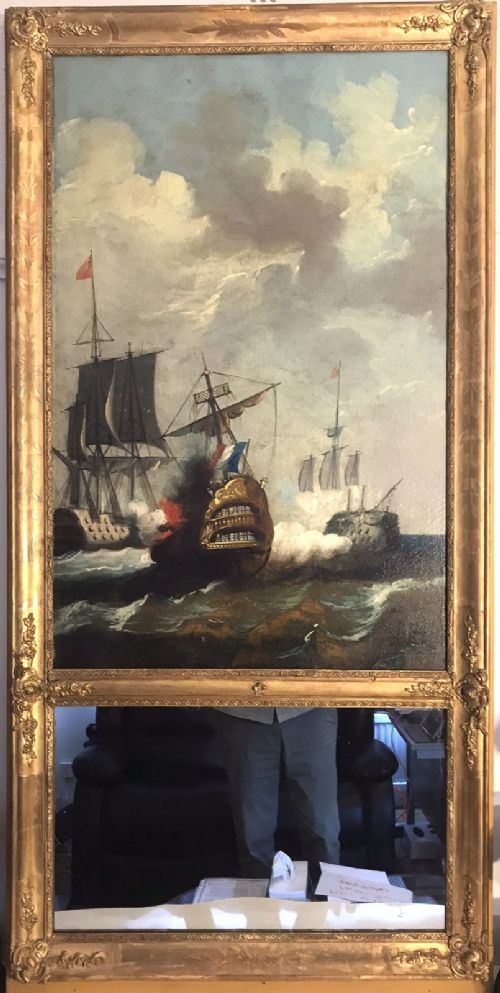
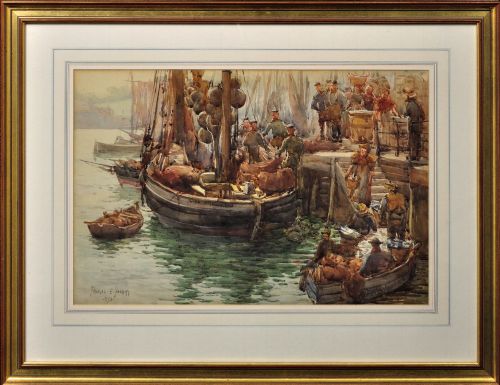
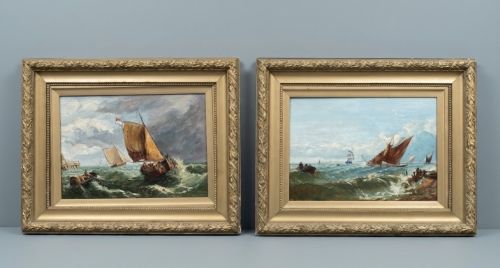
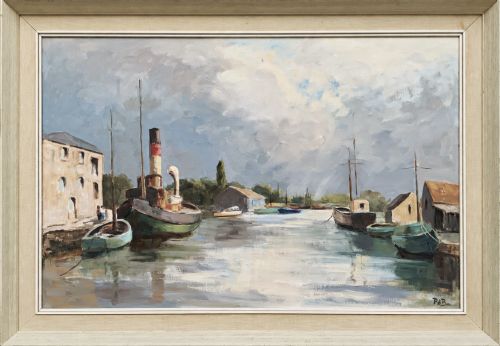
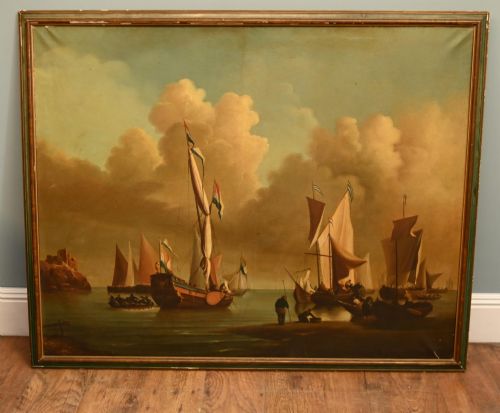
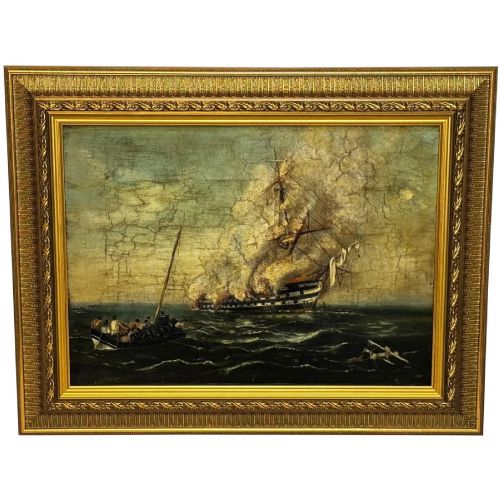
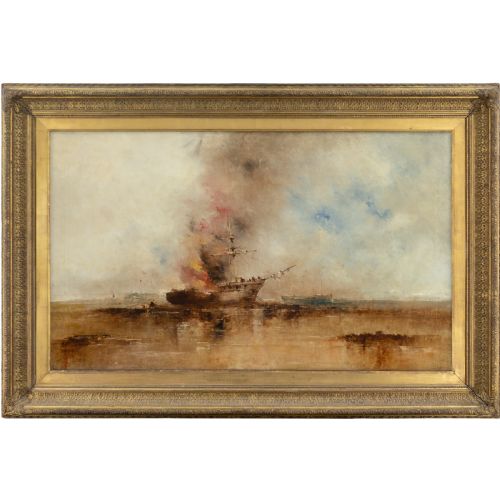
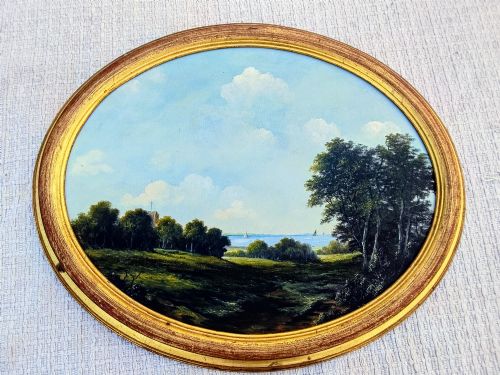
Maritime seascape wall decor encompasses oil paintings, watercolours, and shadow boxes depicting ships, harbours, and coastal scenes. When exploring maritime seascape wall decor, collectors encounter Victorian oils, traditional marine views, and mid-century Cornish fishing trawler paintings.
The selections range from nineteenth-century ship dioramas and detailed naval portraits to twentieth-century coastal watercolours and canvas sea views. Many works capture specific ports, harbours, and dramatic maritime events like ship fires and sea battles.
Materials and methods
Artists painted these works primarily with oil paint on canvas, panel, or board, while others utilised watercolour on paper. Framed pieces frequently feature wooden frames, occasionally with gilded wood finishes, alongside glass protection for works on paper and delicate shadow boxes.
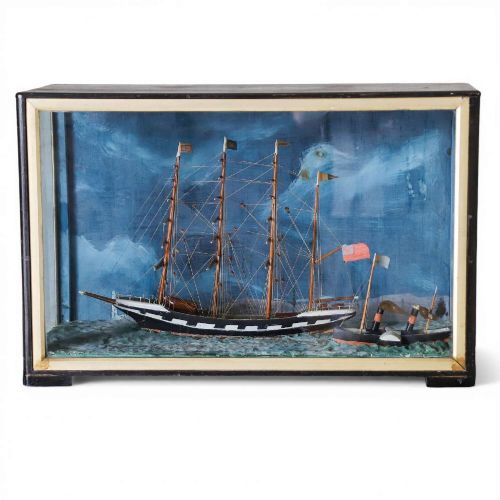
Makers constructed maritime shadow boxes and dioramas using mixed media, incorporating carved wooden ship models and painted backdrops. Canvases and panels display varying textures, from smooth nineteenth-century marine realism to looser brushwork associated with British Impressionism.
Maritime Seascape Wall Decor Retail Price Guide 2026
Typical asking prices for maritime seascape wall decor among the pieces listed under this phrase on Sellingantiques today, from the lower quarter to the upper quarter. They describe what is for sale here now, not the wider market.
Sailors sometimes built intricate ship dioramas inside shadow boxes to pass the time on long voyages.
Assessing the pieces
Quality rests heavily on the artist's ability to render maritime rigging, water movement, and atmospheric light accurately. Works by documented painters command attention through their precise handling of harbour architecture and vessel anatomy.
The construction of the framing and the preservation of the paint surface dictate the overall desirability of each piece. Intricate dioramas and detailed nineteenth-century oils demonstrate a superior level of craftsmanship compared to standard decorative canvases.
James Hardy·William McAlpine·Edward Matthew Elliott·Dion Pears·Richard Brydges Beechey·Frank Wood·H. Hadfield Cubley·Micheal Matthews·Johan Jens Neumann·Thomas Bush Hardy·Arthur Joseph Meadows
The Maritime Seascape Wall Decor Glossary
- Marine painting
- A genre of art that focuses on ships, sea battles, coastal views, and harbour scenes. These works reflect the historical importance of naval power and maritime trade.
- Shadow box
- A deep, glass-fronted frame enclosing a three-dimensional diorama, such as a model sailing ship. They protect intricate maritime scenes from dust and damage.
- Panel
- A rigid flat surface, often wood, used as a support for oil paintings instead of canvas. Panel paintings frequently survive from the nineteenth century and earlier.
- Impressionism
- An art style characterised by relatively small, thin, yet visible brush strokes and an emphasis on accurate depiction of light. British examples capture coastal weather and atmosphere.
Maritime Seascape Wall Decor: Frequently Asked Questions
What subjects appear in these works?
The artworks depict sailing ships, naval battles, harbour views, and coastal fishing boats. Scenes range from calm Cornish ports to dramatic ship fires on the open sea.
Specific locations such as Valletta harbour, St Ives, and Whitby frequently feature in the compositions.
How do I hang a heavy oil painting?
Large oil paintings on canvas or panel require secure wall fixings anchored directly into studs or solid masonry. Heavy frames need robust picture wire and sturdy wall hooks to distribute the weight evenly.
Position the centre of the artwork at eye level for optimal viewing.
How do I date a marine painting?
Dating relies on costume, ship riggings, architectural details, and artist signatures recorded on the canvas or frame. Victorian and nineteenth-century works often show distinct academic realism compared to mid-century examples.
Examine the back of the canvas or panel for old labels, stamps, and inscriptions.
Are shadow boxes fragile?
Shadow boxes contain delicate three-dimensional elements like miniature rigging and paper cutouts that require careful handling. The glass front protects the interior models from physical contact and airborne dust.
Keep them away from direct sunlight and fluctuating humidity to preserve the internal materials.
What is a Turneresque seascape?
A Turneresque seascape imitates the atmospheric, light-filled style of the painter J.M.W. Turner. These pieces emphasise swirling mists, turbulent water, and dramatic skies over strict geometric accuracy.
Artists used loose brushwork and luminous paint applications to create a sense of motion and weather.