




Maritime Oil Painting Signed
A maritime oil painting signed brings the movement of water and coastal light straight onto the wall, captured by hands that worked across the nineteenth and twentieth centuries.
Maritime Oil Painting Signed
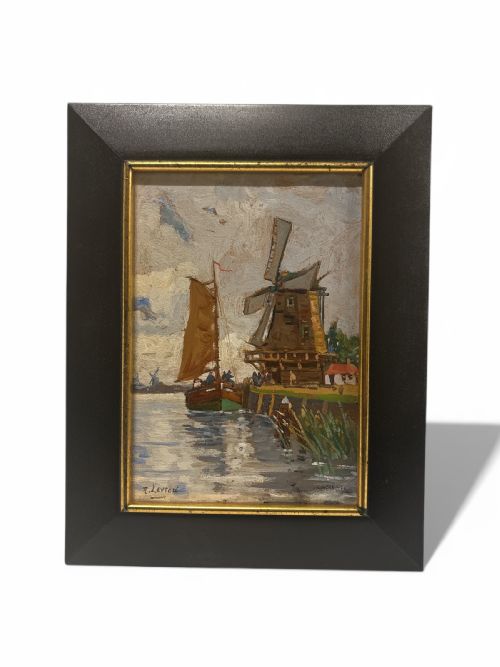
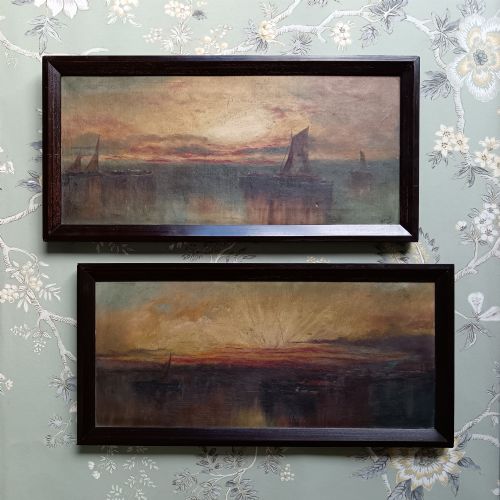
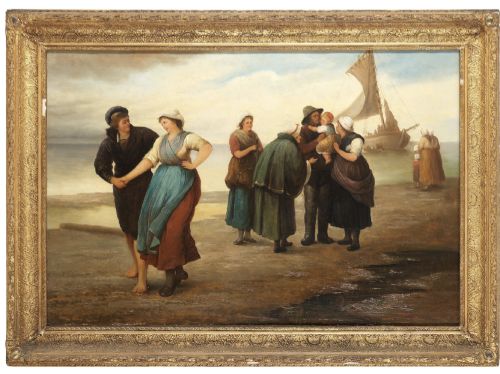
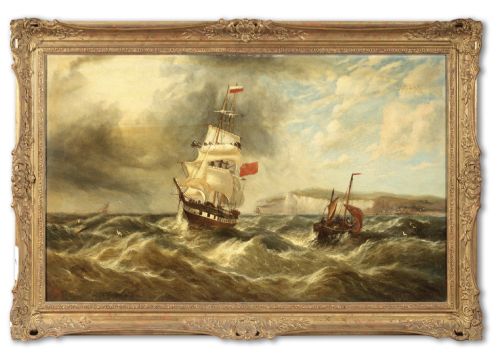
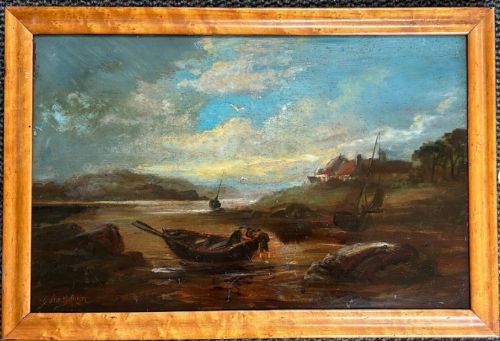
A maritime oil painting signed gathers coastal scenes, open seas, harbours and river estuaries executed across the nineteenth and twentieth centuries. These works record merchant ships, fishing boats, barged rivers and coastal vistas through the eyes of named artists who signed their canvases or panels.
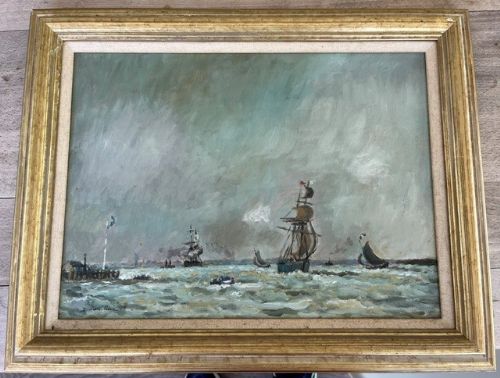
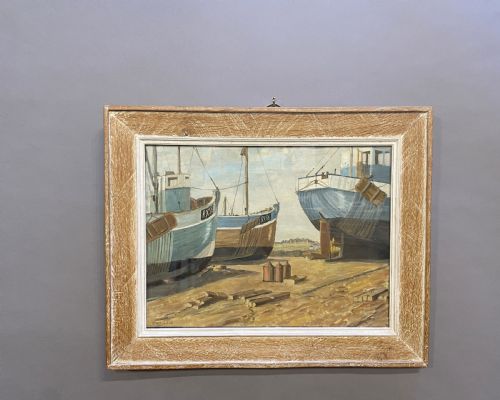
The selections span Victorian marine scenes, Edwardian coastal views, Impressionist interpretations and mid-century British or French school works. Buyers encounter everything from small wood panel miniatures to substantial framed canvases depicting rough seas, sunrises, sunsets and busy industrial ports.
Nineteenth-century pieces often present detailed British and French school vessels navigating turbulent waters, while later twentieth-century examples lean towards impressionistic brushwork, impasto textures and modernist coastal interpretations.
How they were made
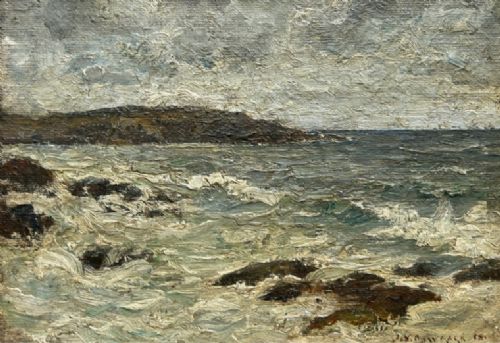
Artists built these works using oil paint applied to woven canvas, prepared wood panels, or solid board supports. The medium allowed painters to build rich layers, capturing the dense greys of stormy seas and the bright whites of breaking coastal spray.
Many works incorporate heavy impasto techniques where thick paint stands proud of the surface to describe choppy waves or rocky shores. Canvases and panels are frequently housed within period gilt frames that complement the maritime subject matter.
The selection includes British and French school artists working in styles from Victorian maritime art to mid-century modernism.
What varies in quality
Quality rests in the confidence of the brushwork and the artist's command of light, atmosphere and maritime architecture. Stronger examples convey the weight of water, the movement of wind in rigging and the specific character of coastal light without hesitation.
The handling of perspective in shipping and the subtlety of colour mixing across sky and sea separate accomplished professional works from more rudimentary student or amateur efforts.
Kenneth Cozens·R Leyton·B. Nash·John Rose Miles·Bernard Benedict Hemy·Fernando Del Basso·T.S. Wallis·Pauwels·John Bell·Sam Bough·William Langley·J Wilson·Lamotte·E. Elliot·Godwin Bennett·Maurice Sijs
The Maritime Oil Painting Signed Glossary
- Impasto
- Paint applied thickly to a canvas or board so that it stands out in relief. This technique gives physical texture to crashing waves, clouds and rocky coastal cliffs.
- Oil on canvas
- Pigment suspended in a drying oil medium spread across a stretched woven textile support. It remains the traditional foundation for most historical and twentieth-century paintings.
- Board
- A rigid flat wooden or composition sheet used as a painting support instead of stretched canvas. Smaller maritime sketches and mid-century works frequently utilise this substrate.
- Gilt frame
- A wooden picture surround covered with a thin layer of gold leaf or metallic paint. These frames often accompany period paintings to enhance the artwork.
Maritime Oil Painting Signed: Frequently Asked Questions
What subjects do maritime oil paintings show?
These works depict coastal vistas, merchant ships on rough seas, quiet estuaries, fishing boats in harbours and industrial rivers. Artists recorded both the working life of ports and the natural moods of the open sea.
Scenes range from nineteenth-century sailing vessels battling coastal gales to mid-century depictions of moored boats and calm waters.
How do I date a maritime painting?
Dating relies on the style of the vessel depicted, the clothing of any figures, the framing, and the physical materials used such as canvas versus board. Signatures can often be researched against historical artist records.
Victorian and Edwardian works tend to show detailed rigging and academic precision, while mid-century pieces often adopt looser impressionistic or modernist brushwork.
Where should I hang an oil painting?
Choose a wall away from direct sunlight and excessive moisture to protect both the oil paint and the underlying canvas or board. Proper placement preserves the integrity of the pigments.
Pairing the painting with a supportive period frame allows it to sit comfortably in both traditional and contemporary interiors.
What is the difference between canvas and board?
Canvas is a flexible woven fabric stretched over a wooden frame, offering a traditional responsive surface for the brush. Board is a rigid panel that provides a firm, solid foundation.
Both supports were used across different periods, with board often appearing in smaller plein air studies and mid-century works.