



Maritime Nautical Tool
A maritime nautical tool is an instrument or chest shaped by sea service, offering brass, wood, and bone artefacts for daily navigation and work.
Maritime Nautical Tool
A maritime nautical tool encompasses navigational instruments, shipboard equipment, and sailors' working implements from various centuries. When searching for a maritime nautical tool, buyers encounter scientific instruments, chests, and personal gear designed for life at sea.
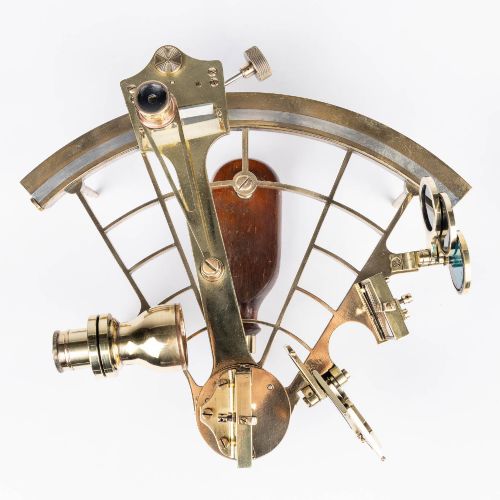
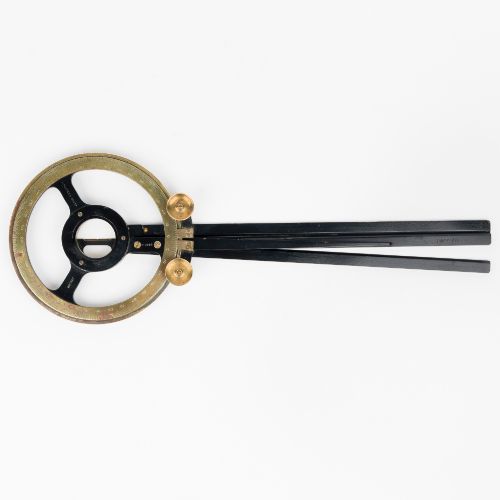
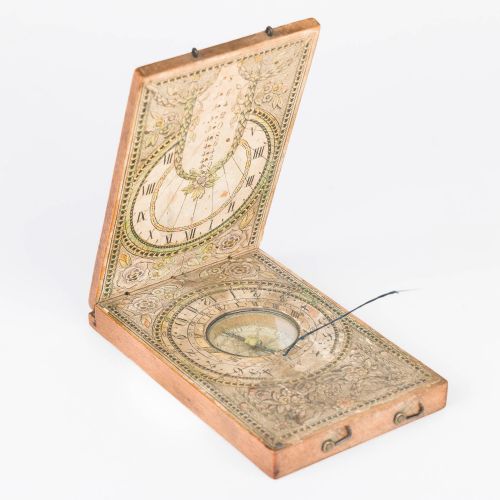
The pieces listed span periods from the eighteenth century through to the twentieth century. Forms range from portable sundials and station pointers to sextants, octants, and sailors' fids.
Victorian examples and twentieth-century military pieces dominate the available selection. Collectors find both precision brass instruments and utilitarian wooden trunks used aboard vessels.
Materials and construction
Makers utilised durable materials suited to maritime conditions, predominantly brass, glass, wood, iron, and bone. Mahogany, pine, rosewood, and ebony provide the structural foundations for chests and tool handles.
Precision instruments combine brass dials, glass lenses, and paper compass cards housed in fitted wooden boxes. Working tools like fids and seam rubbers depend on carved bone and dense hardwoods shaped by hand.
Maritime Nautical Tool Retail Price Guide 2026
Typical asking prices for maritime nautical tool among the pieces listed under this phrase on Sellingantiques today, from the lower quarter to the upper quarter. They describe what is for sale here now, not the wider market.
The selection includes specialised navigation gear from British and European makers, alongside practical sailors' tools.
Assessing quality and standard
Quality rests upon the precision of the mechanics, the integrity of the materials, and the presence of maker signatures. Fine instrument makers produced signed brass gear with intricate graduation scales and original fitted cases.
Utilitarian items demonstrate quality through the density of the timber, such as ebony or rosewood, and the tactile finish of hand-carved bone. Simpler folk art pieces derive their appeal from honest wear and straightforward craftsmanship.
Hughes & Son·A Hurlimann Paris·H Hughes·John Lilley & Son London
The Maritime Nautical Tool Glossary
- Octant
- An early measuring instrument similar to a sextant but spanning an eighth of a circle. These wooden and brass tools governed navigation before modern metal sextants took precedence.
- Sailor's fid
- A tapered tool carved from bone or dense wood used for separating strands of rope during splicing. Sailors carried these daily aboard sailing ships.
- Clinometer
- An instrument used for measuring angles of slope or tilt aboard a vessel. Shipboard versions record the roll and pitch of a ship.
- Station pointer
- A three-armed protractor used in hydrographic surveying and navigation to fix a ship's position from horizontal angles. These brass instruments require precise mechanical movement.
- Artificial horizon
- A device used with a sextant to determine the altitude of a celestial body when the natural horizon is obscured. Black glass sets provide a reflective surface for this purpose.
Maritime Nautical Tool: Frequently Asked Questions
What is a marine sextant used for?
A marine sextant measures the angle between the horizon and a celestial body like the sun or stars. Navigators use these measurements to calculate latitude and longitude at sea.
These instruments formed an essential part of an officer's kit on nineteenth and twentieth-century vessels, ensuring ships stayed on course.
How do I care for antique brass instruments?
Antique brass instruments require dry storage and minimal interference with their natural aged surface. Avoid harsh metal polishes that remove historic patination and markings.
Keep wooden cases and brass components away from direct sunlight and damp environments to preserve the materials.
How do I identify a Victorian navigation tool?
Victorian navigation tools often feature engraved brass plates, mahogany or ebony boxes, and maker signatures from London or regional ports. Stylistic cues match nineteenth-century scientific manufacturing standards.
Documentation or fitted labels inside the cases frequently confirm the period and workshop of origin.