





Marine Watercolour Artwork
Marine watercolour artwork captures the movement of coastal life and historic ships across paper through the expressive medium of watercolour paint.
Marine Watercolour Artwork
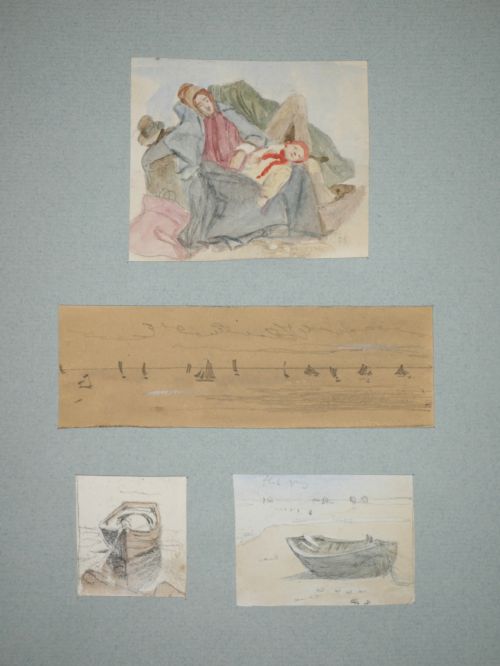
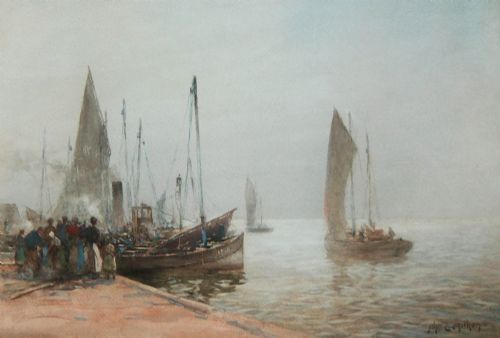
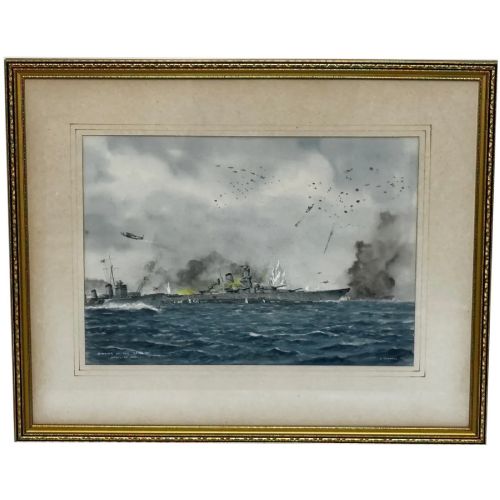
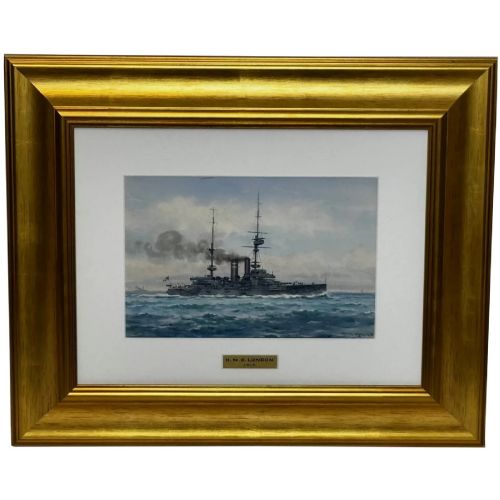
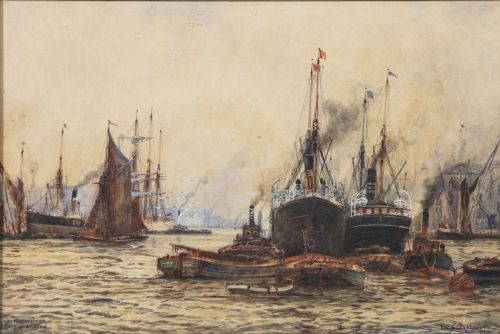
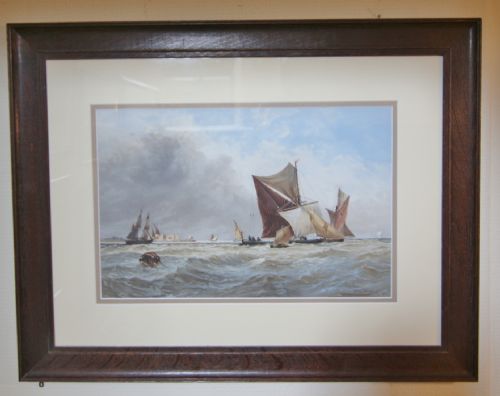
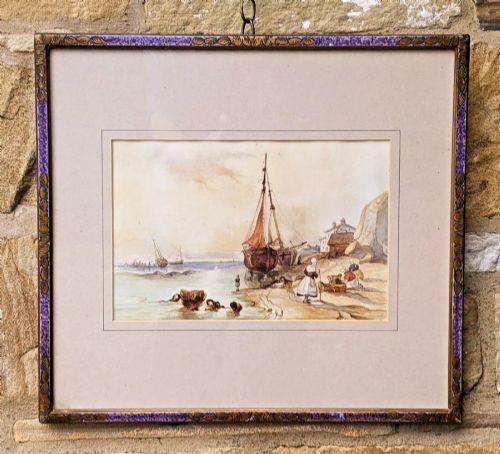
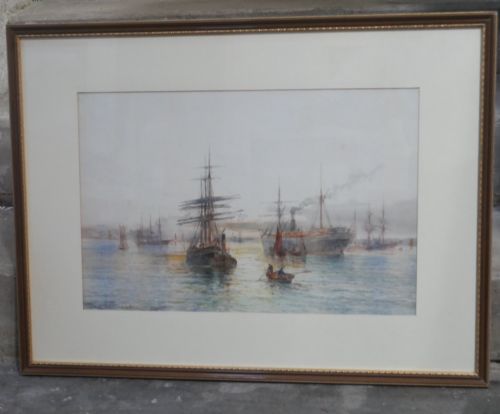
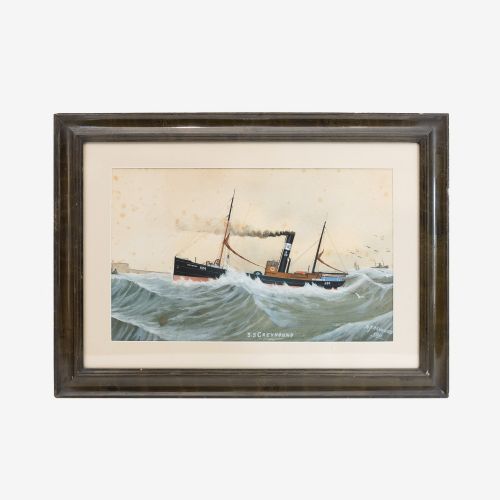
Marine watercolour artwork encompasses paintings on paper depicting coastal scenes, fishing boats, and naval vessels from the nineteenth and twentieth centuries. These works include detailed depictions of British and European harbours, coastal towns, and open sea voyages.
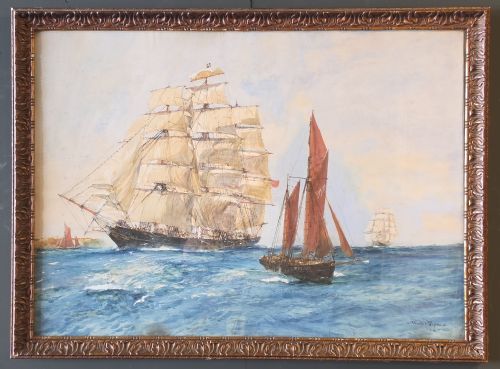
The most common examples on this page are nineteenth-century and early twentieth-century works, often framed with wood and glass, showing traditional craft such as luggers, clippers, and fishing boats.
Pieces range from intimate sketches to large framed maritime paintings, reflecting the changing styles from Victorian maritime art through to mid-century depictions.
How they were made
Artists painted primarily with watercolour pigment and gouache on paper, capturing light on water and the atmosphere of coastal locations.
Works are frequently housed behind glass within wooden frames, sometimes featuring gilt wood mouldings that complement the period of the painting.
The periods represented stretch from nineteenth-century Victorian pieces through Edwardian works to mid-century maritime art.
What varies in quality
Quality rests upon the artist's handling of light, shadow, and maritime atmosphere, alongside the precision shown in rendering rigging, hull forms, and coastal architecture.
The strength of the composition and the preservation of the original paper and pigment condition define the standing of each piece.
James Orrock·James Smetham·Charles Edward Dixon·Frank Watson Wood·Frank William Scarbrough·Hector Caffieri·Thomas Bush Hardy·George Stanfield Walters·Ernest Dade·Edward Seago
The Marine Watercolour Artwork Glossary
- Watercolour
- A painting method where paint is made with water-soluble pigments. It is applied to paper to achieve translucent layers of colour.
- Gouache
- An opaque watercolour paint mixed with a white pigment. It creates heavier, solid areas of colour and highlights within a maritime scene.
- Seascape
- A work of art depicting the sea, coastlines, or marine vessels. These compositions often record historical shipping and harbour life.
- Lugger
- A small traditional fishing boat with one or more masts carrying lug sails. They frequently appear in nineteenth-century coastal watercolours.
- Gilt wood
- Wood coated with gold leaf or a gold-coloured finish. This material is commonly found on traditional frames surrounding antique paintings.
Marine Watercolour Artwork: Frequently Asked Questions
What periods do these watercolours cover?
The listings span from the nineteenth century through the Edwardian era up to the mid-twentieth century. Most examples date from the Victorian period to the 1950s.
Artists during these decades recorded both traditional sailing vessels and twentieth-century naval ships, reflecting the changing maritime landscape.
How should I frame and hang marine watercolours?
These works on paper require protection behind glass to prevent atmospheric damage and fading from direct sunlight. Display them away from damp environments and strong heat sources.
Original frames often feature gilt wood, which pairs well with traditional period mounting and conservation-grade backing.
What subjects appear in these paintings?
Subjects include busy fishing harbours, coastal towns, naval vessels, and racing yachts on open waters. Many capture specific locations around the British coast, such as Scarborough, Whitby, and various North Sea havens.
Other works document international scenes, historical ship portraits, and sentimental tributes to specific vessels and their crews.
How do I identify different maritime art styles?
Victorian maritime works often show detailed attention to shipping vessels and dramatic coastal weather under naturalistic light. Later twentieth-century pieces lean towards impressionistic brushwork and broader interpretations of light and water.
Examining the signature, date, and handling of the watercolour pigment helps place the artwork within its specific artistic period.