

Marbled Top Chest
A marbled top chest brings together heavy stone and fine timber, offering a functional surface that anchors a room.
Marbled Top Chest
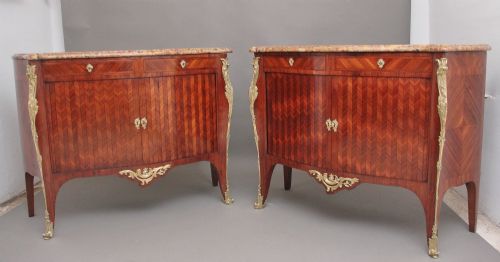
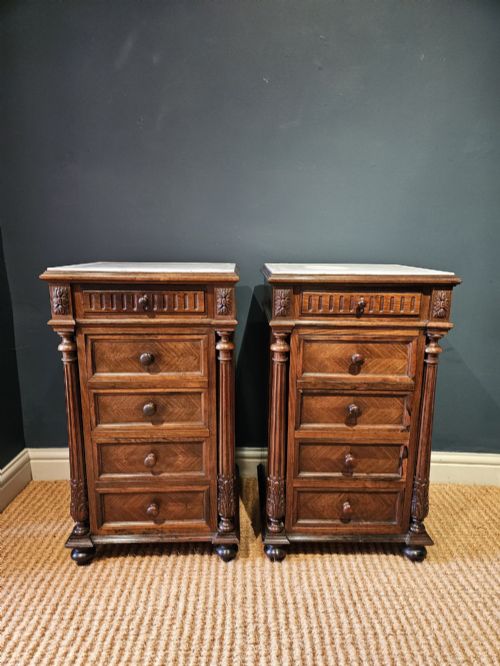
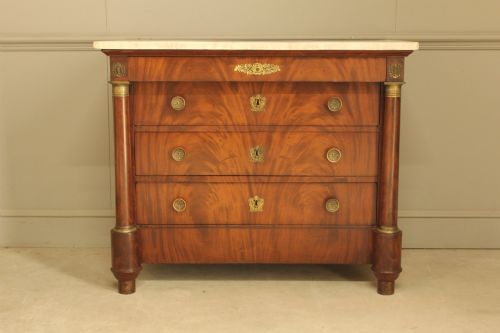
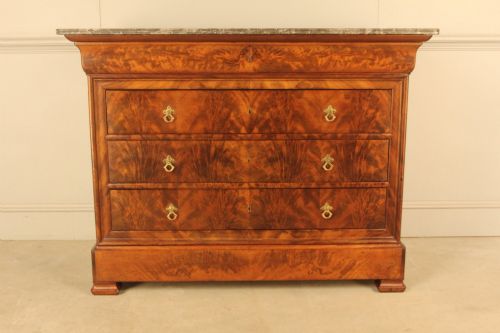
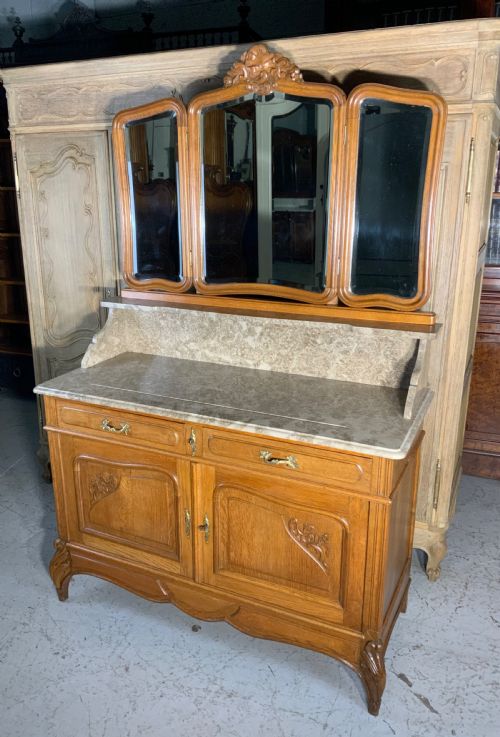
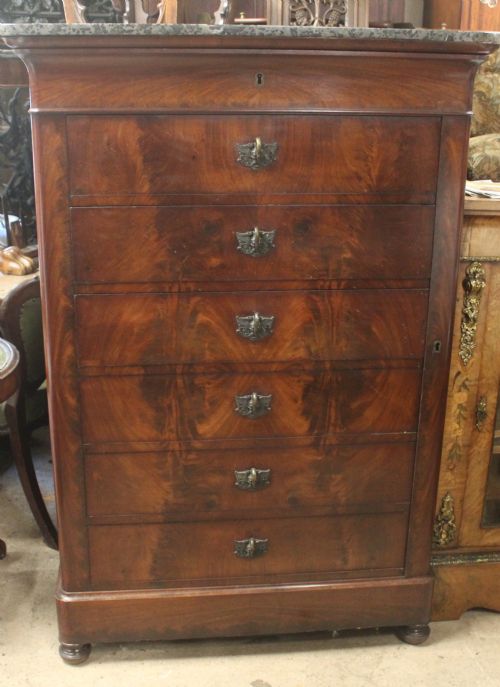
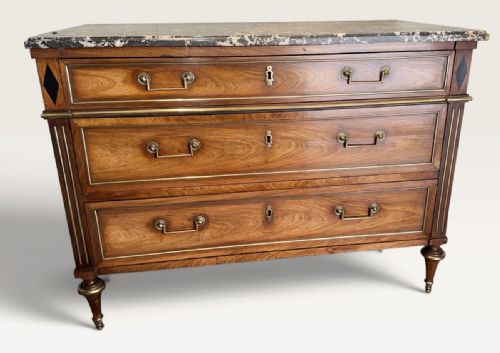
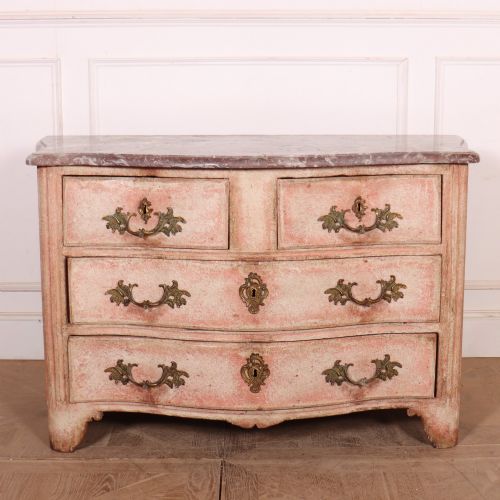
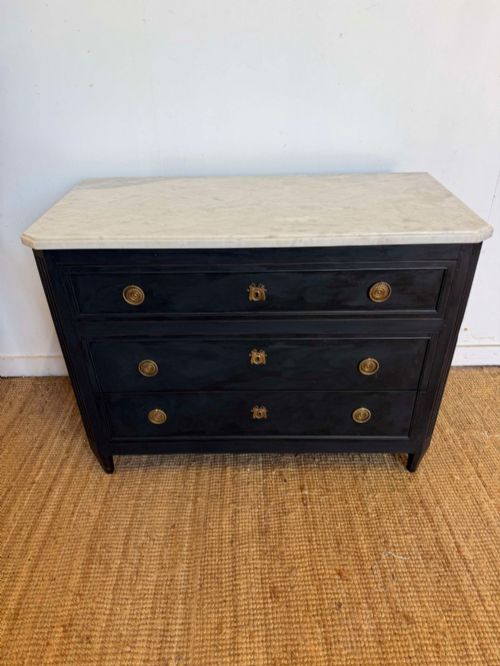
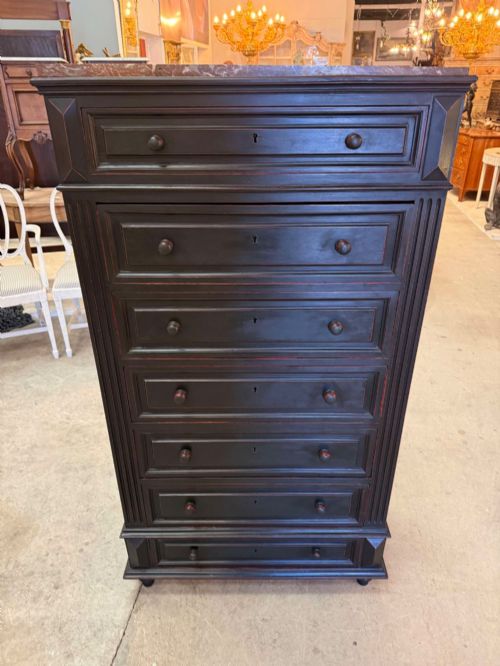
A marbled top chest primarily manifests as a French commode, chest of drawers, or bedside cabinet originating across the eighteenth, nineteenth, and early twentieth centuries. These forms serve practical storage needs while displaying distinct regional and period characteristics.
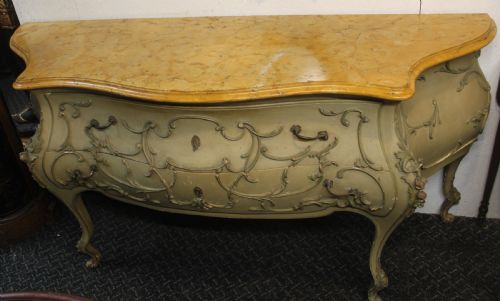
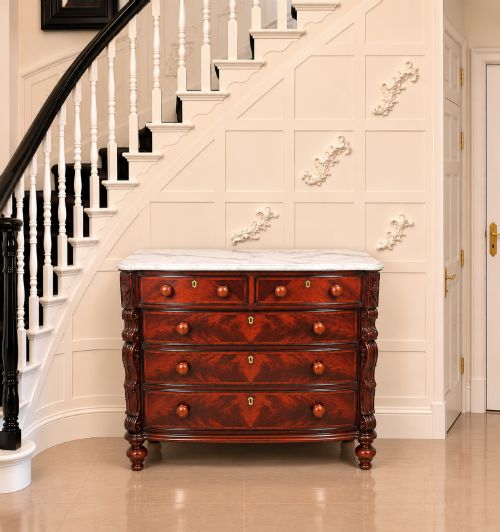
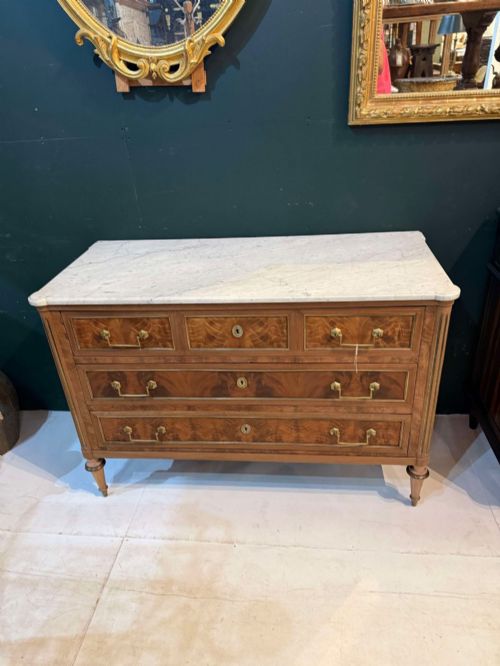
Buyers frequently encounter variations executed in walnut, mahogany, and kingwood, often embellished with marquetry, parquetry, or painted finishes. The integration of stone slabs defines the typology, uniting cabinetry with robust mineral tops.
Origins stretch from the late eighteenth century through revival periods in the nineteenth century, including Louis XV and Louis XVI styles. Pieces range from grand reception commodes to smaller bedside chests.
How they were made
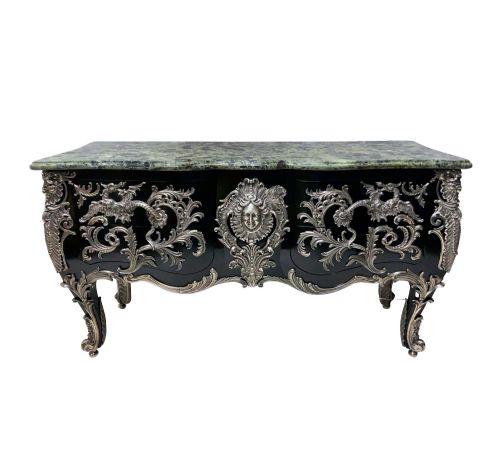
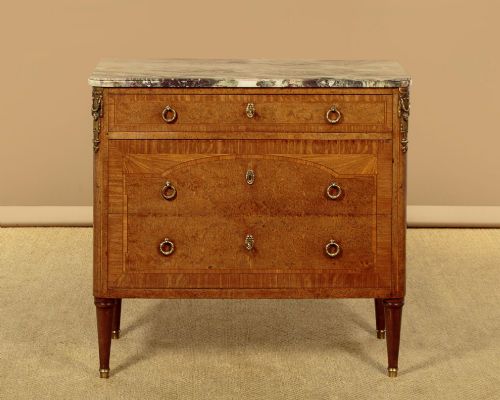
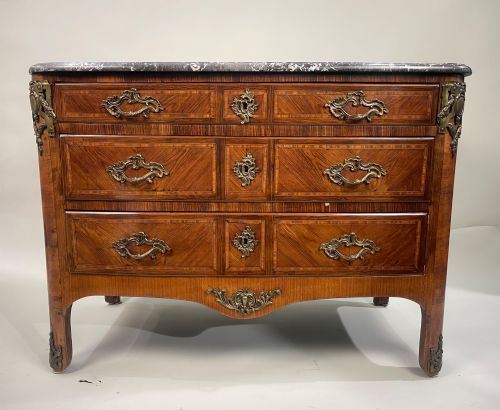
Construction relies upon solid timber carcases faced with veneers such as burr walnut, kingwood, and mahogany, frequently shaped to serpentine or bombé contours. Cabinetmakers applied parquetry and marquetry geometric patterns to create surface decoration.
Mounts cast in ormolu and gilt bronze accent the corners, handles, and apron centres of the woodwork. Heavy marble slabs, shaped to match the exact profile of the timber top, rest directly upon the finished carcase.
Marbled Top Chest Retail Price Guide 2026
Typical asking prices for marbled top chest among the pieces listed under this phrase on Sellingantiques today, from the lower quarter to the upper quarter. They describe what is for sale here now, not the wider market.
Certain bedside cabinets hide diminutive proportions beneath heavy stone tops, serving quiet nocturnal duties since the belle époque.
What varies in quality
Quality rests in the precision of the timber matching and the execution of intricate parquetry or floral marquetry. Finer examples display crisply chased gilt-bronze mounts that integrate harmoniously with the cabinet contours rather than appearing applied as an afterthought.
The selection and thickness of the marble slab dictate refinement, with superior pieces utilising coloured stone correctly profiled to the carcase edge. Drawer construction, visible through hand-cut dovetailing and solid secondary timbers, further separates standard production from superior workshops.
Jacques Bircklé·Henry Dasson·E. Kahn
The Marbled Top Chest Glossary
- Commode
- A low chest of drawers or cabinet, typically originating in France and standing on relatively short legs. It functions as both a decorative furnishing and practical storage.
- Marquetry
- The art of applying small pieces of veneer to a structure to form decorative patterns or pictures. Craftsmen select various wood types to achieve natural tonal contrasts.
- Ormolu
- Gilded bronze used for decorative mounts and furniture embellishments. The technique involves applying a mercury and gold amalgam to cast bronze.
- Bombe
- A swelling, outward-curving contour found on the sides and fronts of certain cabinets. This curved form requires advanced woodworking skill to veneer successfully.
- Parquetry
- Geometric mosaic woodwork used for surface decoration on floors and furniture. Pieces of timber are arranged in repeating patterns such as cubes or chequers.
Marbled Top Chest: Frequently Asked Questions
What is a marbled top chest?
A marbled top chest is a timber storage unit, usually a commode or bedside cabinet, finished with a heavy stone slab on top.
These pieces combine functional drawers with decorative stone surfaces across various historic European periods.
How do I identify French commodes?
French commodes typically feature distinct period styling such as serpentine fronts, applied ormolu mounts, and specific veneer patterns like kingwood or parquetry.
The presence of a shaped marble top further characterises these continental forms.
Where should I place a bedside cabinet?
Bedside cabinets fit well beside traditional or contemporary bed frames, providing enclosed storage and a durable stone surface for lamps and small items.
Pairs often balance the layout of a master bedroom.
How do I care for the marble?
Clean the stone surface with mild soap and water, avoiding acidic substances that can etch the polished finish.
Regular dusting preserves the natural grain and sheen of the material.