

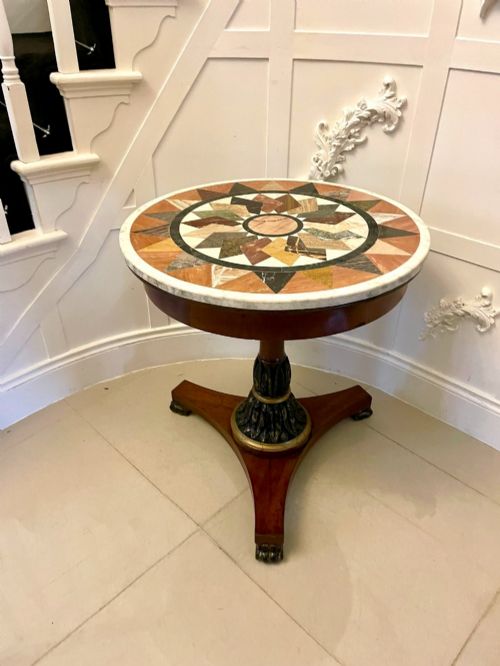
Marbled Table Lamp
A marbled table lamp brings substantial weight and mineral pattern to a room, uniting functional illumination with classical stone.
Marbled Table Lamp
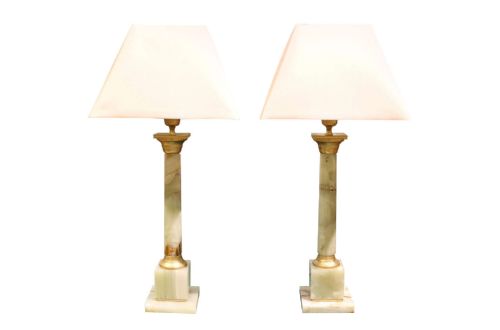
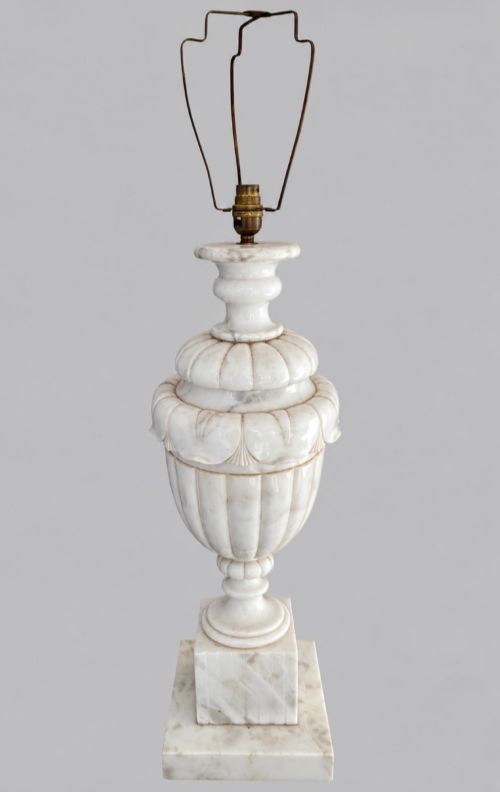
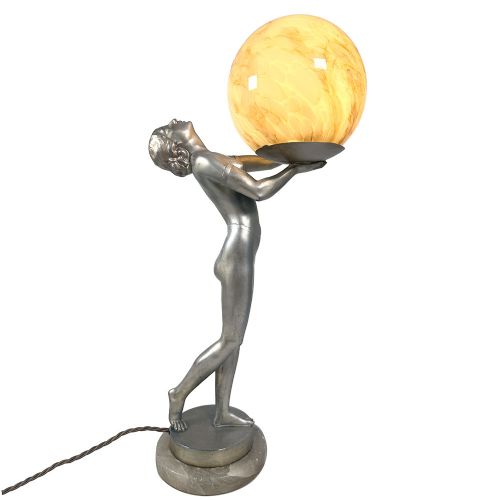
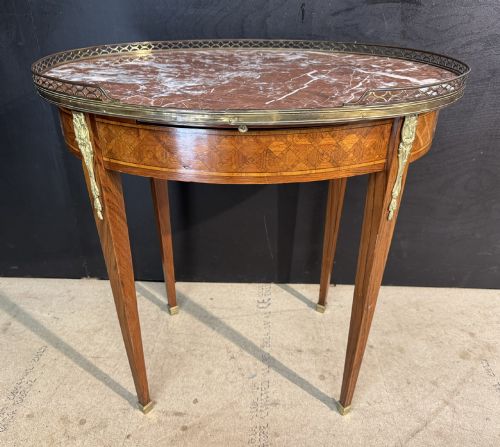
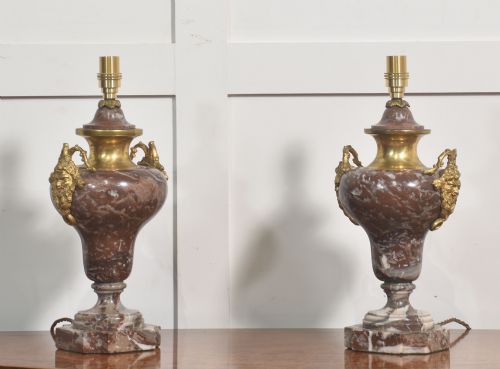
A marbled table lamp uses natural stone alongside metal and glass components to provide illumination. These pieces span from the nineteenth century into the Art Deco period, incorporating materials like white, rouge, and verde marble.
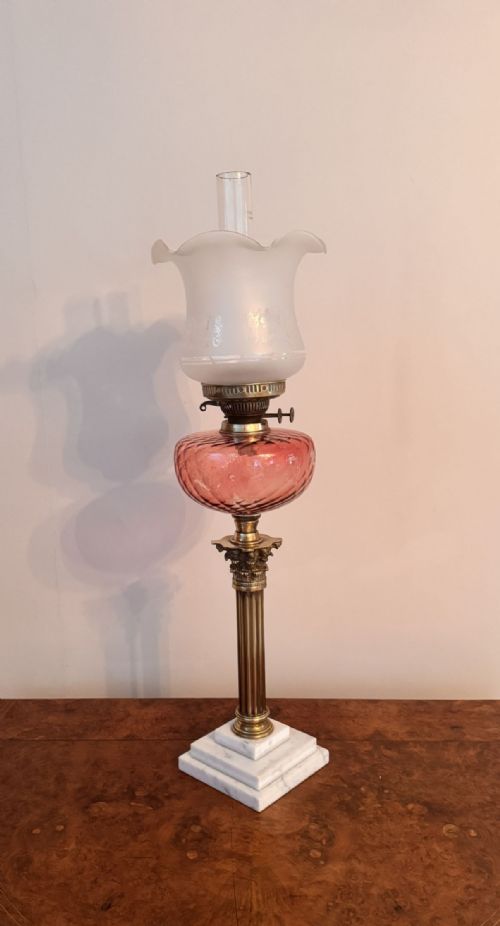
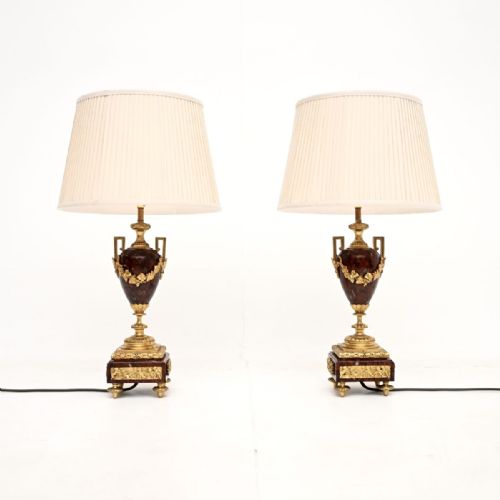
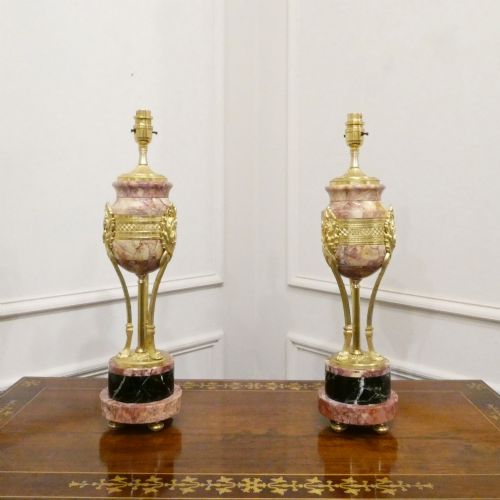
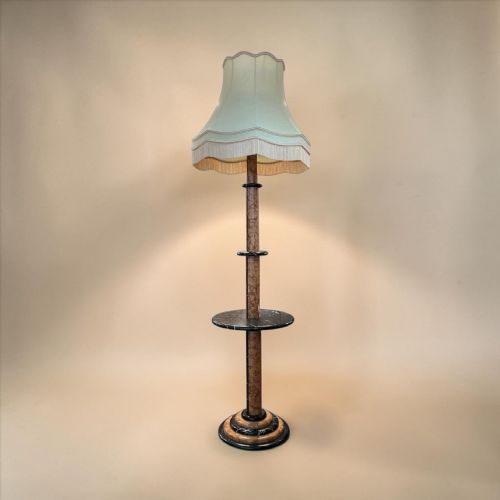
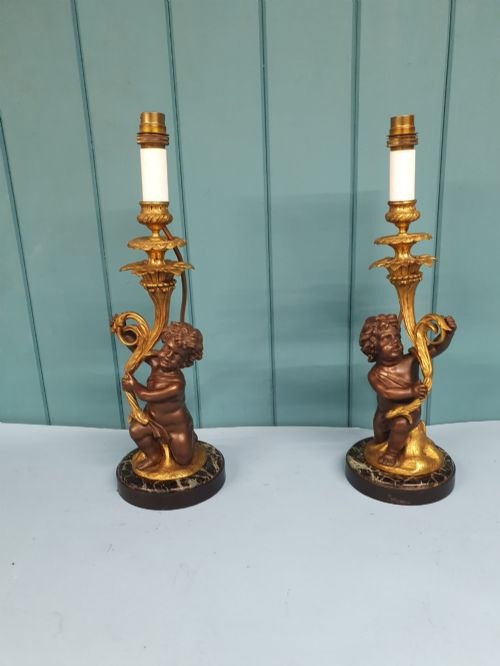
The selection ranges from converted oil lamps and urns to standard lamps and modernist figural designs. French Neoclassical and Victorian examples predominate, often pairing stone bases with brass, gilt bronze, or ormolu mounts.
Materials and Construction
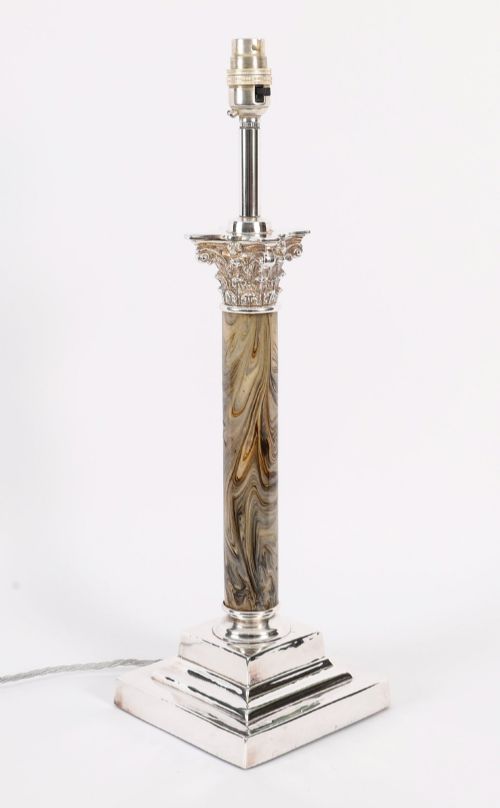
Carved stone forms the structural foundation, paired with cast brass, gilt bronze, or ormolu for collars, mounts, and Corinthian capitals. Fabric and opaline glass complete the luminaires, diffusing the light above heavy mineral bases.
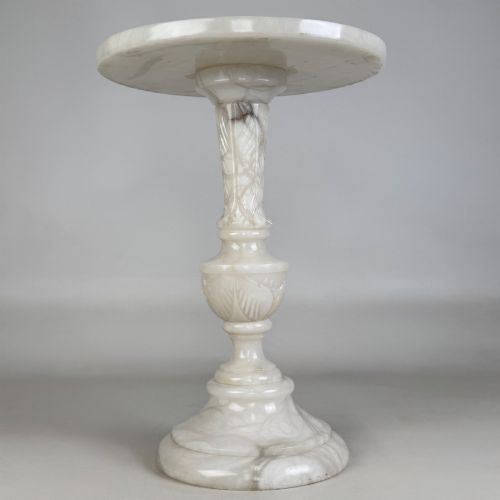
Stonemasons turned and polished solid blocks of marble and alabaster, while metalworkers cast and chased the accompanying mounts to secure the electrical fittings or burners.
Marbled Table Lamp Retail Price Guide 2026
Typical asking prices for marbled table lamp among the pieces listed under this phrase on Sellingantiques today, from the lower quarter to the upper quarter. They describe what is for sale here now, not the wider market.
Several Art Deco iterations feature sculpted dogs and parrots keeping watch beside the bulb.
Judging Quality
Quality rests upon the selection of the stone and the crispness of the metalwork. Finely figured marble with varied veining elevates a piece above uniform or plain stone slabs.
The precision in mounting the brass or gilt bronze collars directly influences the integrity of the object. Heavier cast components and robust structural proportions distinguish superior workshops from standard production.
The Marbled Table Lamp Glossary
- Ormolu
- Gilt bronze mounted on decorative objects. This technique involves applying a finely ground gold-mercury amalgam to bronze.
- Cassolette
- A decorative vessel that functions as a vase or a burner. These often form the basis for converted French table lamps.
- Verde marble
- A dark green stone characterised by pale veining. It appears frequently in Italian and French nineteenth-century mountings.
- Opaline glass
- A pale, translucent glass type used for lamp shades. It softens harsh light sources across Art Deco designs.
Marbled Table Lamp: Frequently Asked Questions
How do I date a marbled table lamp?
Dating relies upon stylistic markers in the metal mounts and the configuration of the stone base. Victorian and nineteenth-century examples often display classical revival motifs, while Art Deco pieces incorporate geometric or figural elements.
Examining the wiring channels, switch types, and base construction provides additional chronological context. Period manufacturing techniques leave specific tooling marks distinct from modern reproductions.
Are these lamps converted from oil lamps?
Many nineteenth-century examples began as oil lamps before undergoing conversion to electricity. This adaptation preserves the original brass burners and font structures.
Conversions are standard practice for period lighting and do not detract from the integrity of the piece. The original proportions remain intact despite the updated internal wiring.
What maintenance does marble require?
Marble requires gentle cleaning with a soft, dry cloth to remove dust from the polished surfaces. Avoid abrasive cleaners or acidic substances that can etch the stone.
The metal mounts benefit from occasional dusting without chemical polishes that might disturb the patination on brass or gilt bronze.
How do French and English lamps differ?
French pieces frequently utilise rouge or verde marble paired with gilt bronze mounts and figural details. English variants often favour simpler brass columns and standard mahogany or marble combinations.
Regional workshops applied distinct aesthetic priorities to their hardware and stone turning. These differences help identify the geographic origin of a lamp.